
Ashes Tattoo Myths vs Facts Explained In more Detail.
Key Takeaways
- Raw ashes are never tipped straight into a bottle of shop ink. Bubblegum Ink matches them to the right particle size, cleans, sterilises to clinical standards and clears contaminants before blending them into bespoke ink made in the studio.
- A properly prepared ashes tattoo is not toxic and carries the same risk profile as a standard tattoo in a clean studio. Cremated remains are largely bone mineral, and once sterilised and particle-matched what enters the skin is a controlled, sterile substance.
- An ashes tattoo does not hurt more than an ordinary one. The ashes are already in the ink before the needle touches the skin, so pain comes down to placement, with ribs, feet and the inner wrist tender for anyone.
- Only around a teaspoon of ashes is used, and the rest goes home with the client. One small measure could cover several tattoos over the years with the vast majority still untouched.
- Clients choose on the day whether to hand over the whole container and let Paul take out what is needed, or to measure a small amount at home and bring only that.
- The ashes stay in view for the whole appointment at Bubblegum Ink. Nothing is carried to a back room and nothing is done where the client cannot see it.
- Sensitive skin is not an automatic bar to an ashes tattoo. Prepared ashes and prepared ink are no harsher than standard pigment, though a conversation beforehand and sometimes a patch test are sensible.
- Ashes tattoos do not fade faster than normal tattoos. Fading is driven by placement, sun exposure and aftercare, exactly as it is with any other tattoo.
Most of what people worry about with ashes tattoos comes from a handful of myths that aren’t true. The big ones: that raw ashes get poured straight into the ink, that it hurts far more than a normal tattoo, that the ashes are somehow dangerous under the skin and that huge amounts get used up. None of those hold up. Prepared properly, an ashes tattoo is a safe, permanent memorial that behaves like any other tattoo once it’s healed, using only a small amount of ashes. Here’s each myth pulled apart, with what’s genuinely going on instead.
A lot of these questions I’ve heard hundreds of times, usually from someone holding a container they’re nervous to open.
Do The Ashes Just Get Mixed Into Normal Tattoo Ink?
Nope and this is probably the biggest myth of the lot. People picture a scoop of ashes tipped into a bottle off the shelf and stirred round. That’s not how it works and it wouldn’t be safe if it were. Raw ashes straight from the container are the wrong particle size and haven’t been cleaned or sterilised for going into skin.
What happens is the ashes are matched to the right particle size, cleaned, sterilised to clinical standards and cleared of contaminants first. Only then are they blended into a bespoke, particle-matched, high-quality tattoo ink I prepare for the purpose. It’s my own ink, made for this, not a generic product with something dropped in.
The reason for all that prep is the reason why you cant mix raw ashes at a studio with any sensible expectation of a clean, lasting result. Once it’s in the skin though, that prepared ink behaves like ordinary ink. Same sensation going in, same healing after. The myth exaggerates the process and skips the part that makes it safe.
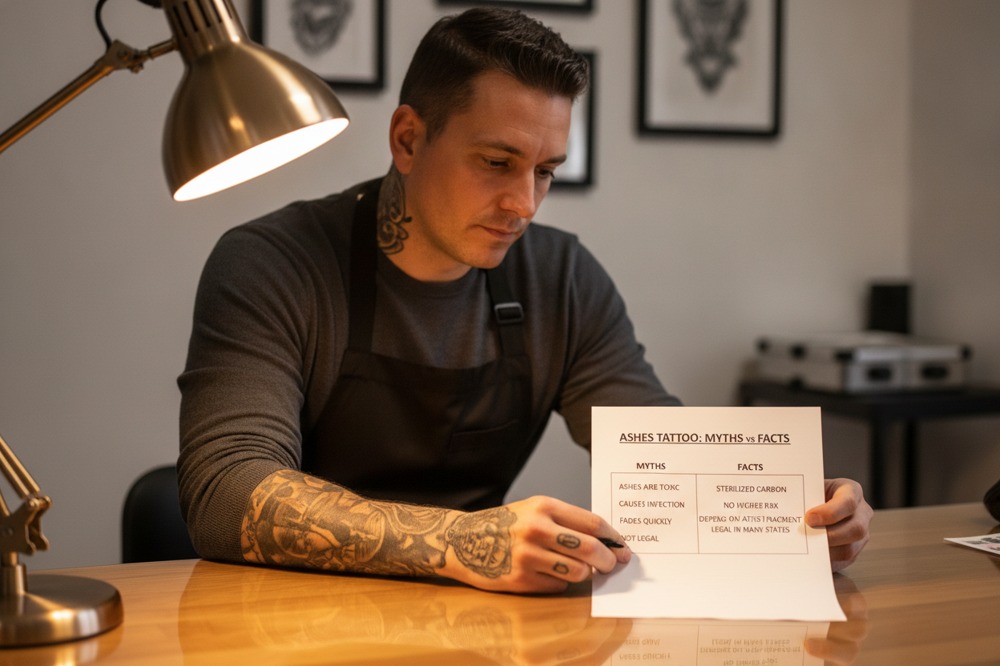
Is It True An Ashes Tattoo Is Dangerous Or Toxic Under The Skin?
No. This one worries people the most, so it’s worth being plain. A properly prepared ashes tattoo isn’t toxic and isn’t riskier to your health than a standard tattoo. The fear usually comes from imagining unprepared ashes going in, which nobody reputable would do.
Cremated remains are largely bone mineral. Once they’ve been cleaned, sterilised and reduced to the right particle size and blended into prepared ink, what goes into your skin is a controlled, sterile substance. That’s the whole point of the preparation. If you want the fuller version of this, I go into it properly on the page covering are ashes tattoos safe and there’s a dedicated read on whether can an ashes tattoo get infected that walks through healing and hygiene.
The honest answer is that the risk profile matches a normal tattoo done in a clean studio. Not zero, because no tattoo is zero, but not some special extra danger because ashes are involved. The danger myth only applies to shortcuts and shortcuts are exactly what the preparation exists to avoid.
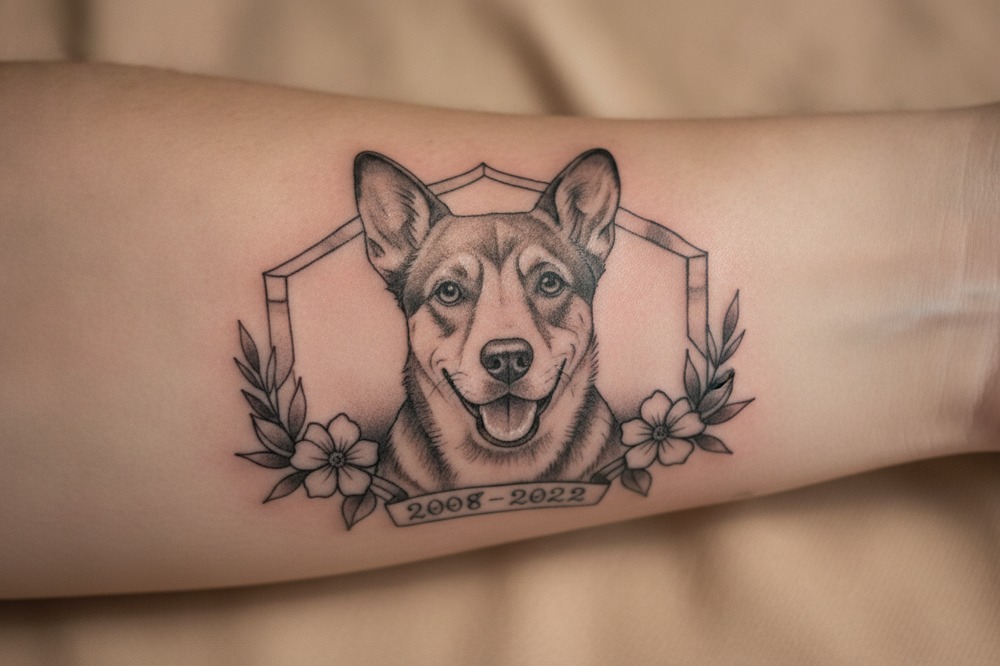
Does An Ashes Tattoo Hurt More Than A Regular One?
No, it doesn’t hurt more. The ashes are already blended into the ink before the needle touches you, so there’s nothing extra happening at your skin. The sensation is the same as a standard tattoo in the same spot.
Where it hurts more or less is down to placement, not the ashes. Ribs, feet and the inside of the wrist are tender for anyone. A forearm or an outer shoulder is gentler. That’s true whether there are ashes in the ink or not. People sometimes brace for something sharper because it feels more significant and the emotional weight of the day is real, but physically it’s an ordinary tattoo.
One thing I’d add: nerves make people tense up and tensing makes any tattoo feel worse. Eating beforehand and not turning up on an empty stomach helps more than most expect.
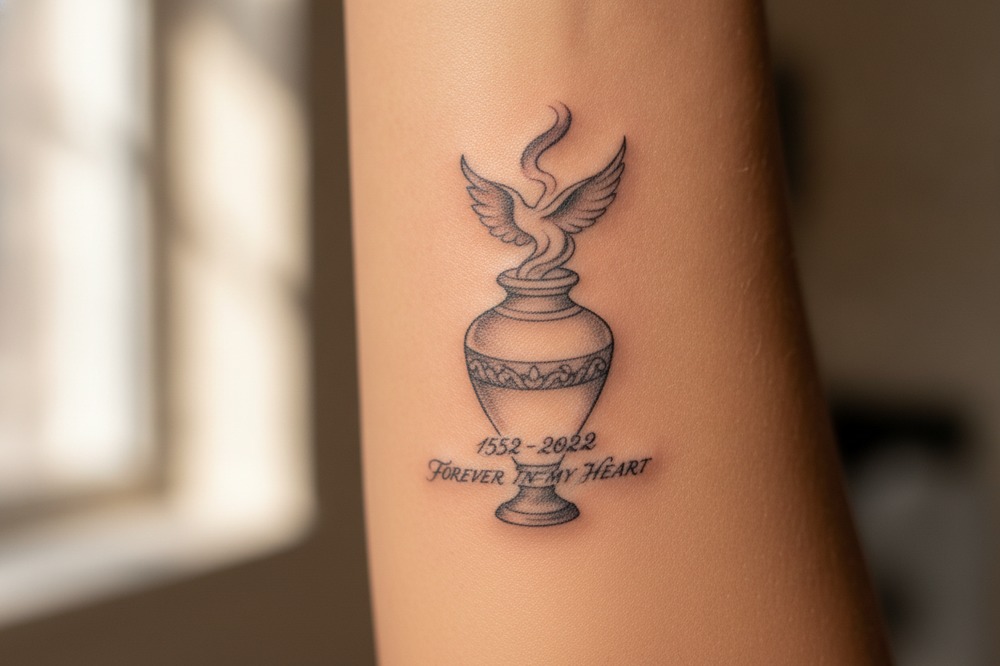
How Much Ashes Goes Into A Tattoo?
Very little and the myth here runs the wrong way. People imagine they’ll hand over a big portion of their loved one and get a small tattoo back. The opposite is true. Only a small amount is used, roughly a teaspoon’s worth and the rest goes home with you.
That surprises nearly everyone. You could have several tattoos over the years from one small measure and still have the vast majority of the ashes untouched. There’s no need to bring more than a little and there’s no benefit to using more than is needed either.
On the day there are two ways to handle it and it’s genuinely your choice which. Either bring the whole container along and I’ll take out what’s needed myself, which suits anyone who’d rather not touch the ashes at all, or measure out a small amount at home beforehand and just bring that. Both are fine. Whichever you pick, only that small amount is used and everything else leaves with you.
Do The Ashes Get Taken Away Into A Back Room?
No and this myth puts people off more than it should. The worry is that you hand your loved one’s ashes over and they disappear somewhere out of sight. That never happens here. The ashes stay in view the whole time.
The container sits with us on the day. Nothing is carried off to a back room, nothing is done where you can’t see it. If you’d rather not handle the ashes yourself I’ll take out what’s needed gently, in front of you and you’re welcome to watch every step or look away if that’s easier. Some people want to see exactly what happens to the last of it. Others find the watching hard and turn their head. Either is completely normal.
That matters because this is the last physical thing you have of them and trust on that point isn’t a small detail. The whole session is one to one in a private studio, not a busy shared floor with people wandering past, so there’s room to feel whatever the day brings.
Can Anyone With Sensitive Skin Still Get One, Or Is That A No-Go?
Sensitive skin isn’t the automatic no it’s often assumed to be. The myth says ashes make a reaction more likely, so anyone whose skin flares up should rule it out. That’s not right. The prepared ink and prepared ashes aren’t inherently harsher than standard tattoo pigment.
That said, if your skin genuinely reacts to things, it’s worth a proper conversation first and sometimes a patch test, same as you’d sensibly do for any tattoo. There’s a full read on whether are ashes tattoos safe for sensitive skin that covers what to check and when caution genuinely applies. The point is that sensitive skin is a reason to plan carefully, not a reason to give up on the idea.
If you want the whole picture across all of these safety questions in one place, the ashes tattoo safety guide pulls the myths and the facts together and links out to each detail.
Want To Ask Me A Question First?
If one of these myths has been sitting on your mind, the easiest thing is to just ask. No pressure and no need to book anything to have a chat. You can ring me on 01270 385001 or email info@bubblegumink.com and I’m happy to talk through whatever’s worrying you, even if it’s a single question about the ashes or the process. Plenty of people get in touch long before they’re ready to book and that’s exactly how it should be.
FAQ
Is Any Part Of “Ashes Go Straight Into The Ink” True?
No. The ashes are matched to the right particle size, cleaned, sterilised to clinical standards and cleared of contaminants before anything else. Only then are they blended into a bespoke tattoo ink I prepare. Nothing goes straight from the container into a bottle.
Is It A Myth That You Need A Lot Of Ashes For A Tattoo?
Yes, it’s a myth. Only a small amount is used, roughly a teaspoon’s worth and the rest goes home with you. One small measure can cover more than one tattoo over the years with plenty left over.
Do Ashes Tattoos Fade Faster Than Normal Tattoos?
No. Once the prepared ashes are blended into the prepared ink, it ages like any other tattoo. Fading comes down to placement, sun exposure and aftercare, the same factors that affect a standard tattoo, not the fact that ashes are in it.
Is It True Studios Take The Ashes Out Of Sight To Prepare Them?
Not here. The ashes stay in view the whole time and nothing is taken to a back room. If you’d rather not handle them yourself I do it gently in front of you and you can watch or look away as you prefer.
Is The Myth That Ashes Tattoos Hurt More Ever True?
No. There’s nothing extra happening at your skin, so the pain matches a normal tattoo in the same spot. How much it hurts depends on placement, like ribs or feet being tender, not on the ashes being in the ink.
You can read more about Bubblegum Ink ®.