
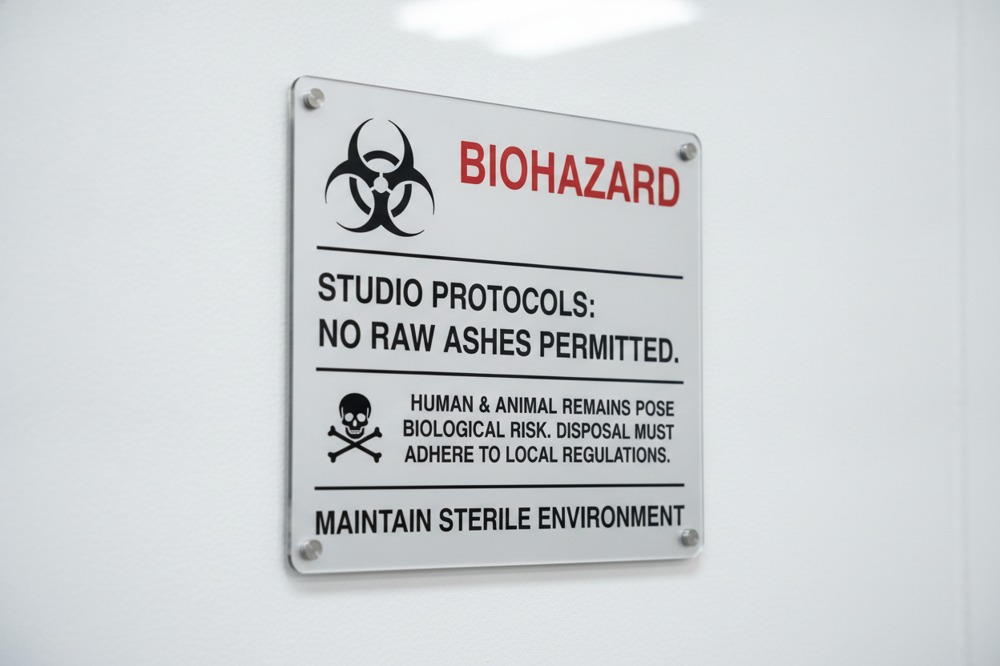
Why You Can’t You Just Mix Raw Ashes at a Studio?
Key Takeaways
- Raw cremated remains cannot go into a tattoo as they are, because they are ground bone fragments with particles too large and too sharp-edged to pass safely through a tattoo needle.
- Heavier raw particles sink to the bottom of the ink pot, and since tattooists draw ink from the top, a raw mix can mean almost none of the ashes reach the skin at all.
- Oversized particles clog and drag the needle, tearing skin more than it should, which is where raised, lumpy or patchy healing comes from.
- Raw ashes have not been sterilised, and an open tattoo is a wound, so mixing them raw creates a route for infection that prepared ashes do not.
- Preparing human ashes is not taught in a tattoo apprenticeship, which is why many UK tattooists refer this work to Bubblegum Ink rather than attempt it.
- Bubblegum Ink matches the ashes to the correct particle size, cleans them, sterilises them to clinical standards and clears contaminants before blending them into bespoke ink made in the studio.
- Ashes are never mixed into off-the-shelf ink, as a half-and-half mix would simply become mud that cannot be tattooed with.
- A properly prepared ashes tattoo carries the same infection risk as an ordinary tattoo, which is low with good aftercare.
- Paul Cutler takes only a teaspoon’s worth, keeps the ashes in view throughout, and everything unused goes home with the client.
- A studio offering to drop raw ashes straight into ink, or handing over a bottle to stir at home, is telling you it has no preparation process.
The worry underneath this question is usually simple: you’re scared that somewhere out there, a studio will scoop your loved one’s ashes straight into a pot of ink and push them under your skin and that something will go wrong. So let me answer it plainly. Raw ashes can’t go into a tattoo as they are because cremated remains aren’t a fine, clean powder. They’re bone fragments ground down and the grind still leaves particles that are far too large and too sharp-edged to sit in ink and pass safely through a tattoo needle. Before anything touches skin they have to be matched to the right particle size, cleaned, sterilised to clinical standards and cleared of contaminants. A studio that skips that and mixes them raw isn’t offering you a shortcut. They’re offering you a risk.
This page is the detail a specialist would give you, because “you can’t” isn’t a satisfying answer on its own and you deserve to know exactly why.
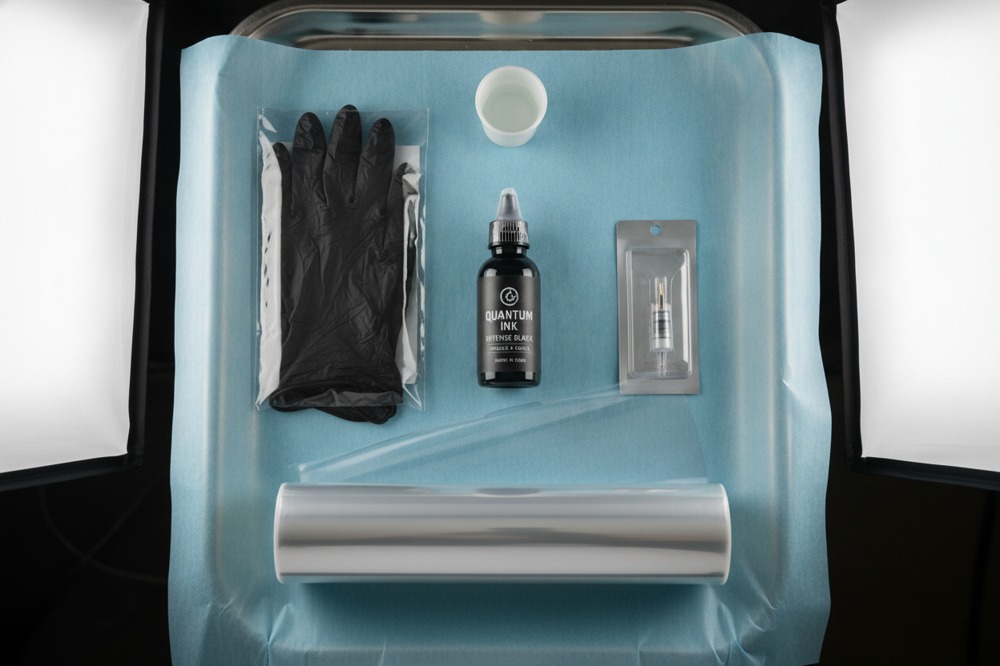
What’s Wrong With Putting Raw Ashes Straight Into Ink?
Think about what ash from a cremation really is. It isn’t soft like the ash from a fire. It’s coarse, gritty, uneven. Run a little between your fingers and you’ll feel bits with edges. Now picture that going into skin through a needle tip that’s finer than a strand of hair.
Three things go wrong at once. The particles are too big to move cleanly through the needle, so they clog it and drag, which tears the skin more than it should. The sharp edges act like tiny shards, causing trauma the body then has to fight, on top of that they will be the heavier particle obviously just sink to the bottom of the ink pot, where non of the ashes will go into you, because tattooist don’t pull ink from the bottom onto their needles, they pull from the top, where there would be no ashes, just watch a YouTube video to see what I’m on about.
And raw ashes carry contaminants that were never meant to enter a wound. Your body treats all of that as something to reject, so it walls it off, pushes it back out or reacts around it. That’s how you end up with a raised, angry, patchy line where a clean memorial should be. The ashes tattoo safety guide goes wider on the whole subject, but this is the specific reason mixing raw is the thing no careful artist will do.
Why Can’t A Normal Tattooist Just Do It For You?
Here’s the honest gap. Most tattooists are brilliant at tattooing and have never been trained to prepare human ashes, because it isn’t part of a tattoo apprenticeship. It’s a separate skill entirely and probably why so many tattooist around the Uk put their clients onto me for an ashes tattoo.
A general studio might agree to “pop the ashes in” to be kind, not realising the preparation they’re missing, or they hand you a bottle of ink and tell you to stir some in yourself at home.
That’s the moment things go wrong. Preparing ashes properly isn’t something you can improvise on the day with a pot of ink and good intentions. It needs the right process and the right handling and it needs to be done to the ashes before they go anywhere near a needle. This is a big part of what reputable studios do differently: they’re upfront that they can’t offer it. The dangerous middle ground is a studio that says yes without the know-how. If someone offers to mix raw ashes on the spot, that tells you they haven’t done this before.
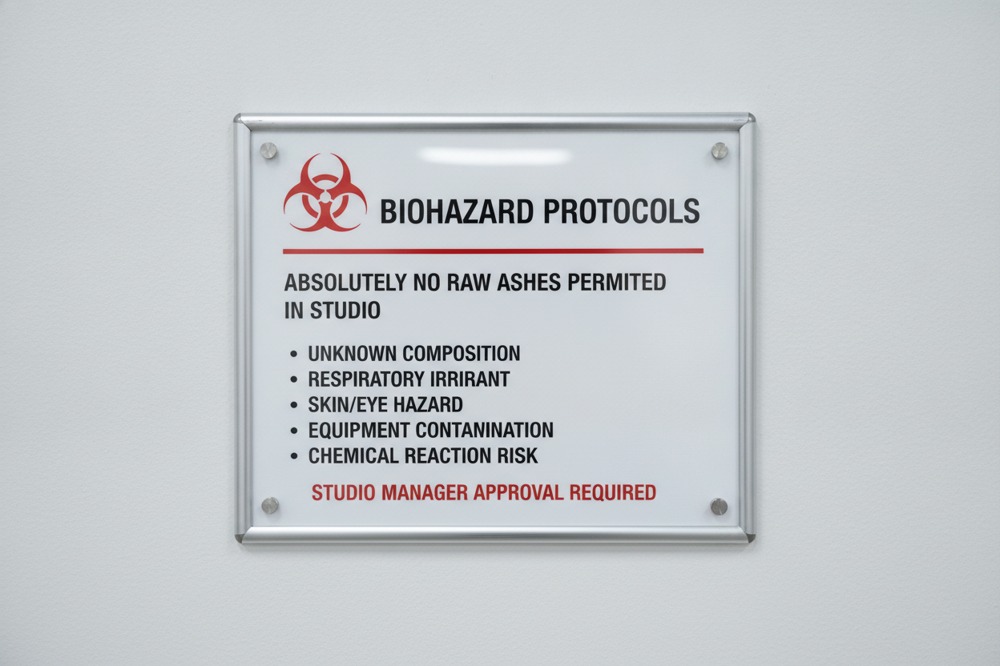
What Has To Happen To The Ashes Before They Can Go In?
The raw material has to become something skin will accept. That means the ashes are matched to the correct particle size, cleaned, sterilised to a clinical standard and cleared of contaminants, then blended into a bespoke, particle-matched, high-quality tattoo ink that I prepare rather than tipped into anything off the shelf. The simple reasoning is this, if i placed half ashes and half normal tattoo ink into a pout, it would juts become ‘mud’ and the tattooist wouldn’t even be able to tattoo with it!
That last part matters. The ashes don’t go into a generic bottle of colour. They go into an ink made to carry them at the right consistency, so it flows through the needle the way normal ink does. I won’t walk through the method step by step, because the exact process is my own, but the principle is the one thing I want you to hold onto: prepared, not raw. Once it’s tattooed and healing, it behaves like any other tattoo. Same sting during, same itch as it heals. The difference is all in what happens before, not in how it feels in the skin afterwards.
Could Raw Ashes Give You An Infection Or A Reaction?
Yes and this is the part people don’t like to think about. An open tattoo is a wound. Anything unsterile going into a wound is a route for infection and raw ashes have not been sterilised. On top of that, the physical trauma from oversized, jagged particles gives your skin more to react to, which is where lumps, prolonged swelling and rejection come from.
If you’re wondering how far that can go, I’ve written more on whether can an ashes tattoo get infected and the short version is that a properly prepared ashes tattoo carries the same infection risk as a normal one, which is low with good aftercare, which i’ll give you, while a raw-mixed one stacks the odds against you for no reason. Skin that’s already reactive has even less tolerance for it. If yours flares at the smallest thing, it’s worth reading whether are ashes tattoos safe for sensitive skin before you book anywhere, because sensitive skin and unprepared ashes are a bad match.
What Happens To The Ashes You Don’t Use?
This is the fear behind a lot of these questions, so let me answer it head on. Nothing of your loved one’s ashes is taken away, hidden or used behind a closed door. When you come in, the ashes stay in front of you the entire time. I take only a small amount, roughly a teaspoon’s worth and everything else stays with you to take home. Nothing is done in a back room and nothing goes missing, it never should, it’s your beloved.
On the practical side, a small sealed container from home is the easiest thing to bring. You’ve got two ways to do it. You can bring the whole container along and I’ll lift out the small amount myself, which suits people who’d rather not handle the ashes at all. Or you can measure out roughly a teaspoon’s worth at home into a little pot, perhaps with a clean spoon set aside just for this and bring only that. Either way the rest goes back home with you. And if handling them feels like too much on the day, I’ll do that part gently while you watch, or while you look away if that’s easier. You set the pace. If you want the wider picture on whether are ashes tattoos safe as a whole, that page pulls it all together, but on the specific worry of “where do the rest of my ashes go,” the answer is: home, with you, always.
Does This Mean No Studio Can Ever Do An Ashes Tattoo?
Not at all. It means you want a studio set up for it specifically, i.e Bubblegum Ink ®, not a general one having a go. I’ve specialised in ashes tattoos for 20 + years now, inside a tattooing career of over 30 years and that specialising is the whole point. The preparation, the handling, the way the appointment is run one to one in a private studio rather than on a busy shared floor, all of it exists because ashes work isn’t ordinary tattooing.
So the takeaway isn’t “ashes tattoos are dangerous.” It’s “raw ashes are and preparation is what removes the danger.” A studio that understands that will never mix them raw and will happily explain why before you commit to anything.
FAQ
Can I Just Mix The Ashes Into The Ink Myself At Home And Bring It In?
Please don’t. Stirring raw ashes into a bottle at home skips every part that makes them safe, so you’d be bringing in the exact problem this whole process avoids: oversized, unsterile particles that skin rejects. The ashes need proper preparation first, which isn’t something a home kitchen can do. Bring the ashes as they are and let them be prepared correctly instead.
What Would Happen If A Studio Tattooed Raw Ashes Into Me?
The likely outcomes are a clogged, dragging needle that damages the skin more than it should, a raised or lumpy result as your body reacts to the coarse particles and a real risk of infection because raw ashes aren’t sterile. You might see the area stay swollen and angry long after a normal tattoo would have settled and the memorial itself can heal patchy or blurred.
If My Loved One’s Ashes Are Very Coarse, Does That Rule Out A Tattoo?
No. Coarse ashes are normal, because cremated remains are always gritty rather than powdery. That’s exactly why they’re matched to the right particle size during preparation. The state they arrive in doesn’t stop you having the tattoo, it’s simply the reason the raw ashes can’t go straight in.
How Do I Know If A Studio Prepares Ashes Properly Or Just Mixes Them Raw?
Ask them directly what they do to the ashes before tattooing. A studio set up for this will talk about matching particle size, cleaning, sterilising and clearing contaminants and will keep your ashes in view the whole time. A studio that says it’ll just “drop them in” on the day, or hands you ink to mix yourself, is telling you it doesn’t have the preparation in place.
Why Do The Ashes Have To Be Sterilised If They’ve Already Been Cremated?
Cremation involves high heat, but the ashes are then handled, stored and transferred, so by the time they reach a studio they can’t be treated as clinically clean going into an open wound. Sterilising to a clinical standard as part of the preparation is what makes them safe to tattoo, which is another reason raw, unprepared ashes can’t be used as they are.
About Me
I’m Paul, founder of Bubblegum Ink ®. Read more about me and Bubblegum Ink.