
Lets Look At Tattoo Pain by Body Area
Key Takeaways
- Tattoo pain is governed by how much flesh sits between the needle and the bone beneath, and by how many nerve endings are packed into that skin.
- The gentlest areas are the outer forearm, outer upper arm, calf and outer thigh, where muscle and fat spread the needle’s vibration instead of passing it into bone.
- The ribs are the sharpest area for most people, because the skin is thin, stretched over bone and moves with every breath, so the needle never meets a still surface.
- Feet, hands, the sternum, the spine, the inner elbow and the back of the knee sit close behind the ribs, mostly through nerve density rather than bone alone.
- Time under the needle matters as much as placement, so a long session on a forgiving area can end up feeling worse than a quick piece on a tender one.
Most people asking this aren’t really asking which spot hurts most. They’re trying to work out whether the place they’ve already pictured the tattoo, over the heart, on the inside of the wrist, along the ribs, is going to be more than they can sit through. So here it is plainly: pain depends mostly on how much flesh sits between the needle and the bone underneath, plus how many nerve endings are packed into that skin. Fleshy, muscled areas with thicker skin (outer arm, outer thigh, calf) sit at the gentler end. Thin skin stretched straight over bone or crowded with nerves (ribs, feet, hands, spine, inner elbow) sits at the sharp end. Everything else falls somewhere between those two.
Best mind set is this, if you don’t want pinching there, then its going to hurt that little bit more in that place. Ive had countless female clients ask for tattoo Garters and it always warn them that that skin inside your leg is really tender……..Ive never got all the way round, without a client saying if its the part that’s not really seen and very painful, then lets just leave that section.
Which Body Areas Hurt The Least For A Tattoo?
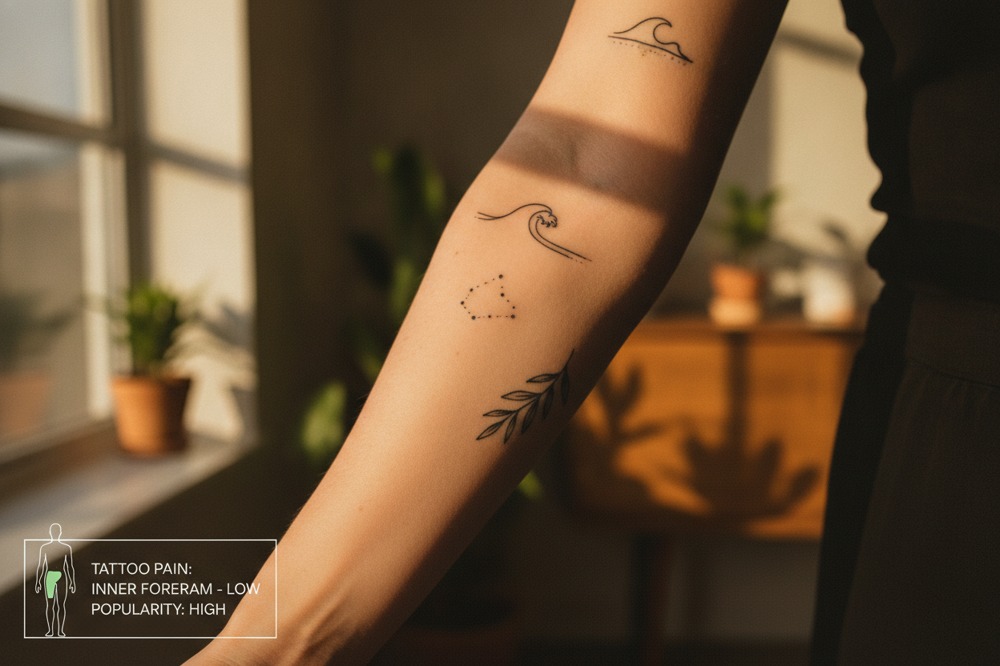
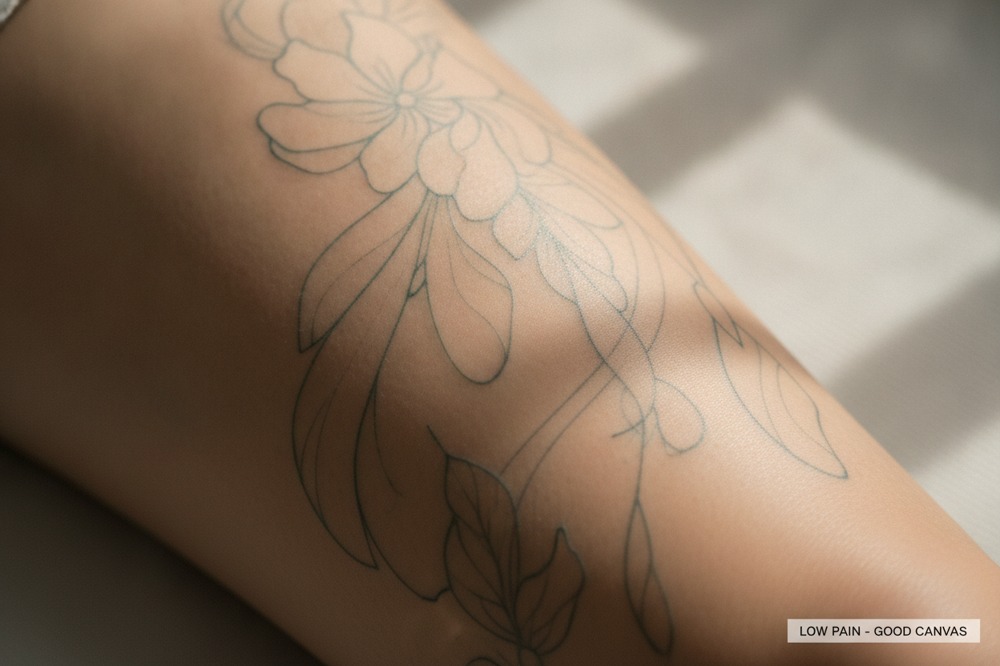
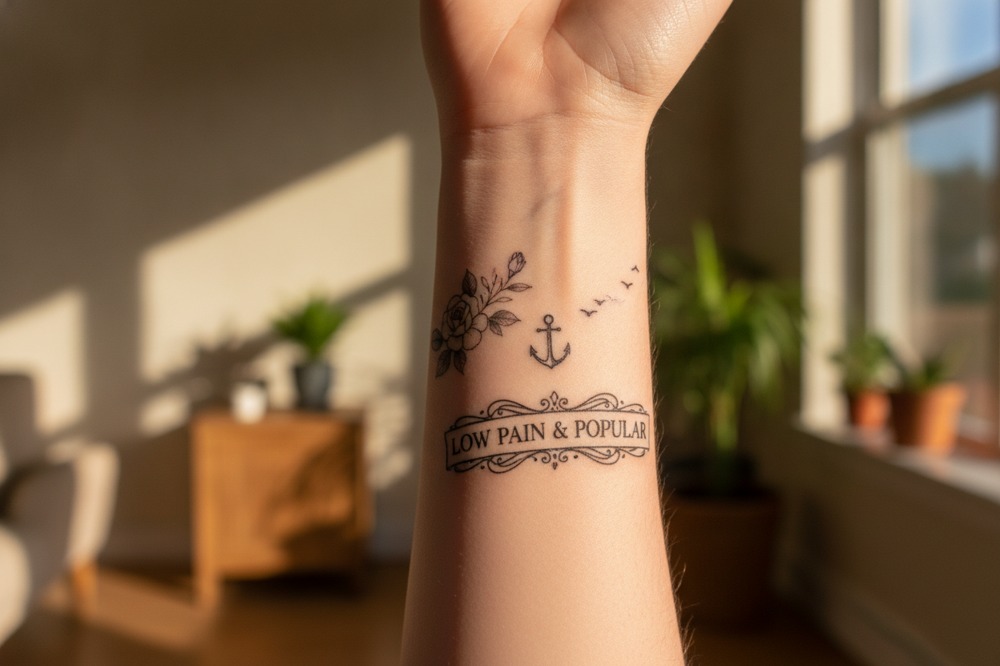
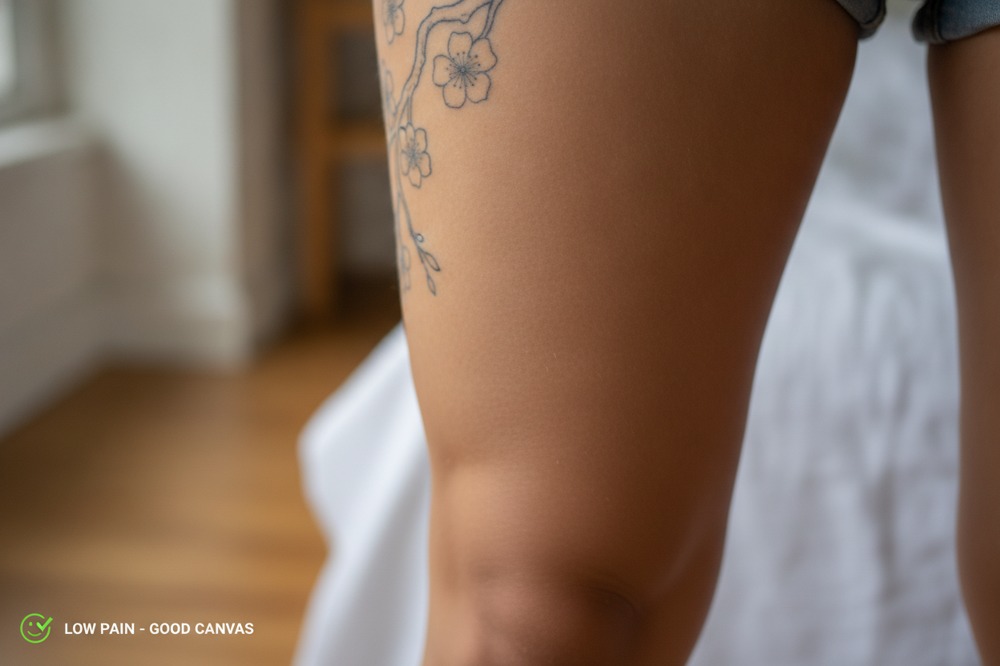
The forearm is the one I steer nervous people towards more than anywhere else. The outer forearm especially. Good muscle, thicker skin, no bone sitting right under the surface and you can watch the whole thing happen, which a lot of people find settles them. The outer upper arm is much the same. So is the calf and the outer thigh, which has so much give that some people describe it as almost dull rather than sharp.
Shoulders are kind too, the meaty top of the shoulder rather than near the collarbone. These are the areas where someone getting their first ever tattoo, an ashes piece for a parent, will usually turn round halfway through and say it wasn’t what they’d braced for. If you want the fuller rundown of the calmer options, I’ve written more about the least painful places for an ashes tattoo separately.
What these spots share is padding. The needle only goes a millimetre or two into the skin, but when there’s muscle and fat beneath, the vibration spreads out instead of rattling against bone. That’s the whole trick of it.
Where Does A Tattoo Hurt The Most?
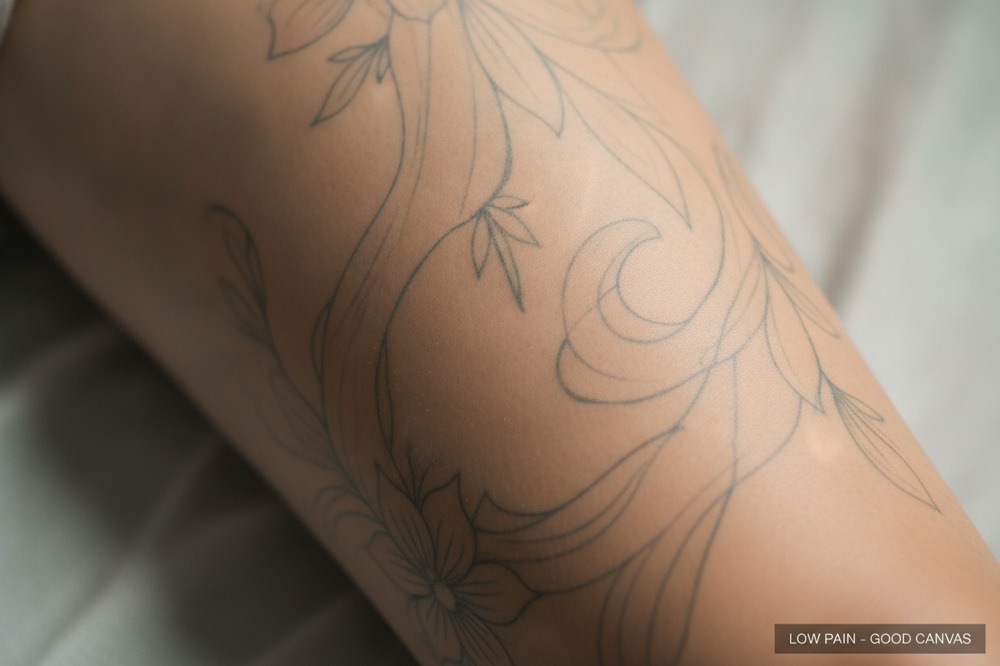
Ribs. If one area has a reputation, it’s earned there. The skin over the ribcage is thin, it’s stretched taut, there’s bone directly beneath and it moves every time you breathe, so the needle never gets a still, cushioned surface to work on. A rib piece is doable, plenty of people sit them, but go in knowing it’s near the top of the scale.
The feet and the hands are close behind. Loads of nerve endings, thin skin, bone and tendon right there under it. The ankle bone, the top of the foot, the fingers, all sharp. The sternum and the middle of the chest over the breastbone sting for the same reason ribs do. So does the spine, each vertebra a little ridge of bone under barely any padding. The inner elbow and the back of the knee catch people out too, soft-looking skin, but so many nerves bunched in that the sensation can be electric rather than a scratch.
The inner arm, armpit side and the inner thigh are more tender than they look as well. Thin, sensitive skin that rarely sees daylight tends to be jumpier than the weathered outer surfaces.
Why Does The Same Tattoo Feel Different On Different Parts Of The Body?
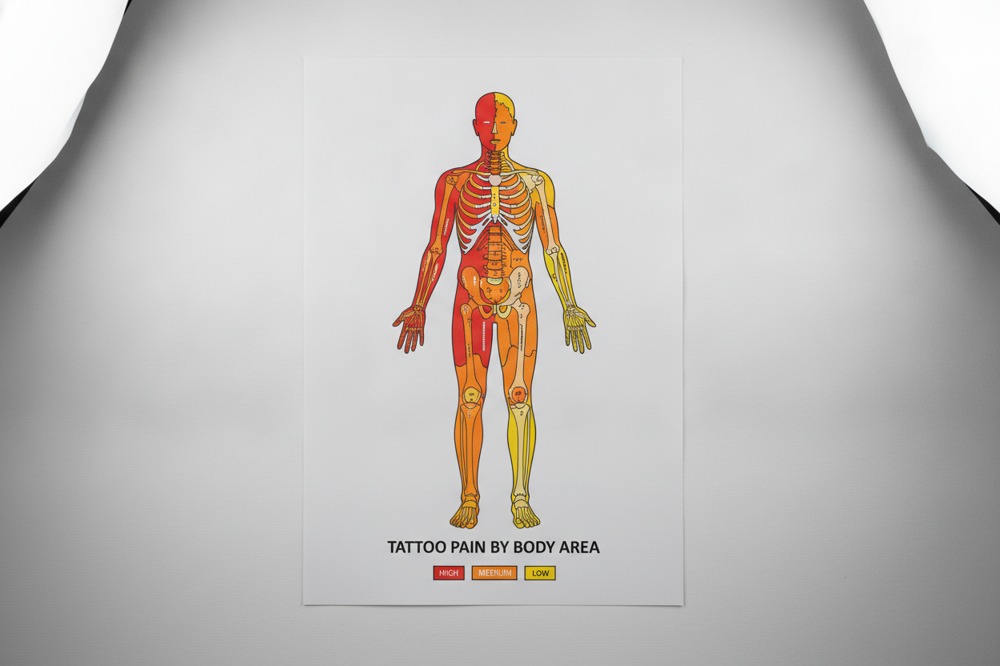
Three things move the dial. First, how close the bone is, thin skin over bone with nothing between passes the buzz straight through, which is why ribs and shins bite. Second, nerve density, fingertips, feet and the inner elbow are wired with far more nerve endings than a calf or an outer arm, so they register more per pass of the needle. Third, whether the skin stays still. Somewhere that flexes and stretches as you move, a hand, the ribs, the back of the knee, never gives the needle a settled surface and that unsettled feeling reads as more painful.
There’s also a slow-burn factor most people forget. A five-minute name on the wrist and a four-hour back piece are not the same event, even if the wrist is a sharper spot minute for minute. Time under the needle takes it toll, so a “gentle” area over a long sitting can end up feeling rougher than a “harsh” one done quickly. When you’re picturing where a tattoo goes, weigh the size of the design against the tenderness of the spot, not just the spot on its own.
Does An Ashes Tattoo Hurt More Depending On Where It Goes?
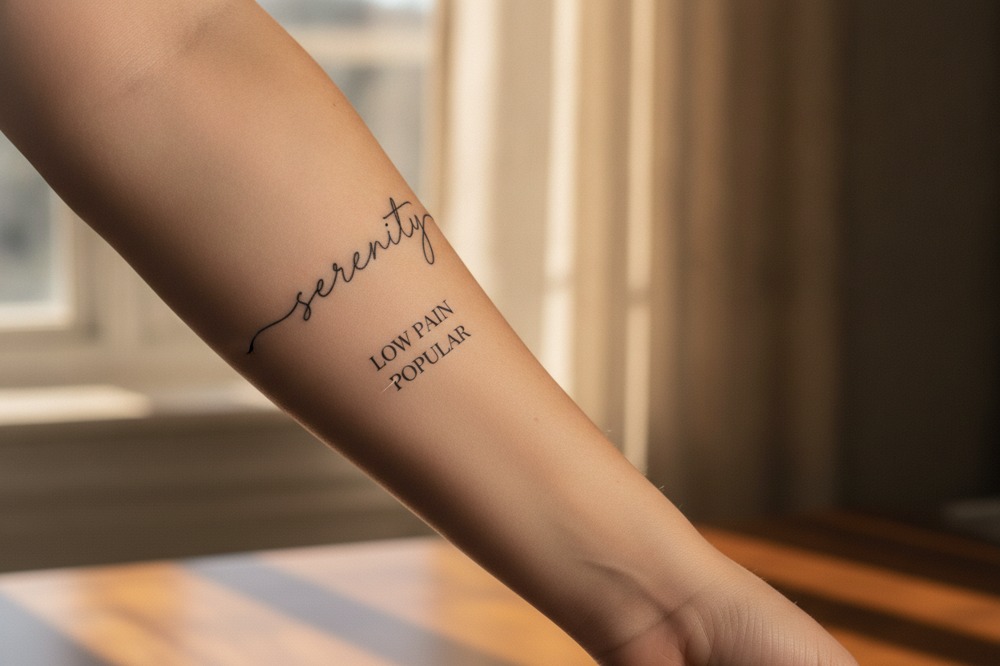
No and this is the reassurance that matters if the ink carries someone’s ashes. Once the ashes have been matched to the right particle size, cleaned, sterilised to clinical standards and cleared of contaminants, they go into a bespoke, particle-matched, high-quality tattoo ink. In the skin that behaves exactly like any other ink, same needle, same depth, same sensation. So the pain is governed purely by the body area, never by the fact it’s ashes. A memorial piece on the forearm feels like a forearm; the same on the ribs feels like ribs. If you want that spelled out further, I’ve covered whether ashes tattoos hurt more than normal tattoos in its own right.
The unspoken worry, though, is usually less about the needle and more about the ashes themselves, what happens to the portion you don’t use. Nothing is ever taken off to a back room. Your loved one’s ashes stay in front of you the whole appointment, on the workstation where you can see them and only a small amount is needed, roughly a teaspoon’s worth. Everything left over goes straight back home with you. Twenty plus years of doing this within a tattooing career of over thirty, that in-view part is the thing I’ve never once changed, because I know how much it matters to see it.
How Do You Choose A Body Area When You’re Worried About The Pain?
Start with what the design needs, then find the calmest spot that suits it, rather than picking the spot first. A signature or a short line of handwriting can sit almost anywhere, so put it somewhere gentle, the forearm, the outer upper arm. A larger portrait or a detailed piece wants a broad, forgiving canvas, which points you at the back, the outer thigh or the upper arm again, all more comfortable than they get credit for.
If this is your first tattoo, don’t book the ribs for it. Choose a kinder area for the first experience and you’ll know your own tolerance for next time. Nerves make pain worse too, tension, held breath, bracing, so managing the head is half the job. I’ve put together some first tattoo tips for nervous clients that help with exactly that. Eat beforehand, no drink the night before, tell me when you need a breather. Breaks are always fine.
When you come, you’ve a simple choice on the ashes, either bring the whole container and I’ll take out what’s needed myself so you don’t have to touch them, or measure a small amount at home, about a teaspoon’s worth and bring just that. Whichever you’d rather. If handling them is too much, I do that part gently while you watch or look away and the rest goes home with you either way.
Is It Safe To Tattoo Ashes Into Any Body Area?
Yes. The preparation is what keeps it safe, not the placement, so a properly prepared ashes tattoo is no more risky on the ribs than on the arm. The particle-matching, cleaning and sterilising is the part that matters and once that’s done the prepared ink sits and heals like any other. If safety is the thing on your mind, it’s worth reading through whether ashes tattoos are safe before you decide and for the full picture on discomfort across the board there’s the ashes tattoo pain guide too.
The only real placement note is aftercare. Spots that rub against clothing or bend constantly, a foot inside a shoe, the inside of a wrist, take a little longer to settle and need more care while healing. That’s worth factoring in when you choose, not as a pain point but a healing one.
FAQ
What Is The Most Painful Body Area For A Tattoo?
The ribs are usually rated the most painful, because the skin is thin, stretched over bone and moves as you breathe, so the needle never gets a still, cushioned surface. Feet, hands, the sternum and the spine sit close behind for the same reasons, thin skin, little padding and plenty of nerve endings.
What Is The Least Painful Place To Get A Tattoo?
The outer forearm and outer upper arm are the gentlest areas for most people, along with the calf and the outer thigh. They have good muscle and fat under thicker skin, so the needle’s vibration spreads out instead of hitting bone. These are the spots I’d suggest for a first tattoo.
Why Does The Same Tattoo Hurt More On One Body Part Than Another?
Three things drive it, how close the bone sits under the skin, how many nerve endings are packed into that area and whether the skin stays still or flexes as you move. Thin skin over bone with lots of nerves, like the ribs or feet, registers far more than a padded, still area like the outer arm.
Does It Hurt More To Tattoo Ashes Into A Sensitive Body Area?
No. Once the ashes are prepared and blended into the bespoke ink, they behave exactly like ordinary ink in the skin, so the pain comes entirely from the body area, not from the ashes. A sensitive spot like the ribs feels the same whether the tattoo carries ashes or not.
Where Should I Put My First Tattoo To Avoid The Worst Pain?
Pick a padded, forgiving area like the outer forearm, outer upper arm or calf and keep the design a manageable size for a first sitting. Avoid the ribs, feet and hands for a first tattoo. That way you learn your own tolerance somewhere comfortable before choosing a sharper spot later.
Does The Size Of The Tattoo Change How Much A Body Area Hurts?
Yes, time under the needle wears you down, so a long session on a gentle area can end up feeling rougher than a quick piece on a sharp one. When you’re weighing up placement, balance how tender the spot is against how big the design is and how long it’ll take, not just the spot on its own.