
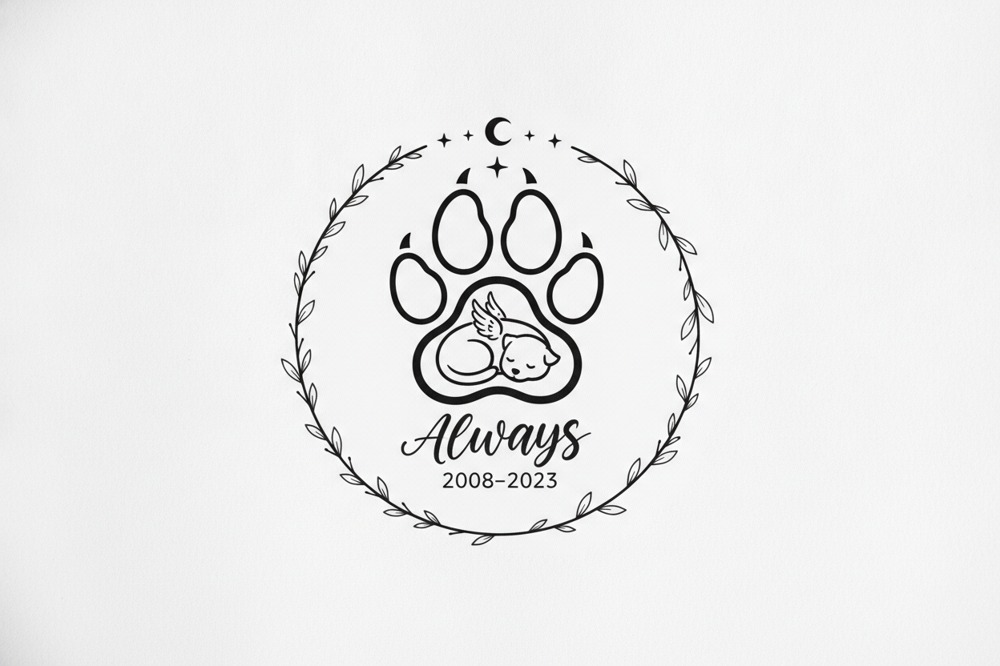
What The Best place For A Paw Print Tattoo?
Key Takeaways
- The most requested paw print tattoo placements are the inner wrist, the inner forearm, behind the ear, the ankle and over the heart on the chest.
- A paw print must stay large enough for the toe pads and main pad to read as separate shapes, because a print pushed too small closes up into a blob within a few years.
- Paul Cutler advises choosing the smallest workable size for the print first and then picking a placement that fits it, rather than choosing the spot and shrinking the paw to suit.
- A large breed paw at true scale needs the forearm, calf, shoulder, upper back or thigh, while a cat or small dog print will sit anywhere including the wrist, ankle, finger or behind the ear.
- Fingers and hands fade fastest because the skin renews quickly and moves constantly, so a paw print there needs touching up sooner than one on the arm.
- The gentlest placements for a paw print are the outer forearm, upper arm, thigh and calf, while the wrist bone, ribs, top of the foot and behind the ear sting more.
- Multiple prints from different pets sit best along a run of flat skin such as the inner forearm or calf, each sized to that animal’s real paw.
The most popular spots for a paw print tattoo are the wrist, the inner forearm, behind the ear, the ankle and over the heart on the chest. Each one changes how the print looks and how private it feels and the right spot depends on the paw’s real size, whether you want to see it every day or keep it for yourself and how much the skin there moves and stretches over time.
A paw print carries ashes beautifully because it’s a simple, recognisable shape that doesn’t need fine internal detail to read as your pet’s. That gives you room to place it almost anywhere. Below I’ll walk through the spots people ask for most, what each one is like and the small practical things that decide whether a print sits well there for years or blurs and disappoints.
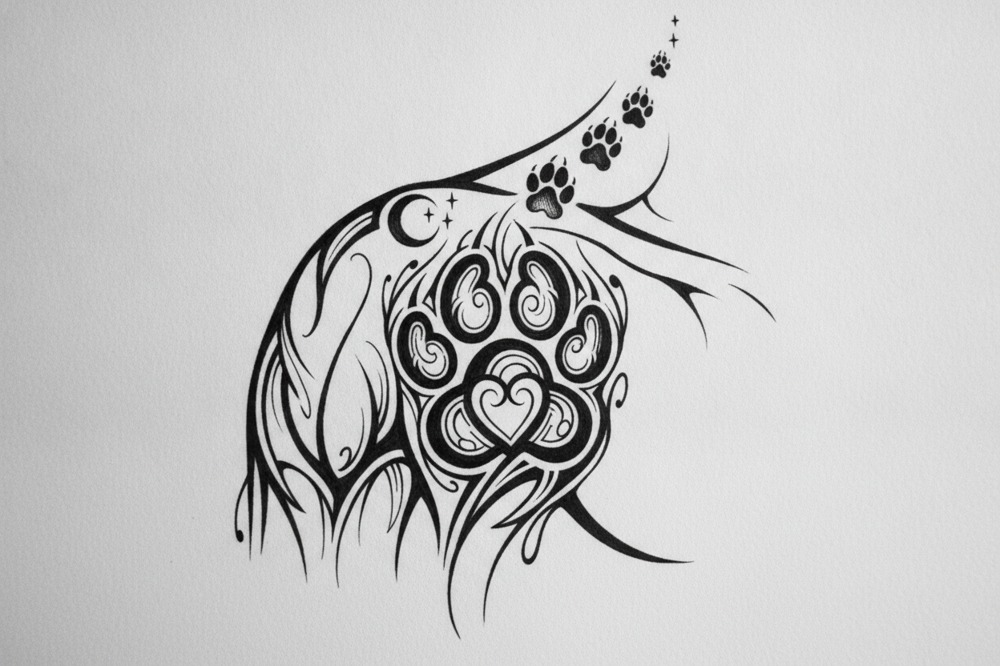
Where Are The Most Popular Spots For A Paw Print Tattoo?
The wrist is the one I’m asked for most. A single print on the inner wrist sits where you’ll catch it a dozen times a day, reaching for your keys, holding a mug, typing. People like that. It becomes a small hello. The outer wrist is a touch more public and a bit firmer over the bone, which holds a crisp print well. Keep it modest in size here. A wrist is narrow and a print stretched too wide wraps round the edge and loses its shape.
The inner forearm gives you far more room. You can run a single larger print, a line of smaller ones or a print tucked beside a name and a date. It’s flat, it’s easy to reach for aftercare and the skin there ages slowly, so a print stays sharp for a long time. If you want a design that grows, say a paw print now with space to add more later, this is the spot I steer people towards.
Over the heart, on the left of the chest, is the quiet emotional choice. Nobody sees it unless you show them. For a pet you shared a bed with or who sat on your chest, that placement means something on its own before the ashes even come into it. It’s a flat, forgiving area for healing too.
Behind the ear is tiny and personal. It only fits one small print and it’s mostly hidden by hair. People pick it when they want their dog or cat with them but not on display at work.
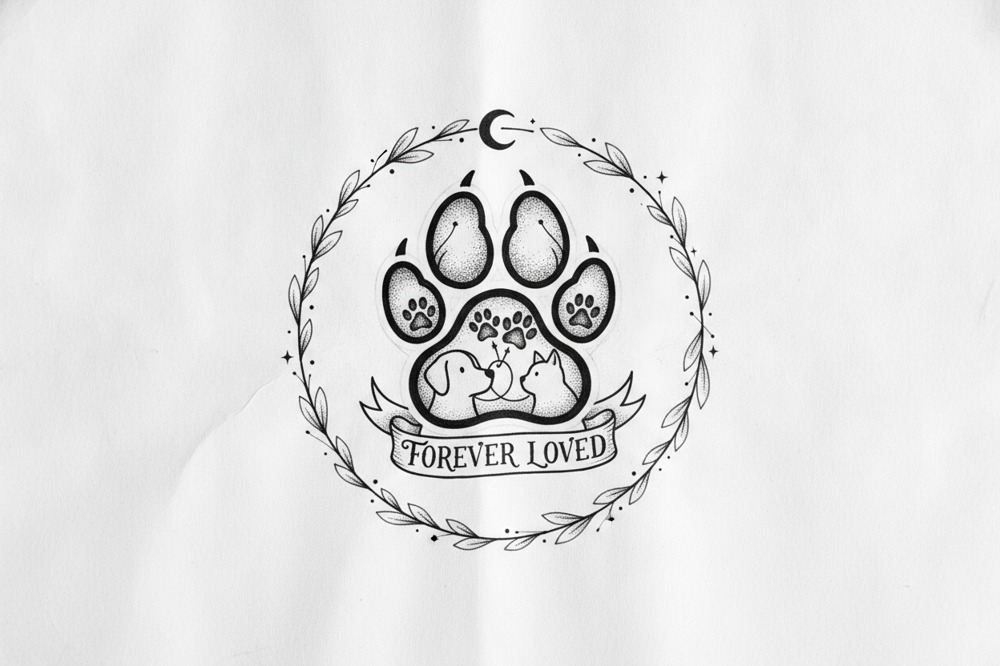
Does The Paw Print’s Real Size Decide Where It Can Go?
Yes and this trips people up more than anything else. A Great Dane’s paw and a kitten’s paw are not the same tattoo. If you want the print scaled to your pet’s actual pad, a big dog’s print won’t fit behind an ear or on a slim wrist without shrinking it so far it stops looking like a real paw.
Here’s the rule I work to. A print needs a minimum size to hold its detail once it’s healed and settled. The toe beans and the main pad have to stay separate and readable. Push a print too small and, over a few years, the gaps between the pads close up and it turns into a blob. So the honest order is: decide the smallest the print can be and still look right, then choose a placement that fits that size, not the other way round.
For a small pet, cat, small dog, rabbit, you’ve got the full menu. Wrist, behind the ear, ankle, finger, all fine. For a large breed at true scale, think forearm, calf, shoulder, upper back or thigh, somewhere with the width to carry it. If your heart’s set on the wrist but your dog was big, we scale the print down a little rather than cramming a full-size pad onto a narrow spot. Most people are happy with that compromise once they see it drawn on.
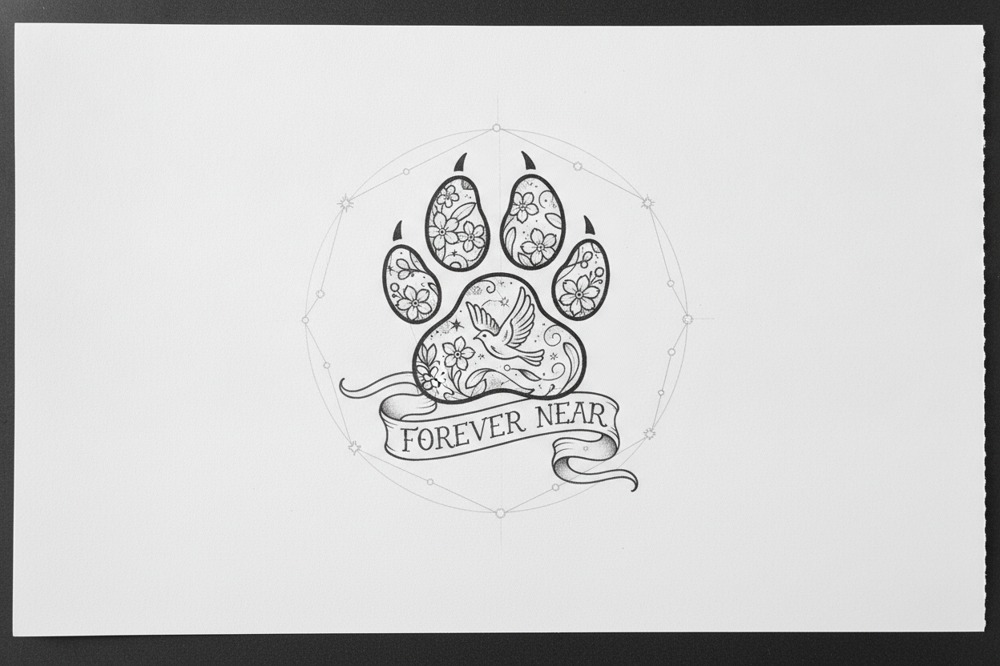
Which Placements Handle Multiple Paw Prints Best?
If you’ve lost more than one pet, or you want a trail of prints walking across the skin, placement changes completely. A single print is easy to place anywhere. A set of three or four needs a run of flat skin so they sit level and read as a group.
The forearm is the natural home for this. Prints can march up the inner arm in a gentle line, each one a different pet if you like, sized to match their real paws so a cat’s print sits small beside a dog’s. The calf works the same way for a longer trail. The top of the foot and the ankle can take two or three prints wandering toward the toes, which people love for the walking-away image it gives.
Across the shoulder blade or along the collarbone you can curve a set of prints to follow the bone, which looks far more natural than a stiff straight line. If you’re planning a group like this, I’d point you at multiple paw print memorial tattoo ideas for the layouts that work and to the paw print ashes tattoos guide for how the ashes are handled across several prints from more than one pet.
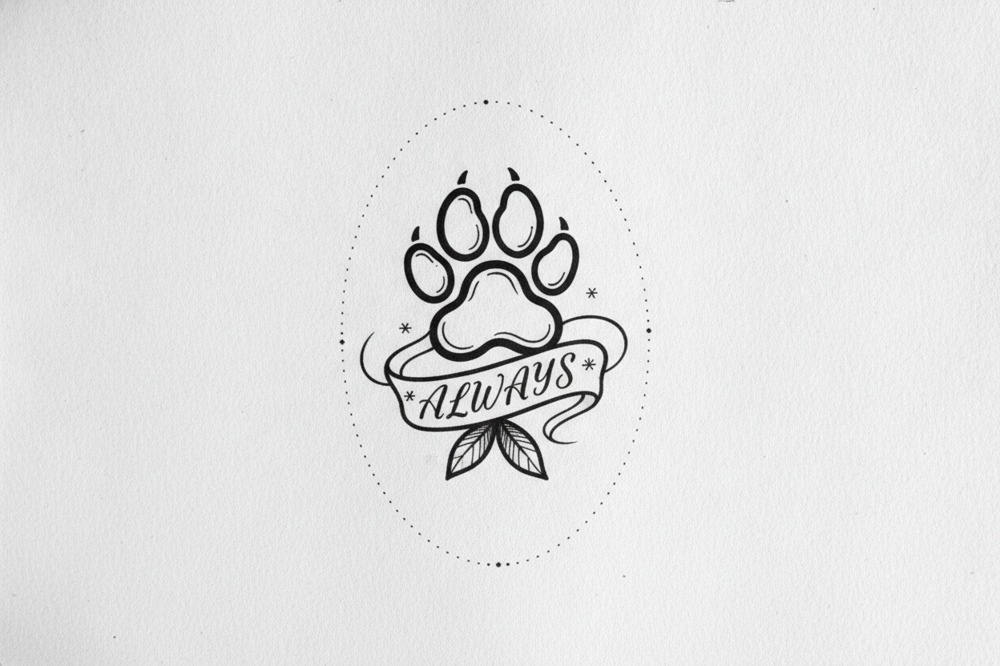
How Does Placement Change When You Add A Heart Or A Name?
A bare paw print is compact and drops onto almost any spot. The moment you combine it with something, a heart shape, a name, dates, the footprint of the whole design grows and your placement options narrow.
A paw pressed inside a heart, or a heart made of the paw’s negative space, needs a spot with a bit of height and width to breathe. Inner forearm, shoulder, over the heart on the chest, the ribs. A wrist can just about carry a small paw-and-heart, but it’s tight, so keep the whole thing simple. If you’re drawn to that combination, paw print heart tattoo ideas shows how the two shapes fit together without either getting lost.
Add a name or a date under the print and you’re now placing a taller design. That suits the forearm, the calf or the upper arm, anywhere with vertical room. Behind the ear or on a finger won’t take it. Curved lettering wrapping under a paw sits nicely on the outer forearm or the shoulder. For the wider question of how a print works alongside other memorial elements, symbols, birth flowers, a favourite quote, it’s worth a look at memorial tattoo design ideas before you settle on a spot, because the design and the placement really do decide each other.
Which Placements Hurt Less And Heal Cleanest For A Paw Print?
Since a paw print is a small, quick piece, most placements are very manageable, but they’re not all equal. The gentler spots are the ones with a bit of muscle or fat under the skin: the outer forearm, the upper arm, the thigh, the calf. A small print there is over in minutes and heals without much fuss.
The spots that sting more are the ones close to bone or nerve-rich: the wrist over the bone, the ribs, the top of the foot, the ankle, the fingers and behind the ear. None of them are unbearable for a piece this size, but if it’s your first tattoo, I’ll usually suggest the inner forearm as a soft landing.
Healing matters just as much as the tattoo itself and placement drives that. A print on your inner forearm is easy to keep clean and out of the way. A print on your foot or ankle rubs against socks and shoes, sits low where blood pools and takes longer to settle, so it needs more care and a little patience. Hands and fingers are the trickiest of all: the skin renews fast and moves constantly, so a paw print on a finger can fade and need a touch-up sooner than one on your arm. I’ll always be straight with you about that before you choose the spot, because a print that looks perfect on day one and blurs by year three isn’t the memorial you came in for.
Can I See The Ashes Go Into The Ink Wherever I Place It?
For most people this is the part that matters more than any placement. Watching your pet’s ashes become part of the ink, or deciding you’d rather not, is a real moment and I make sure you’re in control of it whichever spot you’ve chosen.
Nothing happens out of your sight. I don’t take the ashes into a back room or handle them where you can’t see. Your pet’s ashes stay on the bench in front of you the whole time. Some people want to watch every second of it. Others find that too much and prefer to look away while I do the measuring and blending, then turn back once it’s ink and ready. Both are completely fine and the placement you’ve picked doesn’t change any of that. Whether the print is going behind your ear or across your forearm, the same care goes into the small amount of ashes before it ever touches your skin.
The ashes are matched to the right particle size, cleaned, sterilised to clinical standards and cleared of contaminants, then blended into a bespoke, particle-matched, high-quality tattoo ink. Once it’s in your skin it feels and heals exactly like an ordinary tattoo. There’s nothing about carrying ashes that limits where a print can go.
On what to bring: the easy option is to bring the whole container along and let me take out the small amount I need, roughly a teaspoon’s worth, right there in front of you. That suits anyone who’d rather not handle their pet’s ashes themselves. If you’d prefer, you can measure out that small amount at home and just bring that instead. Either way, the rest goes home with you. Nothing more than a teaspoon’s worth is ever used and I do the measuring gently, watching or not.
How Do I Book And Talk Through The Right Placement?
The next step is to get in touch and book a consultation, either by phone on 01270 385001 or by email at info@bubblegumink.com. Tell me which pet the print is for, roughly how big their paw was and the spot you have in mind and we’ll work out whether it fits or needs adjusting. If you’re torn between two placements, bring both ideas. I’ll draw the print at the right size and hold it against each spot so you can see it on your own skin before anything is permanent. That first conversation costs you nothing and usually settles the decision quickly.
I’ve specialised in cremation ashes tattoos for 20 + years and that sits within a tattooing career of over 30. In that time I’ve placed paw prints on just about every part of the body people carry them, so if you’re unsure, ask. There’s no rush and no daft question.
FAQ
Where Is The Best Place To Put A Single Paw Print Tattoo?
The inner wrist and the inner forearm are the two most popular spots for a single paw print, because both keep it in easy view and hold the detail well. The wrist gives you a small print you glance at all day. The forearm gives you more room to scale the print up or add a name later. If you’d rather keep it private, over the heart or behind the ear works just as nicely.
How Small Can A Paw Print Tattoo Be Before It Loses Detail?
A paw print needs to stay large enough that the toe pads and the main pad read as separate shapes once it’s healed. Go too small and the gaps between the pads close up over a few years and it turns into a blob. For a cat or small dog you can go quite small on a wrist or behind the ear. For a big breed at true scale, you’ll want a forearm, calf or shoulder to carry it properly.
Can You Fit A Paw Print Tattoo Behind The Ear?
Yes, but only a single small print and it suits small pets best at true scale. Behind the ear is one of the more tender spots and it’s mostly hidden by hair, so people choose it when they want their pet with them without it being on show. A large dog’s print won’t fit there without shrinking it so far it stops looking like a real paw.
Which Paw Print Placement Fades Fastest?
Fingers and hands fade quickest, because the skin there renews fast and moves constantly, so a print on a finger often needs a touch-up sooner than one on the arm. Feet and ankles rub against socks and shoes and heal slower too. Flat, low-movement spots like the inner forearm, the upper arm and over the heart hold a print sharp for the longest.
Where Should I Put Multiple Paw Prints From Different Pets?
A run of flat skin works best so the prints sit level as a group. The inner forearm and the calf take a trail of prints beautifully, each one sized to that pet’s real paw so a cat’s print sits small beside a dog’s. The shoulder blade or collarbone lets you curve the set along the bone, which looks more natural than a stiff straight line.
Does A Paw Print Tattoo Hurt Less In Certain Spots?
Yes. Placements with muscle or a little fat underneath, the outer forearm, upper arm, thigh and calf, are the gentlest for a print this size. Spots close to bone or nerve-rich, like the wrist bone, ribs, top of the foot and behind the ear, sting a bit more. None are unbearable for a piece this small, but the inner forearm is the softest landing if it’s your first tattoo.
I’m Paul – Bubblegum Ink ®.