
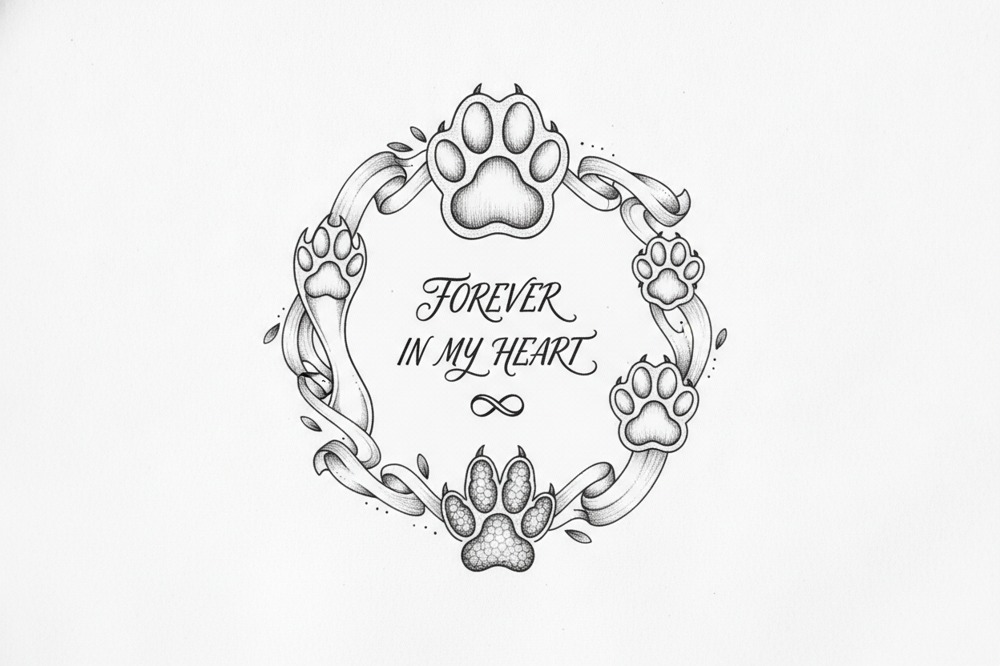
Multiple Paw Print Memorial Tattoo Designs And Ideas
Key Takeaways
- A multiple paw print memorial tattoo sizes each print to the real animal, so a Great Dane’s pad reads larger than the cat’s and the prints tell the pets apart at a glance.
- Bubblegum Ink keeps each pet’s ashes separate throughout, preparing one small batch of ink per animal, so the print for the collie carries the collie and the cat’s print carries the cat.
- Ashes can be symbolically combined into one mix instead if the client prefers, though most people choose to keep each print faithful to a single pet.
- The four layouts that come up most are a staggered walking trail, a loose cluster, an ascending line by year, and prints orbiting a central heart, name or tree.
- Designing in deliberate gaps lets further prints be added years later as more pets are lost, which is why a trail on a forearm or calf suits a growing piece better than a small ankle design.
- Clients keeping ashes back at home for future prints can have that animal’s ashes blended into the new print the same way when they return.
- Bubblegum Ink asks for around a teaspoon of ashes per pet, ideally measured into separate labelled pots at home so each animal stays clearly identified.
- Real inked paw prints taken at home give the truest shape to work from, as every pad differs, and photographs work as a second best.
Most people who ask about this have lost more than one pet over the years and want them together in one piece, not scattered across separate tattoos. The usual way to do it is a trail or cluster of paw prints, each one sized to match the animal it stands for, so a Great Dane’s pad reads bigger than the little cat who bossed him around. From there you can vary the arrangement, the spacing and the small marks that tell each print apart. If you have ashes from more than one pet, each print can carry that pet’s own ashes, kept separate through the whole process so they never mix.
That last part is what makes a multiple-print memorial different from just repeating one design, as it’s not one paw stamped four times. It’s four individuals and the good versions of these tattoos work hard to keep them individual.
How Do You Arrange Multiple Paw Prints In One Tattoo?
There are a handful of layouts that come up again and again and the one you pick usually depends on how many pets you’re honouring and where it’s going on your body.
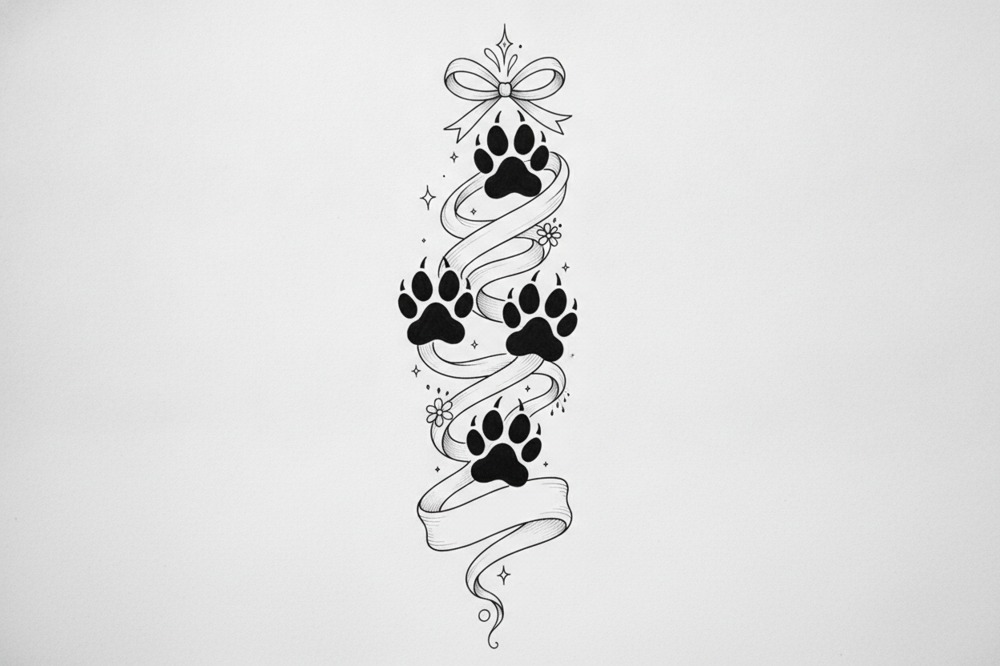
A walking trail is the most popular. Prints march in a diagonal line, as if the animals crossed your skin and kept going and it suits a forearm, a calf or the side of a foot beautifully. You can stagger left-right pads like a real gait, which looks more natural than a straight column of identical stamps.
A cluster or scatter works when the pets were a proper pack and you don’t want a pecking order. The prints sit in a loose group, different sizes, slightly turned, some overlapping. It reads as “all of them, together” rather than a timeline.
An ascending line, oldest at the bottom, newest at the top, quietly tells the story of the years if that matters to you. Some people do the reverse and lead with the first pet they ever had.
Then there’s the anchored design, where the prints orbit something central, a heart, a name, a date, or a small tree. That central piece pulls the separate animals into one family. If a shape holding them together appeals, paw print heart tattoo ideas is worth a look, since a heart makes an easy hub for two or three prints without crowding.
How Do You Make Each Paw Print Look Like A Different Pet?
This is the question that separates a thoughtful piece from a row of copy-paste stamps and it’s the part I care about most when someone brings me two or three animals.
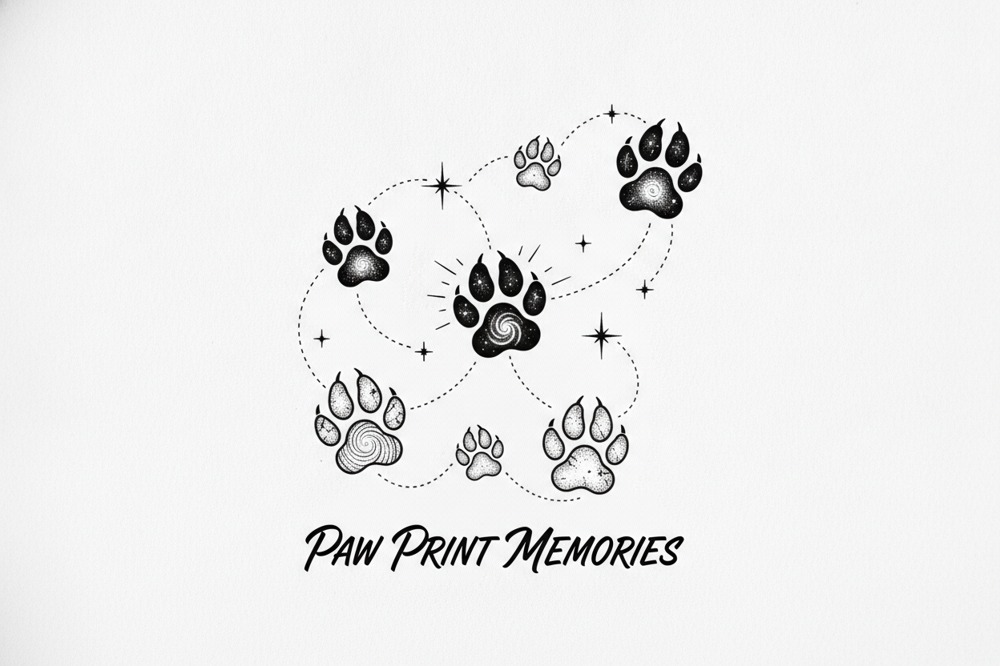
Size is the first tool. Match each print to the real animal. A lurcher, a terrier and a house cat should give you three genuinely different pads and getting the proportions right instantly says “these were separate creatures.” Bring photos or, better, real inked paw prints from home if you have them, because every pad has its own shape.
After size comes the detail inside each print. Fur texture, a scar, a missing toe from an old injury, the way one dog’s pads were always a bit splayed. Little truths like that turn a generic paw into a specific one. A cat’s print is rounder with a neater toe arrangement than a dog’s, so if you’re mixing species that difference alone helps them read apart.
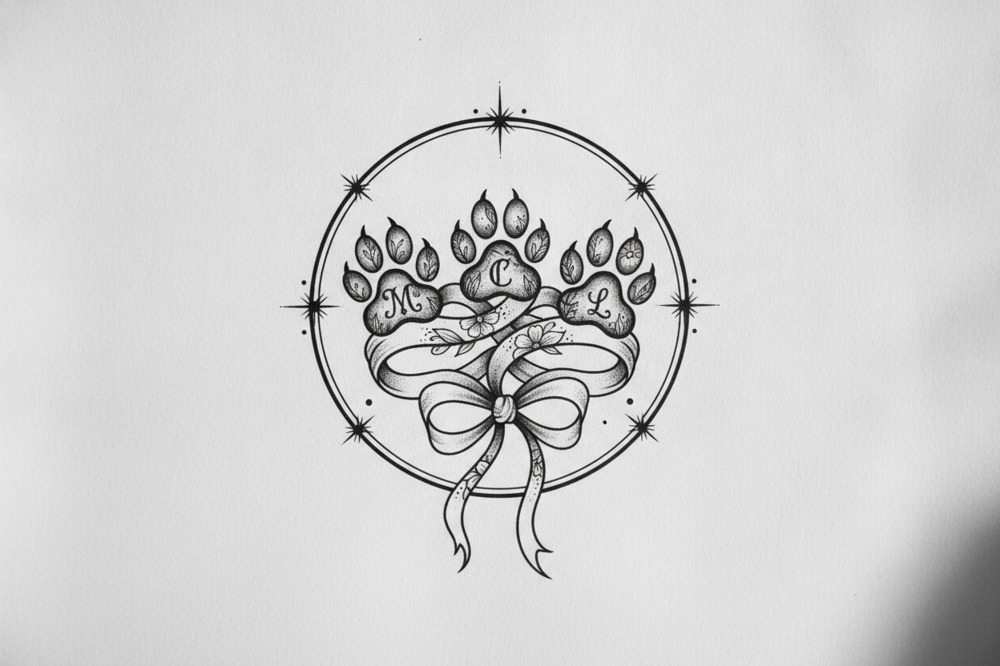
Style can carry it too. One print in soft grey watercolour, another in clean black, a third with a fine outline only. Or keep them all the same style but add each pet’s initial or a tiny date beneath. Names underneath are the clearest way to label who’s who and paw print tattoos with names covers how to keep lettering legible when it’s sitting under a small print.
Can You Put Ashes From More Than One Pet In The Same Tattoo?
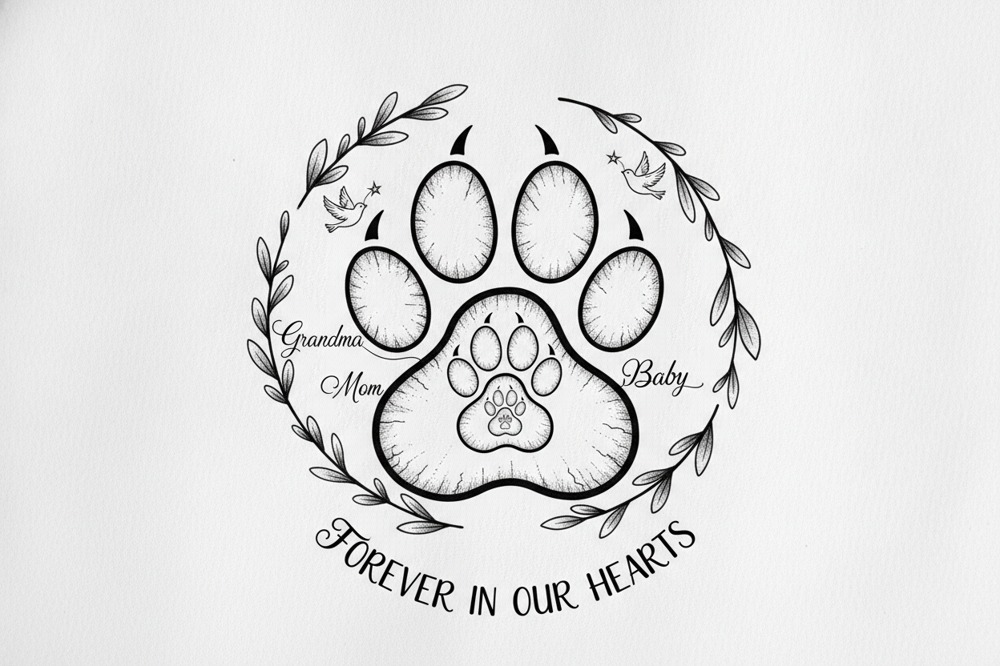
Yes and this is where multiple prints get genuinely personal rather than just decorative. Each print can hold that specific pet’s ashes.
The way I do it, the ashes from each animal are kept separate. Every pet’s ashes are matched to the right particle size, cleaned, sterilised to clinical standards and cleared of contaminants, then blended into a bespoke, particle-matched, high-quality tattoo ink, one small batch per pet. So the print I do for your collie carries your collie and the print for the cat carries the cat. They don’t get pooled into one mix. Once it’s in your skin it heals and feels like any ordinary tattoo, but each paw is truly its own animal.
If you’d rather have them symbolically united instead, some people do want the ashes combined and that’s your call to make. I’ll do whatever you decide. Most people, though, like knowing each print is faithful to one pet.
If you want the fuller picture of how ashes work in this kind of memorial before you commit, the paw print ashes tattoos guide walks through the whole thing.
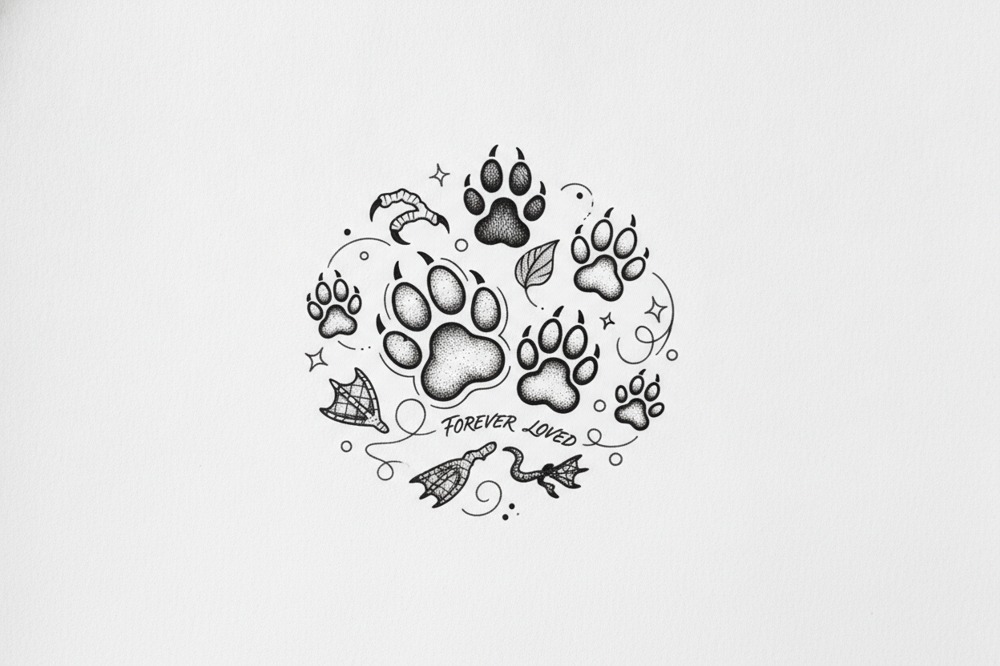
What If Your Pets Died Years Apart Or You’ll Add More Later?
This comes up constantly and it’s a real planning question, not a design one. You’ve lost one now, but there’s a dog at home who won’t be here forever and you don’t want to redo the whole tattoo when the time comes.
The fix is to leave room. We design the trail or cluster with deliberate gaps, so a future print drops in where it belongs without cramming or looking bolted on. A walking trail is ideal for this, since a line can simply carry on. A print added in two years’ time will read differently in fresh healing than the older ones for a while, but that settles.
On the ashes side, if you know more pets will join the piece later, keep some of each animal’s ashes set aside at home. When you come back for the next print, that pet’s ashes go into it the same way. An infinity loop can be a lovely spine for an ever-growing family and paw print infinity tattoo ideas shows how the shape keeps expanding without the design falling apart.
Where On The Body Do Multiple Paw Prints Sit Best?
More prints means more length or more width, so placement matters more here than it does for a single paw.
A trail loves a long, straight run. The inside forearm, the outer calf, the side of the ribs, along a collarbone, or wrapping the ankle. These let the prints travel without bending awkwardly across a joint. If you’ve got four or five pets, a forearm trail from wrist to elbow holds them comfortably.
A cluster wants a broader flat area. The shoulder blade, upper arm, chest or thigh gives a scatter room to breathe. Cramming a cluster onto a wrist just muddles the prints together.
Think about how the piece grows too. If more pets may join, pick a spot with runway. A calf or forearm has somewhere to go; a small ankle print boxes you in. General placement thinking for memorial work sits in these memorial tattoo design ideas if you want to see how layout and body-area interact more broadly.
What Happens On The Day With The Ashes?
Since this piece may involve ashes from several pets, the handling is worth explaining plainly, because it’s the part people worry about most.
My honest recommendation, especially with multiple animals, is to measure out a small amount at home, roughly a teaspoon’s worth per pet, into separate labelled bags or pots and just bring those. It keeps each animal clearly identified and means the rest stays safe at home with you. If handling the ashes yourself feels like too much, bring the whole container for each pet instead and I’ll take out what’s needed here.
Either way, nothing happens out of your sight. The ashes sit on the tray on the counter in front of us, still in what you brought them in and I prepare and blend each one there while you watch. If you’d rather look away for that part, that’s completely fine, but it’s never taken off to a back room. With several pets on the go I lay them out clearly and work through them one at a time, so there’s no chance of a mix-up between animals.
I’ve tattooed for over 30 years and for 20 + years the work has been almost entirely ashes memorials. What that experience buys you on a piece like this is the fiddly stuff done right: keeping several small ink batches separate, sizing prints so they read as different animals and spacing a design that might still be growing in five years.
Ready To Plan Your Pets’ Prints Together?
If you started reading because you’ve lost more than one pet and didn’t want them split across separate tattoos, that’s exactly the piece I most like to help with. Send me the pets, roughly how many prints, whether you’ve ashes for all of them or only some and whether you think you’ll add more down the line. From there I’ll sketch a layout that keeps every one of them distinct and leaves room if it needs to grow. Call 01270 385001 or email info@bubblegumink.com and we’ll talk it through, no rush, at your pace.
FAQ
Can I Put Two Or Three Pets’ Ashes In One Paw Print Tattoo?
Yes. You can have a separate print for each pet with that animal’s own ashes blended into its ink, kept apart through the whole process so they never mix. If you’d prefer the ashes symbolically combined instead, that’s your choice and I’ll do it that way. Most people like each print staying faithful to one pet.
How Do I Keep Multiple Paw Prints From Looking Identical?
Size each print to the real animal, so a big dog’s pad reads larger than a cat’s, then vary the detail inside, texture, a scar, pad shape. You can also change the style print to print, or add each pet’s name or initial underneath to label who’s who.
What Layout Works Best For Several Pets In One Tattoo?
A staggered walking trail suits a forearm, calf or ankle and can carry on if you add pets later. A loose cluster or scatter suits a shoulder or thigh when you don’t want a timeline. Prints orbiting a central heart or name pull separate animals into one family.
Can I Add More Paw Prints Later As I Lose More Pets?
Yes and it’s worth planning for. We leave deliberate gaps in the design so a future print drops in naturally rather than looking bolted on. Keep some of each pet’s ashes set aside at home so, when you come back, that animal’s ashes go into the new print the same way.
How Much Of Each Pet’s Ashes Do I Need To Bring?
Only a small amount per pet, roughly a teaspoon’s worth. I’d suggest measuring that out at home into separate labelled pots so each animal stays clearly identified, then bring those. Or bring the whole container for each and I’ll take out what’s needed. The rest goes home with you.
Do The Paw Prints Have To Match The Real Shape Of My Pets’ Paws?
They don’t have to, but it makes the piece far more personal when they do. If you have real inked paw prints from home, bring them, since every pad has its own shape. Photos work too. Matching each print to the paw is the surest way to tell the animals apart at a glance.