
How to Turn Any Handwriting Into a Tattoo
Key Takeaways
- Turning handwriting into a tattoo comes down to four steps: choosing the right piece of writing, capturing it cleanly, tracing the exact strokes, and sizing it to sit well on the skin.
- Messy writing usually makes better source material than tidy writing, because the wobble and the pressure changes are the parts that look like the person.
- Paul Cutler traces the real pen path from the scan rather than setting the words in a handwriting-style font, so thick strokes stay thick, thin strokes stay thin and imperfect joins are kept.
- A flatbed scan at 600 dpi or higher is ideal, though a phone photo shot flat and straight down in daylight works, and the original note never needs to leave the client.
- Shaky writing from someone elderly or unwell is kept rather than corrected, because the tremor is usually the reason that note was chosen.
- A short signature needs to be at least a few centimetres wide to stay legible long term, as fine handwriting strokes spread and merge in skin over the years.
- Flat, stable skin such as the forearm holds fine lettering better over time than the inner wrist or the side of a finger, which stretch and crease.
- Ashes can be blended into the lettering, prepared on the day by matching particle size, cleaning, sterilising to clinical standards and clearing contaminants before going into bespoke ink made in the studio.
- Clients bring the ashes to the appointment rather than posting them, either handing over the whole container or bringing around a teaspoon measured out at home.
The original doesn’t need to be neat, dark or even complete for it to become a good tattoo. A faded shopping list in biro, half a word torn off a card, a shaky signature that trails off at the end. Those are often better source material than a careful, deliberate note, because the wobble and the pressure changes are the parts that look like the person. Turning handwriting into a tattoo comes down to four things: choosing the right piece of writing, capturing it cleanly with a scan or a straight-on photo, tracing the exact lines so the shapes stay true, then sizing it to sit well on the skin. Do those four and you keep the handwriting, not a font that looks a bit like it.
I’ve tattooed for over 30 years and I’ve spent 20 + of those working almost entirely with ashes and memorial pieces, so handwriting comes across my table most weeks. Below is how it works, start to finish and where a small amount of ashes fits in if you want that too.
Which Piece Of Handwriting Should You Choose?
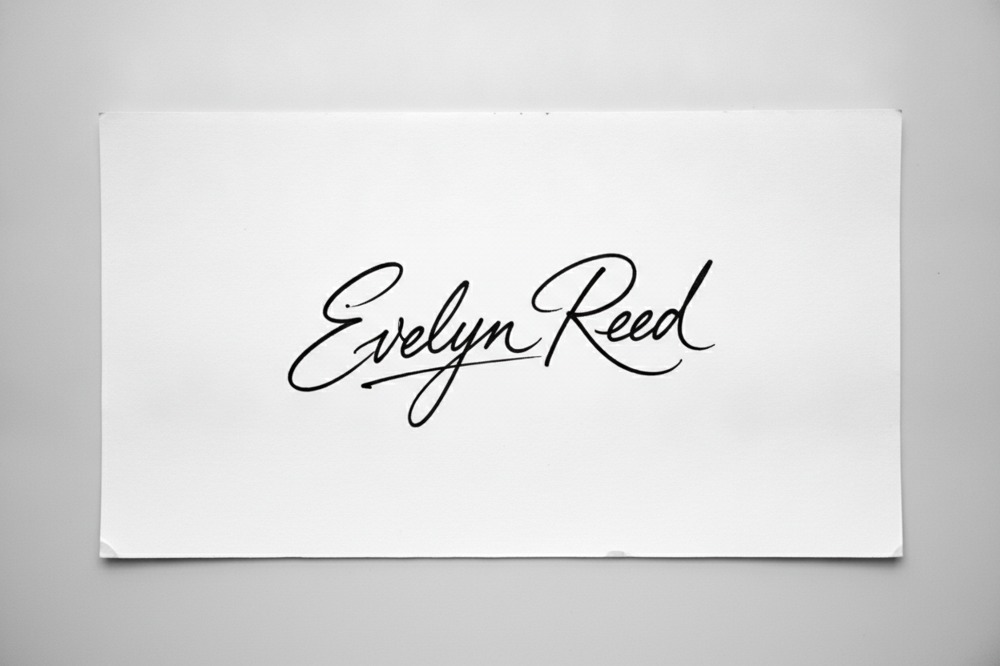
Start by laying out everything you’ve got and reading it as shapes, not words. The best source is usually the one where the writing looks most like them, not the tidiest. A birthday card signed in a rush. The way they always looped the tail on a y. A recipe card with a splash mark on it. Those quirks are the whole point.
A few practical things make one piece easier to work with than another. Blue or black biro on plain paper traces cleaner than pencil, which fades and smudges. Writing on lined paper is fine, I work around the lines. Writing over a busy background, like across a printed greetings-card message, takes a bit more care to separate out but it’s doable. If the words you want are spread across two different notes, I can lift a word from one and a word from another and set them together so it still reads as their hand.
Short and meaningful beats long and cramped. “Love you always” or a single name in their signature holds up far better as a tattoo than a whole paragraph shrunk down. If you’re weighing up a signature specifically, the signature memorial tattoo ideas page walks through what works. And if you’re still gathering the wider picture on all of this, the handwriting ashes tattoos guide covers the ground around it.
How Do You Get The Handwriting Off The Paper And Ready?
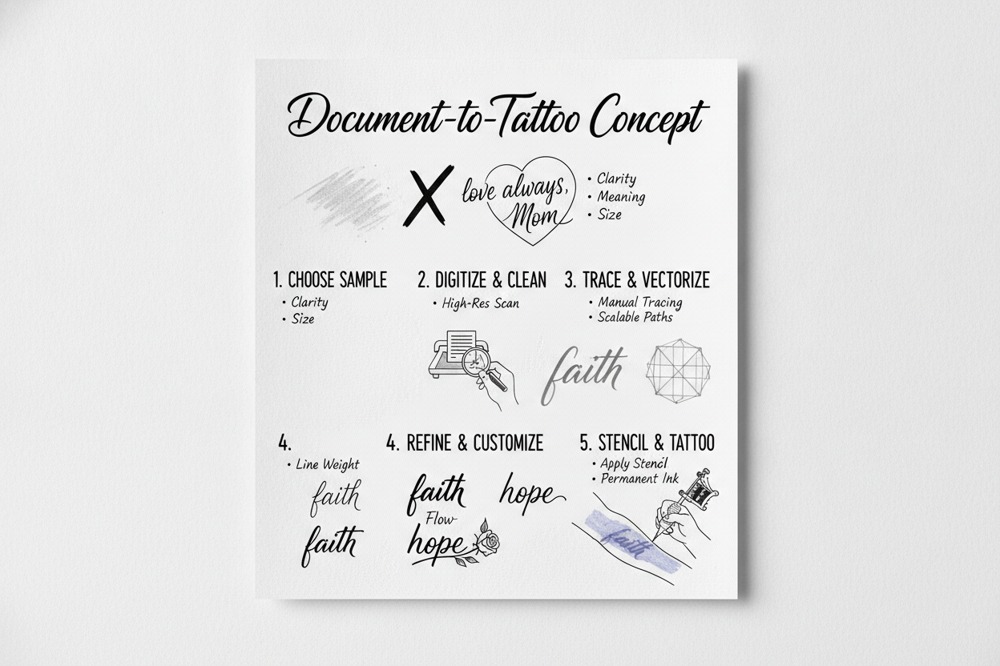
You need a clean, flat, straight-on capture of the writing. A flatbed scanner is best if you can borrow one, set to 600 dpi or higher, because it lights the page evenly and keeps the lines crisp. No scanner? A phone photo works well as long as you do it right. Lay the note flat on a table near a window, hold the phone directly above it so you’re not shooting at an angle and make sure your own shadow isn’t falling across the paper. Angle and shadow are the two things that warp the letters and lose detail.
Send me the original file, not a screenshot of a screenshot or a photo of your laptop showing the note. Every time an image gets re-photographed it loses sharpness and with handwriting that sharpness is exactly what I’m trying to keep. If the paper is fragile or precious, don’t post it, a good scan or photo is all I need and the actual note stays safe with you.
Once I’ve got a clean capture, the writing gets tattoo from a loved ones handwriting treatment, cleaned up so any paper texture, folds or coffee rings drop away and only the ink strokes remain.
Can The Tattoo Match The Handwriting Exactly?
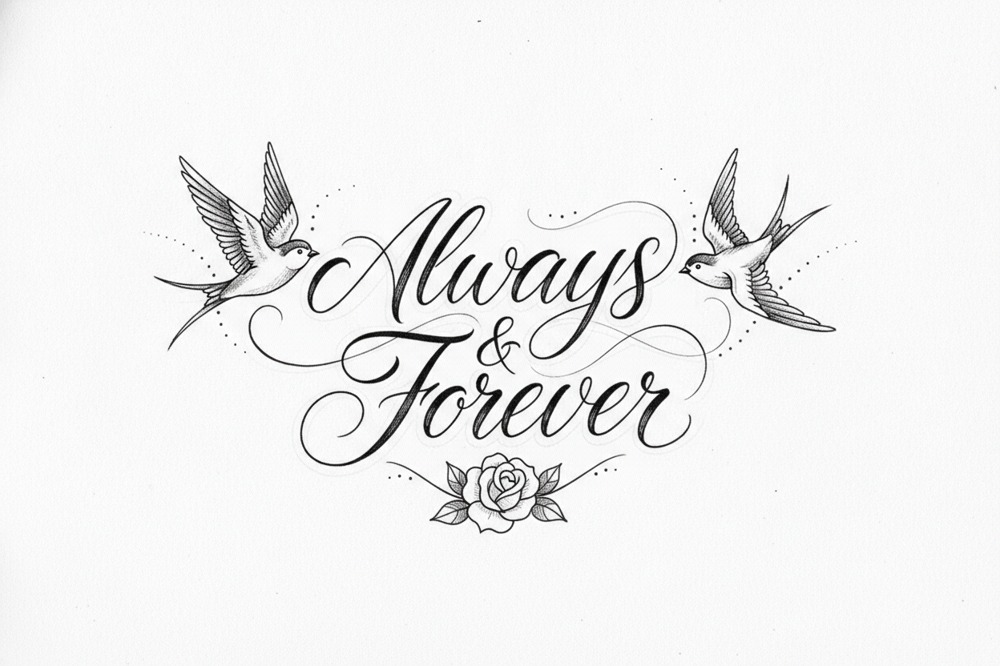
Yes and this is the part people worry about most. It’s not typed out in a handwriting-style font and it’s not redrawn freehand from memory. The actual strokes are traced from your scan, line for line, so the finished stencil follows their real pen path. Where they pressed hard and the line went thick, it stays thick. Where the pen lifted and the letter thinned out, it thins. The little gaps and the imperfect join between two letters are kept, because those are the tells that make it unmistakably theirs.
What I will do is tidy without changing character. A stray fleck of ink that was just the pen catching the paper can come out. A word can be nudged so the spacing reads well on a curved bit of skin. But the shapes themselves aren’t smoothed or corrected. A tattoo needs a fraction more breathing room between fine lines than a pen leaves on paper, otherwise very close strokes can blur together as it heals, so occasionally I’ll open a tight gap by a hair. You’ll see any adjustment like that on the stencil before a needle touches you and nothing gets changed without you seeing it.
What If The Writing Is Faint, Shaky Or Only A Fragment?
This comes up a lot and it’s rarely a dealbreaker. Faint pencil or writing that’s gone brown with age can usually be rescued from a high-resolution scan, because the strokes are still physically there even when they’re hard to see by eye. Shaky writing from someone who was elderly or unwell is not a problem to fix, it’s the thing you want kept. That tremor is them near the end and smoothing it away would take out the very reason you chose that note.
A torn or partial piece can still work. If the tail of a word is missing, I can follow the direction the pen was clearly heading and rebuild just that fragment in keeping with the rest of their hand, always shown to you first. If a single letter is genuinely lost and you need it, sometimes I can borrow that same letter from elsewhere in their writing so it’s still their version of it, not mine. What I won’t do is invent whole words in a style that only approximates theirs and pass it off as authentic. Deciding where a design sits on the body matters here too and the handwriting tattoo placement ideas page is worth a look for how size and spot affect faint or fine writing.
How Small Or Large Should The Handwriting Be?
Size is where a lot of handwriting tattoos are quietly won or lost. Real handwriting has thin, fine strokes and if you shrink it too far those hairlines can’t hold as separate lines in skin, they spread and merge over the years until a delicate word turns into a smudge. So there’s a floor. A short signature usually wants to be at least a few centimetres wide to stay legible for the long run. Longer phrases need proportionally more room, or the letters get too fine to survive.
Where it goes changes the answer. Skin that stretches and creases, like the inside of a wrist or the side of a finger, is harder on fine lettering over time than a flatter, more stable area such as the forearm or upper arm. I’ll be honest with you at the design stage if a note you love is a touch too intricate for the small spot you had in mind and we’ll either bump the size up a little or pick a placement that’ll keep it sharp. Better to have that conversation before, than to watch a fine word blur years later.
How Do The Ashes Get Blended Into The Handwriting Tattoo?
If you want their handwriting done in their own ashes, the writing side is exactly as above and the ashes come in on the day. The ashes are first matched to the right particle size, cleaned, sterilised to clinical standards and cleared of contaminants, then blended into a bespoke, particle-matched, high-quality tattoo ink that I prepare for this. That’s not off-the-shelf ink with something stirred in, it’s a proper memorial ink. Once it’s in your skin it heals and feels no different to any ordinary tattoo. If you want the detail on that side of it, adding ashes into tattoo ink goes further into how it’s done.
On the amount, you’ve got two easy options and neither means handing over everything. You can bring the whole container along and I’ll take out what’s needed myself, which suits most people who’d rather not touch the ashes at all. Or, if you’d prefer, measure out a small amount at home, a teaspoon’s worth and just bring that. Only a small amount is used either way and the rest goes home with you the same day.
How much of this you watch is entirely your call. The ashes stay in view the whole time, nothing is taken off to a back room and I’ll talk you through each step only as much as you want me to. Some people want to see every part of it. Others would rather look away while I measure and blend and then turn back for the tattoo itself. Both are completely normal and you stay in control of how involved you are.
FAQ
Can You Turn A Photo Of Handwriting Into A Tattoo, Or Do I Need The Original Note?
A clear photo is enough, you don’t have to part with the original. Lay the note flat, shoot straight down over it in good daylight, avoid your shadow falling across it and send me that image file rather than a screenshot. A flatbed scan at 600 dpi or more is even better if you can manage one, but a careful photo works and the real note stays safely with you.
Will The Tattoo Look Exactly Like Their Handwriting Or Just Similar?
Exactly like it. The strokes are traced from your scan, following their real pen path rather than a lookalike font, so the thick and thin bits, the loops and the imperfect joins all carry through. I only tidy stray specks or open a very tight gap so fine lines don’t blur as they heal and you see any adjustment on the stencil before we start.
How Small Can A Handwriting Tattoo Be Before It Stops Working?
Handwriting has fine strokes, so shrink it too far and those lines spread and merge over the years. A short signature usually wants to be at least a few centimetres wide to stay crisp long term and longer phrases need more room again. Placement matters too, flatter and more stable skin holds fine lettering better than areas that stretch and crease.
Can You Fix Shaky Or Faded Handwriting Before Turning It Into A Tattoo?
Faded writing can usually be recovered from a high-resolution scan because the strokes are still physically on the paper. Shaky writing I’d leave as it is, not fix, the tremor is part of what makes it theirs and smoothing it out would take away the reason you chose that note. Genuinely missing fragments I can rebuild in keeping with their hand, always shown to you first.
Do I Have To Bring The Ashes On The Same Day As The Handwriting Tattoo?
Yes, ashes come on the day, not posted ahead. Bring the whole container and I’ll take out the small amount needed myself, or measure roughly a teaspoon’s worth at home and bring just that. Only a little is used and the rest goes back home with you. It all stays in view and you choose how much of it you want to watch.