
Cat Paw Print vs Dog Paw Print Tattoo Ideas
Key Takeaways
- A dog paw print tattoo reads wide and chunky, with a large heel pad, four separated oval toes and often small triangular claw marks above each toe.
- A cat paw print tattoo is rounder and tighter, with a three lobed heel pad, four neat toe beans and no claw marks at all, because a cat’s claws retract.
- Claw marks are the fastest way to tell the two apart in ink, and leaving them out of a large dog print can make it read as a bear or a generic pad.
- Cat prints hold together at very small sizes, down to around the size of a five pence piece, which suits a wrist, finger or behind the ear.
- Dog prints blur when shrunk too far, so Bubblegum Ink simplifies a small dog print into a clean silhouette rather than keeping the claw and toe detail.
- A dog print and a cat print sit well together in one tattoo precisely because the shapes differ, so neither is mistaken for the other at a glance.
- Anyone bringing ashes from two pets should keep them in separate labelled containers, so each print carries the right animal.
- Ashes make no difference to how a print looks or heals, because they are prepared into the pigment itself rather than sitting on the surface as grit.
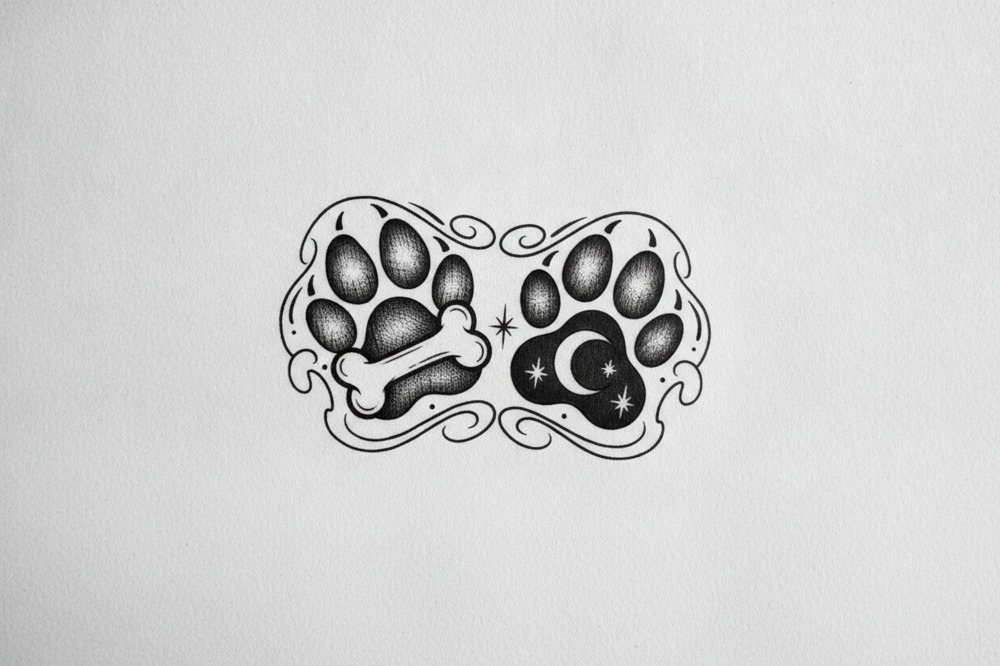
A dog paw print tattoo reads as bigger and more spread out, with a large heel pad and four clearly separated toes that sometimes show claw marks. A cat paw print is rounder, more compact and softer, with three lobes on the heel pad, four neat toe beans and no claws showing, because a cat’s claws retract. That single difference, claws or no claws, is the fastest way anyone glances at the ink and knows which animal it was. Everything else comes down to shape: dogs go wide, cats stay tucked and round.
That matters more than people expect once it’s on skin, as a design that works for a Labrador can look off for a cat and the other way round. So it’s worth knowing what you’re asking for before you pick a spot on your arm.
What’s The Difference Between A Dog And Cat Paw Print In Ink?
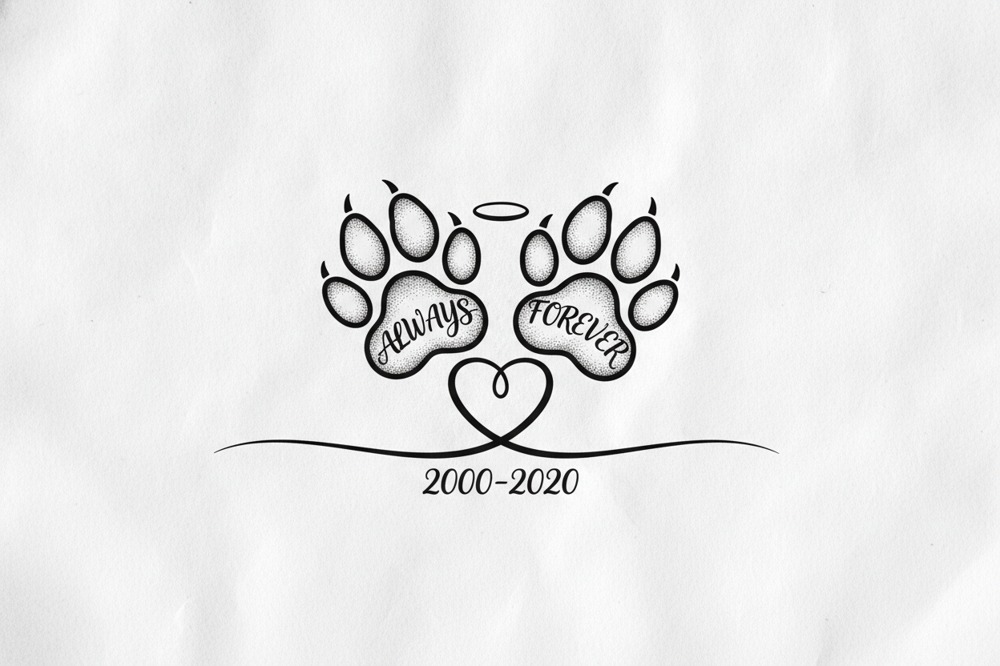
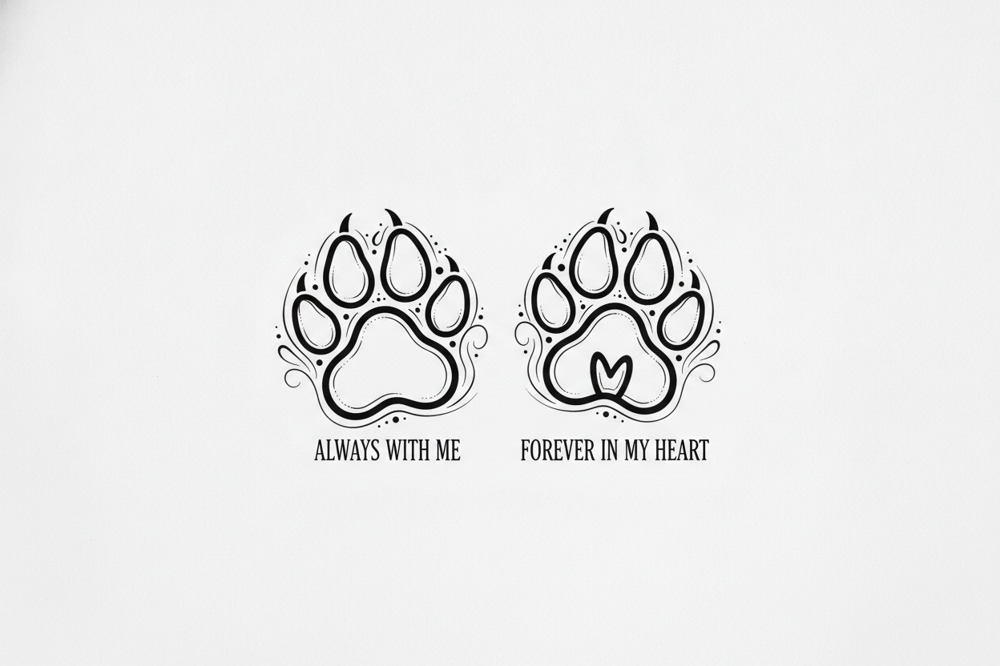
Hold the two side by side and the dog print is the chunkier one. The main pad sits large at the back, the toe pads are oval and set apart and there’s often a bit of a gap between the pad and the toes. Many dog prints carry small triangular claw marks above each toe. If you want your dog’s print to look unmistakably like a dog, keeping those claw marks in is the trick. Leave them out and a big print can start to read as a bear or a generic pad.
A cat’s print is tidier. The heel pad has that three-lobed base, the four toe beans sit close and slightly forward and there are no claw marks at all. The whole thing is rounder and smaller in proportion. In tattoo terms this means a cat print holds together beautifully at a small size, while a dog print wants a touch more room to keep its shape clear.
There’s a size point too. A Great Dane’s real paw is enormous next to a cat’s, but on skin you’ll usually scale both to whatever suits the placement. What changes is the level of detail each can carry. More on that below.
Which Paw Print Holds Detail Better When It’s Small?
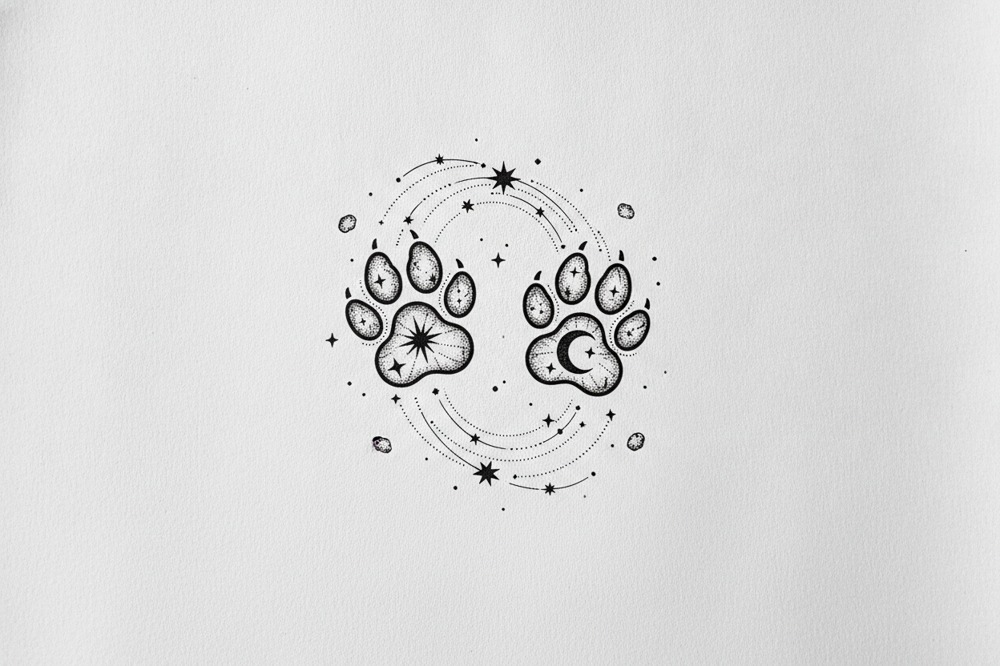
Cat prints win at tiny sizes. That compact, rounded shape stays legible even when it’s the size of a five-pence piece, which is why so many cat owners go for something delicate on a wrist or behind the ear. The four beans and the little three-lobed pad don’t need much room to be recognisable.
Dog prints can go small too, but the spread-out toes and any claw detail start to blur together if you shrink them too far. If you love the idea of something dainty for a big dog, I’d usually simplify: drop the claws, soften the gaps and treat it more as a clean silhouette than a detailed print. That keeps it readable. If you want the detail kept in, give it a little more space. If you’re weighing up how tiny is too tiny, the small paw print memorial tattoo ideas worth looking through show where that line usually sits for each.
Ashes change nothing here, by the way. When your pet’s ashes are prepared and blended into a bespoke, particle-matched, high-quality tattoo ink, the finished print looks and heals like any other tattoo. The ashes are in the pigment, not sat on top as grit, so a small cat print with ashes is just as crisp as one without.
How Do You Combine A Dog And Cat Paw Print In One Tattoo?
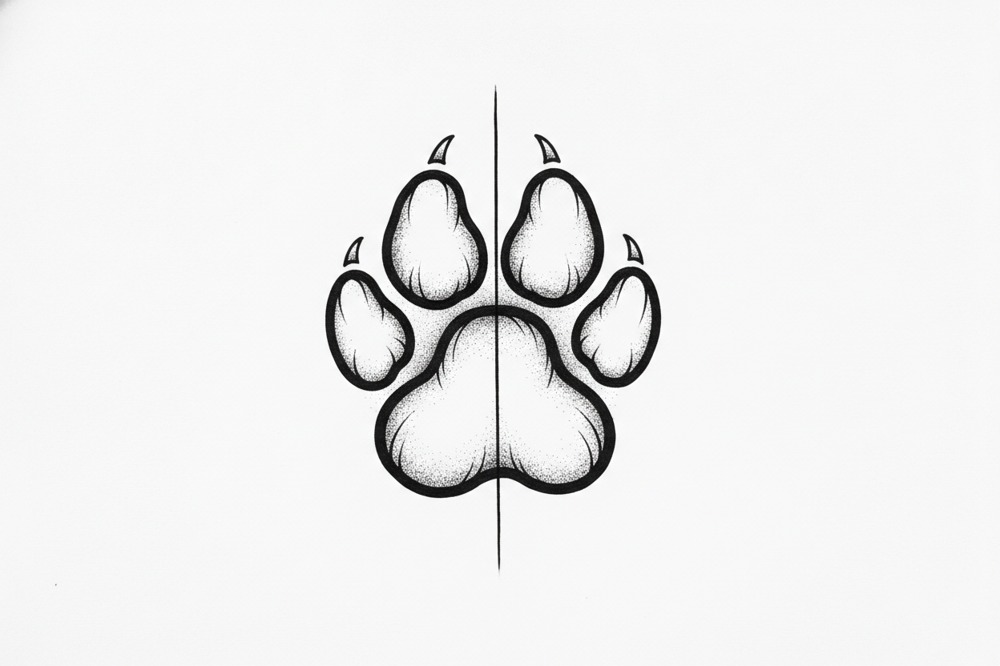
This comes up a lot from people who lost a dog and a cat and want them together. The good news is the two prints naturally sit well side by side precisely because they’re different shapes. The bigger, wider dog print and the smaller, round cat print read as two distinct animals at a glance, so nobody mistakes one for the other.
A few ways I see it done. Two prints walking in a line, dog first or the one you lost first, is simple and reads clearly. Prints of different sizes stacked or overlapping can look like they’re padding along together. Some people set the dog print and cat print inside a heart outline, or trail them off a sprig of the pet’s favourite flower. If names matter to you, splitting the ashes so each print carries a bit of its own animal is a lovely touch and adding the names underneath keeps them separate and clear. The paw print tattoos with names approach works especially well here because it removes any doubt about which print is which.
One practical note. If you’re bringing ashes from both pets, keep them apart until we’re ready, so each print carries the right animal. A small labelled tub for each does the job.
Where Does Each Paw Print Sit Best On The Body?
Shape drives placement more than you’d think. A round cat print suits small, curved spots: the inside of a wrist, the ankle, behind the ear, the back of the neck or a finger. Its neat outline sits happily in tight spaces. A dog print, being wider, likes a flatter run of skin where it can spread without cramping: the forearm, the shoulder blade, the calf or the upper arm.
If you’re doing both together you want a spot that can take the pair without squashing them. A forearm or the outer calf gives two prints room to breathe. For a single cat, though, you can afford to tuck it somewhere small and personal. The full run of paw print tattoo placement ideas covers how each shape behaves as skin moves and stretches, which is worth a read before you settle on a spot, since a print on a knuckle ages very differently to one on a forearm.
Can You Style A Dog Or Cat Paw Print Beyond A Plain Outline?
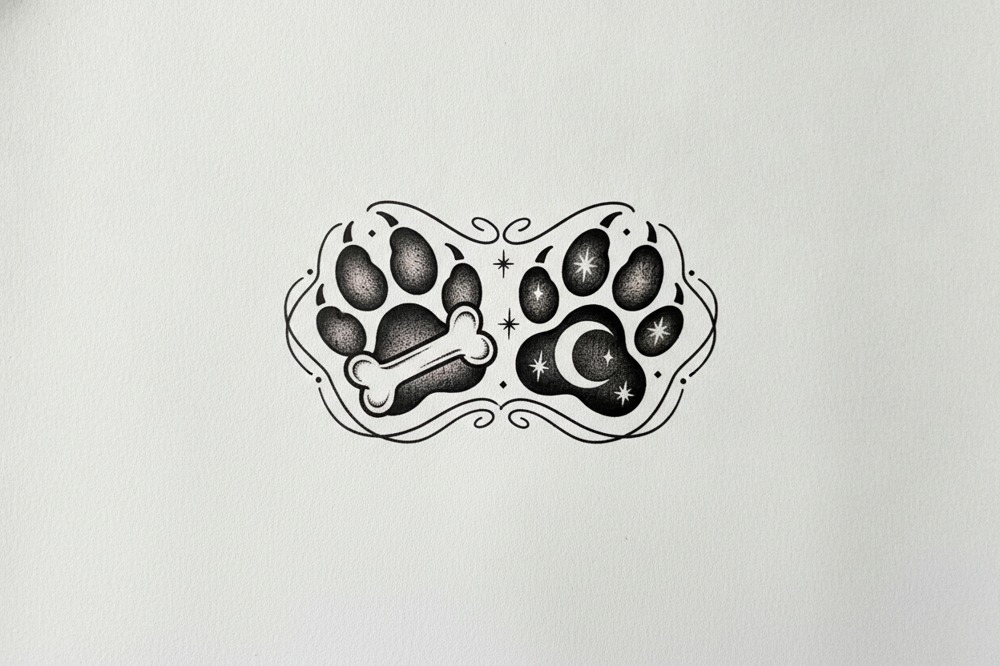
Yes and the style you pick reads differently depending on the animal. A solid black dog print looks bold and grounded, which suits a lot of dogs. A cat print in soft grey wash or fine line feels lighter and matches the softer nature of the shape. Watercolour splashes behind a print, the pet’s fur colour bleeding out from the pad, work for both but sit especially well on the rounder cat shape.
You can weave the paw into other elements too. A cat print as the dot of a heart, a dog print pressed into a small pawprint trail leading to a name, a print worked into an infinity loop or a birth-month flower. If you want to see how a paw print sits within a bigger memorial piece rather than standing alone, the memorial tattoo design ideas collection shows plenty of ways a single print becomes part of a larger tribute. For the full picture on prints specifically, the the paw print ashes tattoos guide pulls the whole topic together in one place.
How Do The Ashes Go In, And Do They Stay In View?
Nothing gets taken to a back room. Nothing gets posted off. Nothing gets handled somewhere you can’t see. Your pet’s ashes stay in front of you the whole time, from the moment we open them to the moment they go into the ink. That’s the part people worry about most and it’s the part I’m most careful with.
Bring the ashes on the day, not before. Two ways work. You can bring the whole container along and I’ll lift out what’s needed myself, which suits anyone who’d rather not touch them at all. Or measure out a small amount at home, roughly a teaspoon’s worth, into a small sealed pot, a clean film tub or a little jar with a spoon from home does the job and just bring that. Either way only a small amount is used and the rest goes home with you. If handling them is too much, I’ll do it gently while you watch, or while you look away if you’d rather.
The ashes themselves are matched to the right particle size, cleaned, sterilised to clinical standards and cleared of contaminants before they go anywhere near the skin. Once they’re in the ink and in the skin, the tattoo behaves like any other, same healing, same care.
I’ve specialised in cremation ashes tattoos for 20 + years, within a tattooing career of 30 + and the studio in Sandbach is private and appointment-only, so it’s just you, your pet’s ashes and me. No shared floor, no walk-in bustle.
FAQ
How Can You Tell A Dog Paw Print From A Cat Paw Print In A Tattoo?
Claws and shape. A dog print is wider with a large heel pad, separated oval toes and often small claw marks above each toe. A cat print is rounder and more compact, with a three-lobed pad, neat toe beans and no claws, because a cat’s claws retract. If someone wants their dog to read clearly as a dog, keeping the claw marks in is the giveaway.
Does A Cat Paw Print Tattoo Work Better Small Than A Dog One?
Generally yes. The rounded, compact cat shape stays recognisable at a very small size, so it suits a wrist, finger or behind the ear. A dog print can go small too, but the spread toes and claw detail blur if you shrink it too far, so for a tiny dog print I’d usually simplify it into a cleaner silhouette.
Can I Get My Dog And Cat Paw Prints In The Same Tattoo?
Yes and they sit together well because the shapes differ. A wide dog print and a round cat print read as two separate animals at a glance. Setting them walking in a line, inside a heart or with names underneath keeps them clearly distinct. If you’re using ashes from both, keep each pet’s ashes separate so each print carries the right animal.
Do The Ashes Look Different In A Dog Print Versus A Cat Print?
No. Once the ashes are prepared and blended into the ink, they’re part of the pigment, so the finished print looks the same whether it’s a chunky dog print or a delicate cat one. A small cat print with ashes is just as crisp as a larger dog print, because the ashes aren’t sitting on the surface as grit.
Which Placement Suits A Cat Paw Print And Which Suits A Dog Paw Print?
The round cat shape suits small curved spots like the inner wrist, ankle, finger or behind the ear. The wider dog print prefers a flatter stretch of skin such as the forearm, calf or shoulder blade, where it can spread without cramping. For both together, a forearm or outer calf gives the pair room to breathe.
Written by the founder of Bubblegum Ink ®, with around 20 years specialising in cremation ashes tattoos inside a tattooing career of around 30. Read more about me.
Ready To Take The Next Step?
If you’ve an idea forming, the next move is simple: send me a quick enquiry with the pet or pets you want to remember and a rough idea of the print or prints you’re picturing. From there we can book a consultation to talk through shape, size, placement and how you’d like the ashes handled on the day. Call 01270 385001 or email info@bubblegumink.com and we’ll take it from there, at your pace.