
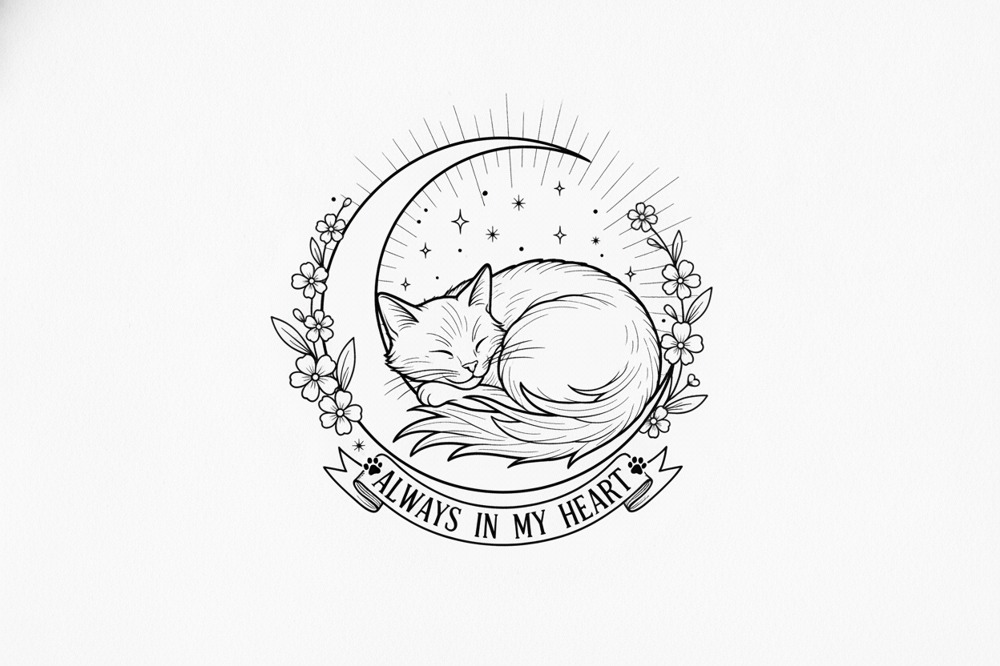
Cat Memorial Tattoo Placement Ideas For You To Review
Key Takeaways
- The inner forearm is the most common placement for a cat memorial tattoo, because a curled or stretched cat reads well along it and the wearer sees it simply by turning their wrist.
- Cats fold rather than stand square, so the best placements are ones that give a curled pose, a looped tail or a turned head somewhere to sit without distortion.
- A cat’s paw pad is finer than a dog’s, so a paw print tattoo needs flatter, less mobile skin such as behind the ear, the inner wrist or the ankle to hold its detail over the years.
- A cat portrait needs the forearm, outer upper arm, thigh or calf, as a tabby’s stripes or a tortie’s patchwork will muddy within a few years if shrunk onto a wrist.
- The inner bicep, ribs, upper thigh, shoulder blade and chest all sit under normal clothing for anyone who wants a cat memorial kept private.
- Adding a cat’s ashes rules out no placement, because prepared ashes ink heals and feels exactly like ordinary tattoo ink.
- Bubblegum Ink asks clients to bring the ashes in a small sealed container and uses only a teaspoon’s worth, with everything else going home with them.
- Paul Cutler has specialised in cremation ashes tattoos for 20+ years, within a tattooing career of over 30.
Most people asking this aren’t really asking where a tattoo fits best. They’re asking where they want their cat to sit for the rest of their life. Somewhere they’ll see it and feel a small lift, not a jolt. The forearm, the inner wrist and the upper arm are the spots people choose most for a cat, because a cat’s shape (curled, mid-stretch, sitting neat with the tail wrapped round) suits a long or rounded area of skin. A small paw print goes well behind the ear, on the inner wrist or the ankle. A single whisker line or a tiny silhouette can tuck almost anywhere. The right spot depends on your cat’s design, how big it needs to be to keep the detail and whether you want it on show or kept for you.
Where On The Body Suits A Cat Memorial Tattoo Best?
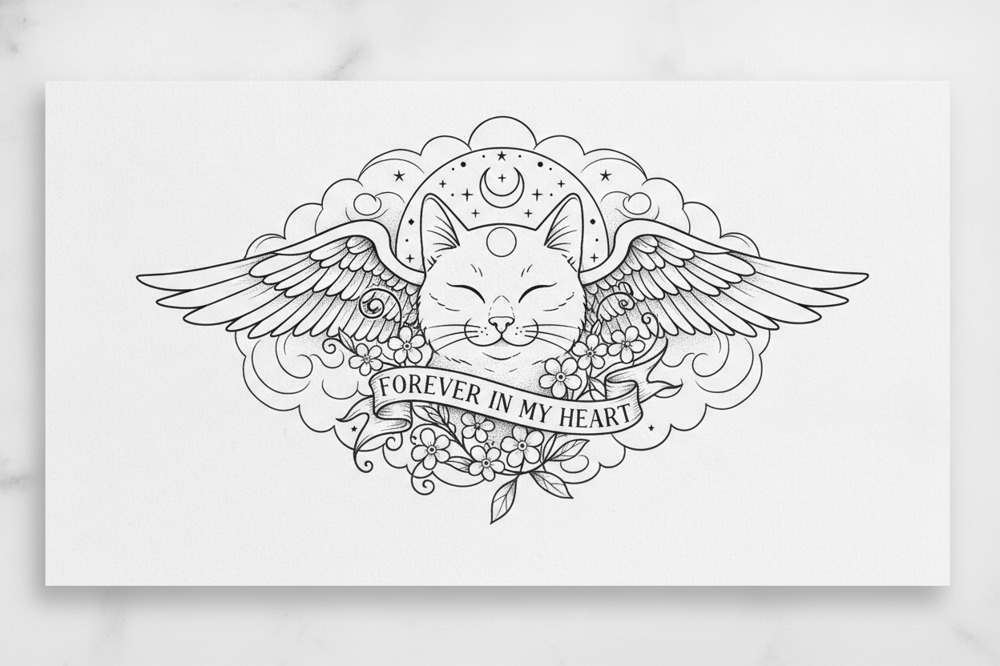
Cats fold. That’s the thing that makes them different to plan for. A dog usually stands square, a name sits in a straight line, but a cat curls into a ball, loops its tail, tucks its paws under and turns its head to look back over its shoulder. So the best placements are the ones that give that curve somewhere to live.
The inner forearm is my most common spot for a cat. You get a long, flat-ish run of skin and a cat lying stretched out or curled reads beautifully along it. You also get to see it yourself just by turning your wrist, which matters when the whole point is quiet company.
The outer upper arm and shoulder take a sitting cat well, tail curled round the front paws, because the rounded muscle lets the pose sit without distortion. The calf works the same way for a fuller design. If your cat had a signature pose (the loaf, the belly-up flop, the meatloaf on the windowsill) tell me and we’ll pick the area of the body that lets that pose breathe rather than squashing it into a spot that fights it.
Where Should A Cat Paw Print Or Small Cat Tattoo Go?
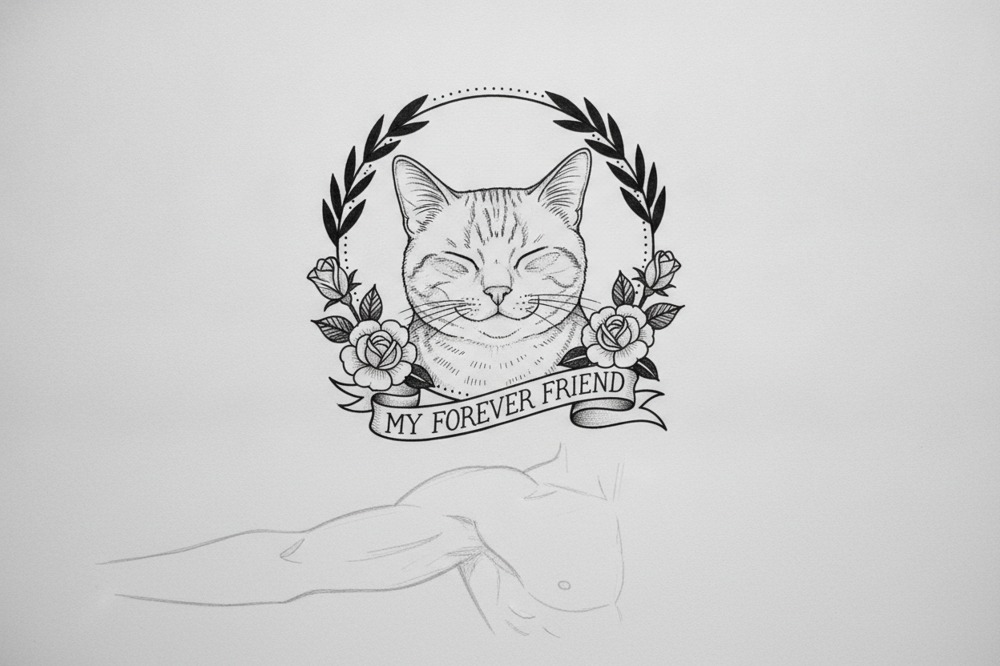
A paw print is a different job to a full cat. It’s small, it’s simple and it can go places a whole cat can’t. Behind the ear is popular for a single little paw, so is the inner wrist, the side of a finger, the collarbone and the ankle. Because a cat’s paw pad is delicate (four toe beans and the main pad, much finer than a dog’s) it wants a spot where fine lines heal cleanly. Flatter, less mobile skin holds that fine detail better over the years than a knuckle or the edge of a hand that creases all day.
If you want more than a print, a tiny silhouette of your cat sitting, or just the curve of a tail, is one of the smallest meaningful tattoos I do. Those tuck behind the ear, on the wrist bone or on the back of the arm. Keep them small and simple and they age well. Cram too much whisker and fur detail into a fingertip-sized piece and it’ll blur as it settles, so with the very small ones I’ll steer you toward shape over detail. For more on how these small pieces come together there’s plenty in the cat memorial tattoo ideas and inspiration I can show you.
Where Does A Cat Portrait Work Without Losing The Detail?
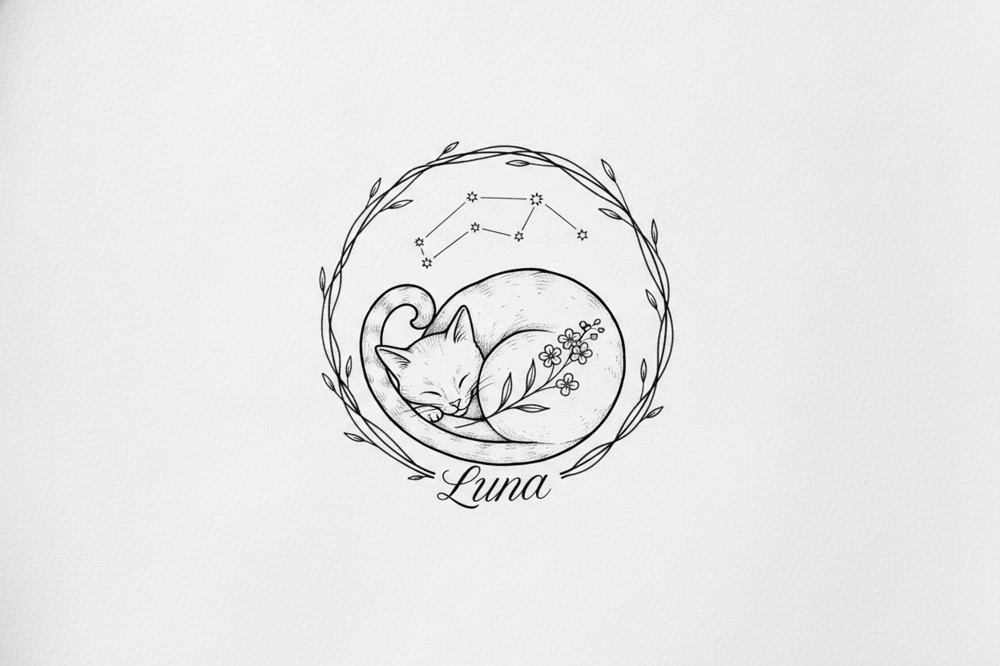
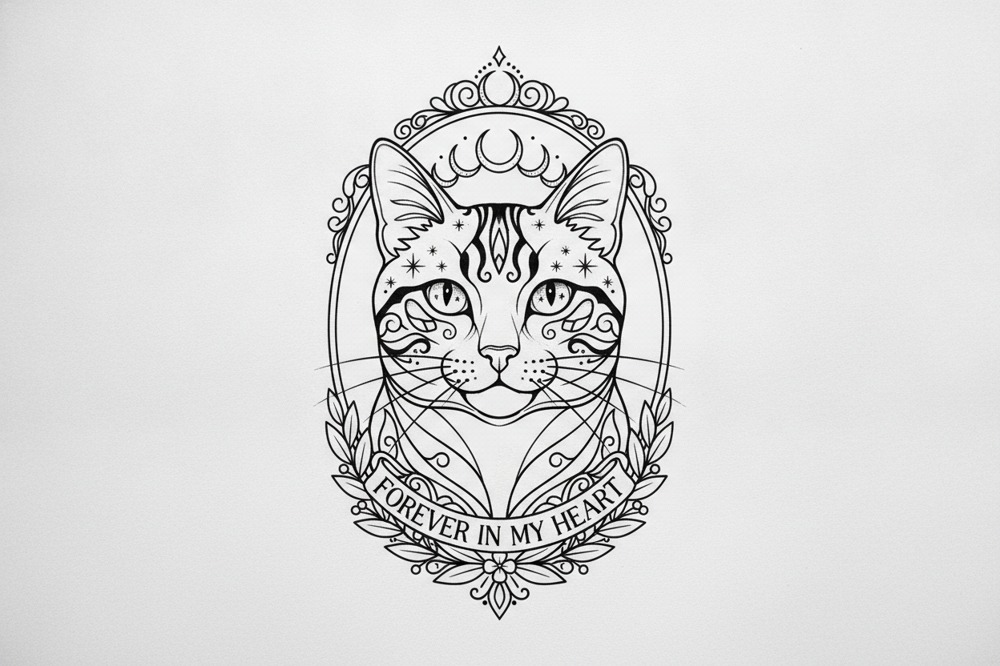
A face is where placement and size stop being about looks and start being about whether it’ll still look like your cat in ten years. A portrait needs room. Eyes, the set of the ears, the markings that made your cat yours (the white bib, the notched ear, the odd-coloured eyes) all need enough space to read and to stay reading as the ink settles into the skin over time.
For that reason I’ll usually place a portrait on the forearm, the outer upper arm, the thigh or the calf and I’ll be honest with you about the smallest it can go and still hold. A tabby’s stripes and a tortie’s patchwork carry a lot of information and shrinking that onto a wrist tends to muddy it within a few years. A flat-faced cat, a Persian or a British Shorthair, needs the width for the face; a lean, long-nosed cat can go a touch narrower. If a portrait is what you’re after, the cat portrait ashes tattoo ideas give a feel for the scale these usually need and we’ll settle placement around that rather than the other way round.
Do You Want It On Show Or Kept For Yourself?
This is the question that quietly decides more placements than design does. Grief is private for a lot of people and a cat memorial isn’t something everyone wants to explain to a stranger in a shop queue.
If you want it hidden, the ribs, the inner upper arm, the upper thigh, the shoulder blade and the chest all sit under normal clothes and only come out when you choose. The inner bicep is a favourite for a cat kept private, you turn your arm and there it is, no one else the wiser.
If you want it where you’ll catch it through the day, the inner forearm and the wrist win, because your own eyes land there constantly. The back of the hand and the ankle are visible to you and to others. There’s no right answer, only yours. Some people want the whole world to know about the cat that slept on their chest for fifteen years and some want a secret only they carry. Both are right. Placement is just how you make that choice physical and it sits alongside the wider memorial tattoo design ideas worth thinking through before you commit to a spot.
How Does Placement Change When The Ashes Go In?
When your cat’s ashes are part of the tattoo, placement carries a little more weight, but the practical side is simpler than people fear. The prepared ashes are matched to the right particle size, cleaned, sterilised to clinical standards and cleared of contaminants, then blended into a bespoke, particle-matched, high-quality tattoo ink. Once it’s in your skin it heals and feels exactly like any other tattoo, so no placement is off-limits for reasons of the ashes themselves. Choose the spot for your heart and your lifestyle, same as you would any memorial.
Here’s the part people worry about but rarely ask out loud: what happens to the ashes they don’t use. Nothing of your cat leaves your sight. The ashes stay in view on the bench the whole time, never carried off to a back room and only a small amount goes into the ink (roughly a teaspoon’s worth). Everything else goes home with you. If handling them yourself feels like too much, I’ll take out what’s needed gently while you watch, or look away if you’d rather, whichever gets you through the day easier.
On the day itself, one practical tip saves fuss: bring the ashes in a small sealed container, a clean screw-top jar or tub does the job. You can either bring the whole container and I’ll measure out what I need myself, which suits anyone who’d rather not touch them, or spoon a small amount out at home with a clean spoon and just bring that little bit. Either way the rest stays yours and goes back home with you.
I’ve specialised in cremation ashes tattoos for 20 + years and that sits inside a tattooing career of more than 30, so the placement conversation is one I’ve had a great many times. The studio is private and appointment-only, one to one, no shared floor and no one else watching. You can read the fuller picture of how ashes work in the cat ashes tattoos guide, which covers the ground beyond placement.
FAQ
What Is The Best Placement For A First Cat Memorial Tattoo?
The inner forearm is where I steer most first-timers with a cat. The pain is moderate rather than sharp, you can see the tattoo yourself without a mirror and the area is flat enough to hold a curled cat or a small portrait without distorting as it heals. It’s easy to keep clean and cover during the settling weeks too.
Where Can I Put A Cat Memorial Tattoo So It Stays Hidden At Work?
The inner upper arm, the ribs, the upper thigh, the shoulder blade and the chest all sit under normal work clothes. The inner bicep is the one people pick most for a cat they want private, since a short sleeve covers it fully and you only see it when you turn your arm.
How Big Does A Cat Portrait Need To Be For The Placement To Work?
Big enough for the face to read and keep reading over the years. On a forearm, upper arm, thigh or calf there’s room for the eyes, ears and markings to hold. Shrunk down to a wrist a detailed tabby or tortie tends to blur within a few years, so I’ll always talk you through the smallest it can safely go before we fix the spot.
Does A Cat Paw Print Tattoo Work Behind The Ear?
Yes, behind the ear is one of the nicest spots for a single cat paw. Keep the print simple, because a cat’s paw is finer than a dog’s and heavy detail behind the ear can blur. A clean little print with the four toe beans and the main pad ages far better there than a busy design.
Can I Place A Cat Memorial Tattoo Near One For Another Pet?
You can and lots of people do. Matching the placements, both cats along the same forearm, or a pair sitting on the same shoulder, keeps them reading as a set. Tell me at the design stage and I’ll plan the spacing and scale so a second one can join later without the first feeling cramped.
Which Cat Placement Hurts The Least?
The outer upper arm, the outer forearm and the calf are among the gentler spots, plenty of flesh and no bone right under the skin. Ribs, the inner wrist, the ankle and behind the ear are more tender because the skin is thin over bone. For a first cat tattoo the upper arm gives you a comfortable spot with room for a proper design.