
Cat Portrait Ashes Tattoo Ideas And Guidance
Key Takeaways
- A cat portrait ashes tattoo carries a small amount of your cat’s prepared ashes inside the ink, so the finished piece is both a likeness of them and a part of them.
- The likeness lives in a handful of features: eye shape and pupil size, markings such as a white bib or a broken tabby M, ear shape, whiskers and muzzle length.
- A three quarter angle, with the head turned slightly, tends to read as the most alive, while the sleeping curl reads gentler than a direct stare.
- Paul Cutler advises against going too small on a realistic cat portrait, as fine detail blurs during healing and the likeness is the first thing to soften.
- Fine line and silhouette portraits hold up far better at small sizes than heavy realism, which is why a black cat works well as a solid silhouette.
- Bubblegum Ink matches the ashes to the right particle size, cleans, sterilises them to clinical standards and clears contaminants before blending them into bespoke ink prepared in the studio.
- Clients either bring the whole container and watch a small amount taken out, or bring around a teaspoon measured at home, with anything unused going back the same day.
- One sharp, well lit photograph taken at the cat’s eye level in natural light gives a truer portrait than several blurred ones.
Most people who come to me for a cat portrait bring one photo they can’t stop looking at. Usually it’s the cat asleep in a sunny spot, or that half-annoyed look over the shoulder. A cat portrait ashes tattoo takes that likeness and carries a small amount of your cat’s prepared ashes inside the ink, so the piece is both a picture of them and a part of them. The face is where I’d start. Get the eyes, the nose shape and the markings right and it reads as your cat straight away, not a generic tabby.
That’s the honest heart of it, as the photo does most of the work, the ashes make it personal and everything else is choices about style, size and where it sits on you.
What Makes A Cat Portrait Look Like Your Cat?
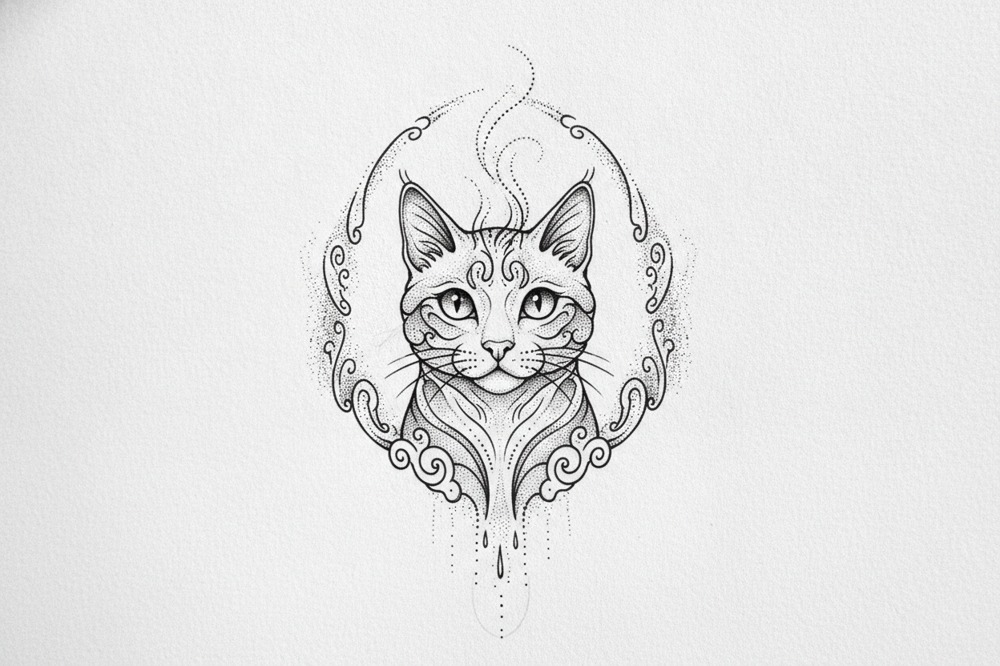
It’s rarely the whole cat. It’s the little identifying bits. A cat’s face has a handful of features that make it unmistakably them and if I nail those the portrait lands.
The eyes come first. Colour matters, but so does shape and the size of the pupil in your reference photo. A wide, round pupil reads soft and gentle. A narrow slit reads alert, a bit cheeky. Pick a photo where the eyes are doing what you remember them doing.
Then the markings. A white bib, a smudge of black under the nose, one ear tipped differently to the other, a broken tabby M on the forehead. These are the things that separate your cat from every other cat of that colour. Bring me a photo where those are visible and in focus. Ears carry a lot too. Folded ears, big radar-dish ears, a notch or a scar in one, whether they sat forward or flattened back when your cat was thinking. Whiskers and the muzzle shape finish it off. A blunt, round face versus a long, fine one changes everything about the likeness.
One clear, well-lit photo beats ten blurry ones. If your best shot is a bit soft, I can often work from it, but a sharp reference always gives the truer portrait.
Realistic, Line Or Watercolour: Which Cat Portrait Style Suits You?
Style changes the whole feel, so it’s worth thinking about before we design anything.
A realistic black and grey portrait leans into detail. Every strand of fur, the depth in the eyes, the soft shadow under the chin. This suits a cat with strong markings or striking eyes and it wears well as the years pass. If your cat was a tortie or a tabby with a lot going on in the coat, realism shows it off.
Colour realism does the same but brings in ginger warmth, green or amber eyes, the pink of a nose. Lovely for a cat whose colour was a big part of who they were.
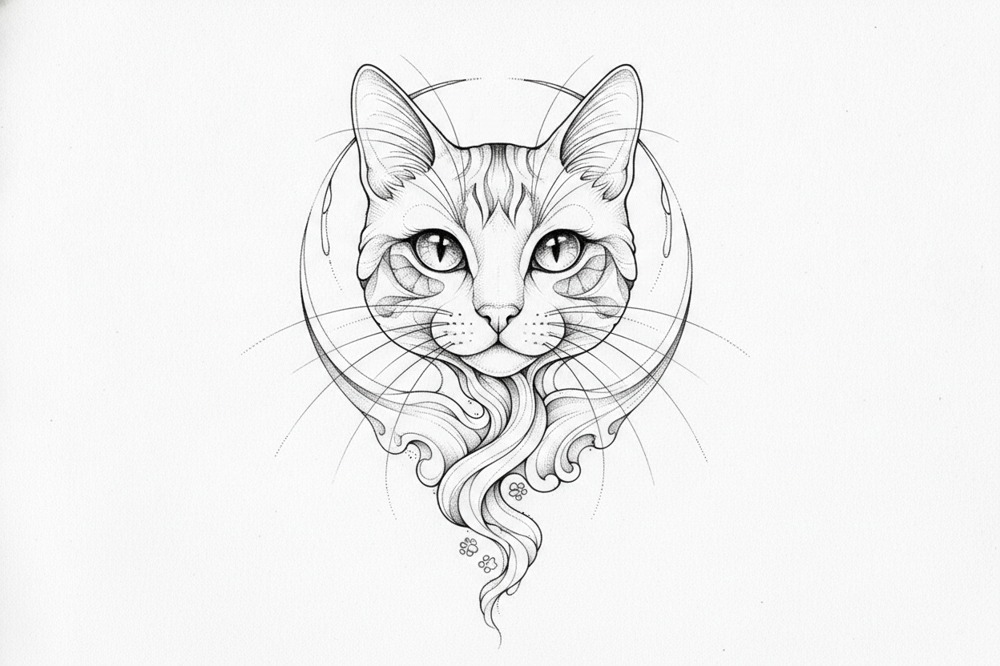
Fine line and single-needle work strips it back to the essential shapes. A delicate outline of the face, maybe just the eyes and the ear shape suggested. It’s quieter and more subtle, good if you want something small or discreet.
Watercolour splashes soft colour behind or around a line portrait, loose and painterly, which some people love for the gentleness of it. If that appeals, I can talk you through how it sits alongside your cat’s ashes and other approaches over on the memorial design ideas page.
A silhouette is the most pared-down option. Just the profile of the head and pricked ears, filled solid. It won’t capture individual markings, so it works better as a symbol than a true portrait, though it’s a strong choice for a black cat.
Full Face, Profile Or Sleeping: Which Cat Portrait Angle Works Best?
The angle you pick decides how much of your cat’s character comes through and honestly not every angle tattoos equally well.
A front-on face is the most direct. Both eyes, the full spread of markings, the little furrow of the brow. It’s the closest thing to your cat looking back at you and it’s what most people picture when they think portrait.
A three-quarter angle, where the head is turned slightly, tends to feel the most alive. You get the eyes and the shape of the muzzle and a sense of depth to the face. Cats rarely sat dead straight, so this often looks the most natural.
A profile suits a distinctive head shape, a long elegant nose or a proud pose. You lose one eye, but you gain a clean, graceful line.
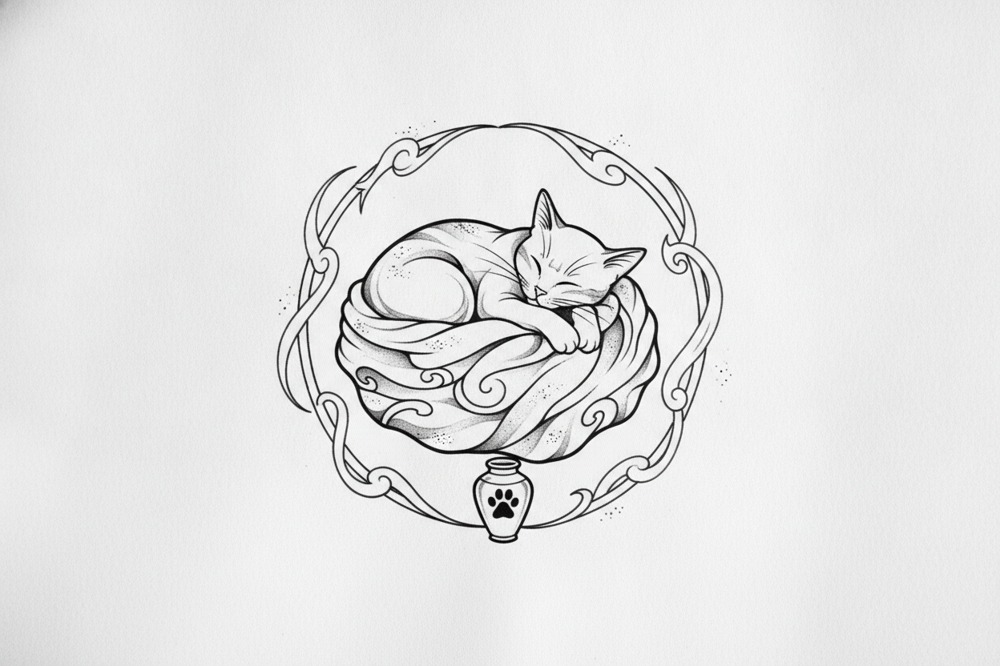
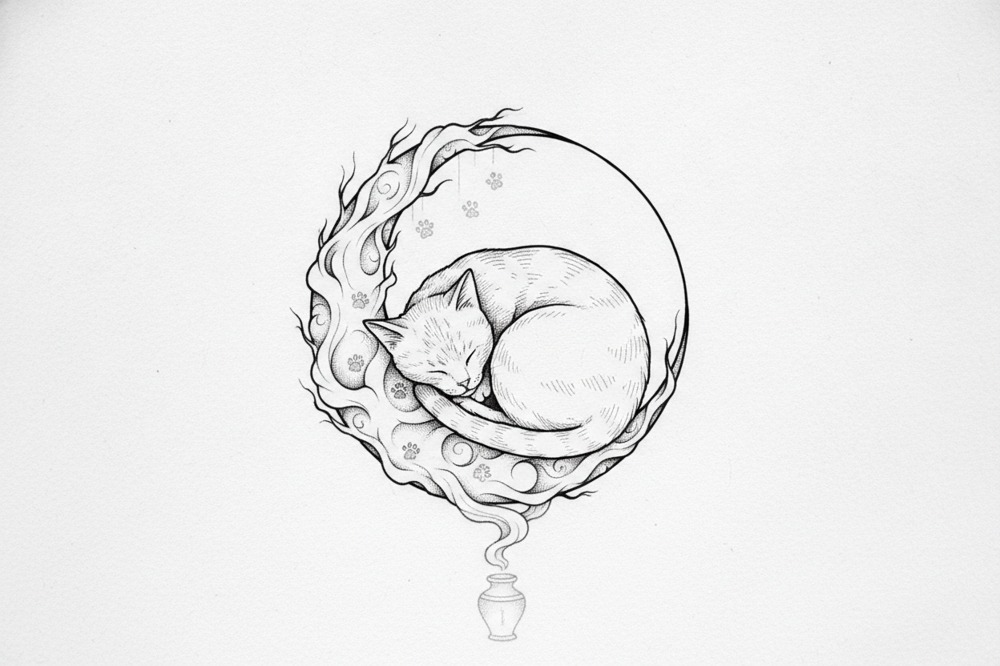
The sleeping curl is popular for a reason. A cat tucked into a ball, nose to tail, eyes shut. It’s peaceful and it captures a pose you probably saw a thousand times. It reads gentle rather than staring, which some people find easier to carry.
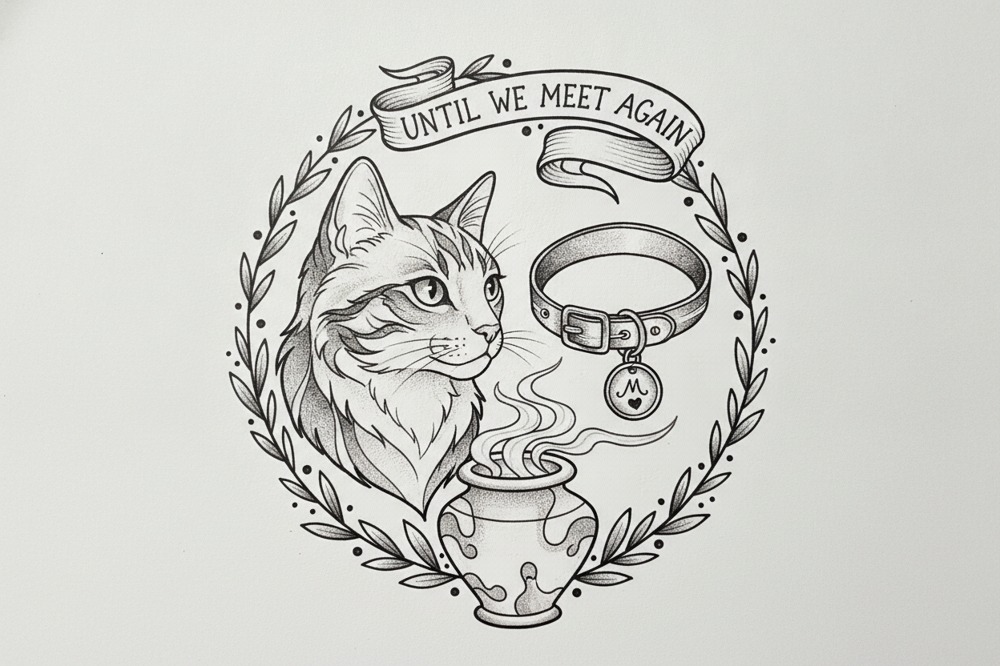
Whatever the angle, a portrait pairs nicely with a small detail alongside it. Their name in a simple script, the dates, a tiny paw print. If a paw feels like the right addition, there are more ideas on cat paw print ashes tattoo ideas.
Where Do Cat Portraits Sit Best On The Body?
Size and placement go together with portraits more than with most designs, because detail needs room.
The forearm is a favourite. It gives enough space for the eyes and markings to hold detail, it heals well and you can see it easily, which matters when the whole point is having them close. The upper arm and shoulder suit a slightly larger, more detailed piece and let you keep it private under a sleeve.
The inner arm and the ribs feel more personal and hidden, though ribs are a tender spot for finer work. The thigh and calf give plenty of room for a bigger, richer portrait if you want scale.
My honest steer: don’t go too small on a realistic portrait. Squeeze a detailed face into a couple of inches and the fine work blurs as it heals and your cat’s likeness is the first thing to go soft. If you want small, a fine line or silhouette approach holds up far better at that size than heavy realism does. A black cat in particular can work beautifully small as a solid silhouette and there’s more on that over on black cat memorial tattoo ideas.
How Are My Cat’s Ashes Kept Safe And In View During A Portrait?
When you arrive, the first thing you’ll see on the counter is a clean stainless tray and next to it whatever you’ve brought your cat’s ashes in, still sealed until we’re both ready. Nothing goes into a back room. It all happens right there in front of you, on the bench you’re sitting at.
Here’s how the ashes side works. You’ve got a simple either/or: bring the whole container and I’ll take out the small amount I need myself while you watch, or measure out a small amount at home, roughly a teaspoon’s worth and just bring that. Either way, whatever isn’t used goes home with you the same day. If handling the ashes feels like too much, I’ll do that part gently and you can look away for it, then look back when it’s done.
The ashes themselves are matched to the right particle size, cleaned, sterilised to clinical standards and cleared of contaminants before they go anywhere near a needle. Then they’re blended into a bespoke, particle-matched, high-quality tattoo ink that I prepare myself for this work. Once it’s in the skin it behaves like any ink, so the sitting feels like a normal tattoo and it heals like one. The rest goes home with you, so you’re never left worrying you handed over more than you meant to.
Specialising in ashes work for 20 + years, inside a tattooing career of over 30, (god that makes me feel old), means I’ve inked a lot of cat faces and I know where the likeness lives before the needle’s even out. That experience is really about getting your cat right the first time, because there’s no second attempt at this. If you want the fuller picture of how these sittings run, the cat ashes tattoos guide walks through it.
How Do I Get The Best Reference Photo For A Cat Portrait?
The portrait is only as good as what I’ve got to work from, so this bit is worth a few minutes.
Go for natural light near a window rather than flash, which flattens the eyes and washes out fur detail. Get level with your cat’s face instead of shooting down from above. A photo where the eyes are sharp and open, with the markings clearly visible, gives me the most to work with.
If all you have is one slightly imperfect photo, don’t panic. A cat that’s already passed means you’re working with whatever exists and I’m used to that. I can often combine a good angle from one shot with clearer markings from another, or gently sharpen a soft feature in the design stage. Send me what you’ve got and I’ll tell you honestly what will and won’t translate into skin before we commit to anything.
FAQ
How Many Photos Do You Need For A Cat Portrait Ashes Tattoo?
One good, sharp, well-lit photo is enough for a strong portrait. More helps, especially if different shots show the eyes and the markings clearly, because I can take the best of each. If you only have one imperfect photo of a cat who’s passed, send it over and I’ll tell you honestly what will translate into skin before we start.
Can You Do A Cat Portrait If My Cat Had Very Plain Markings?
Yes. A plain cat still has distinguishing features: eye colour and shape, muzzle length, ear shape, the way the fur sat. I focus the likeness on those. For a very plain coat, a realistic portrait that captures the eyes and expression usually reads more like your cat than a busier stylised piece would.
What’s The Smallest A Cat Portrait Ashes Tattoo Can Be?
It depends on style. A detailed realistic face needs room, roughly palm-sized or more, or the fine detail softens as it heals and the likeness goes with it. A fine line or silhouette portrait holds up much smaller. If you want something small, we’d lean toward a simpler style rather than squeezing heavy detail into a couple of inches.
Can I Add My Cat’s Name Or Dates To The Portrait?
Yes and it’s a common request. A name in simple script under or beside the face works well, as do dates or a small paw print. I’d keep the lettering restrained so it supports the portrait rather than competing with it. We plan the whole layout together before anything goes in.
Does A Cat Portrait Made With Ashes Look Any Different To A Normal Tattoo?
No, it looks like an ordinary portrait tattoo. The prepared ashes are blended into the ink and sit invisibly within the colour, so nobody can tell by looking. What you get is a proper portrait of your cat that also holds a small part of them, healing and ageing exactly as any tattoo does.
Can You Combine A Cat Portrait With Another Pet In One Tattoo?
Yes. If you’ve lost more than one cat, or a cat and another pet, I can design a piece that brings them together, with each portrait made using that individual’s own prepared ashes kept separate. We’d talk through composition so both faces have room to read clearly rather than crowding each other.
You can read more about me and the studio if you’d like to know how I got here.