
Least Painful Places for an Ashes Tattoo Or Any Tattoo For That Matter
Key Takeaways
- The least painful places for an ashes tattoo are the outer forearm, outer upper arm, calf, outer thigh and upper back or shoulder.
- These areas hurt least because muscle or fat sits between the needle and the bone, the skin is thicker and the nerve endings are not packed close to the surface.
- An ashes tattoo hurts no more than an ordinary one, because once prepared the ashes are carried in bespoke particle-matched ink and behave like any other ink in the skin.
- The sharpest areas are the ribs, sternum, spine, top of the foot, ankle, inner wrist and elbow, where skin is thin and bone sits directly underneath.
- Session length matters as much as placement, so even a forgiving area turns tender after a couple of hours and a large piece can be split across visits.
- The same small amount of prepared ashes goes into the tattoo whatever its size, so a modest forearm piece carries as much of a loved one as a large one.
- Clients bring the ashes to the appointment and Paul Cutler measures out a teaspoon’s worth himself, with everything else going home the same day.
The least painful places for an ashes tattoo are the outer forearm, the outer upper arm, the calf, the outer thigh and the upper back or shoulder. These spots have more muscle or fat under the skin, fewer nerve endings close to the surface and no bone sitting right beneath. An ashes piece hurts no more than any other tattoo in the same spot, because once the prepared ashes are blended into a bespoke, particle-matched, high-quality tattoo ink, it feels like ordinary ink going into the skin. So the placement rules are the same ones that apply to any tattoo. Pick from that list and you’ll have the gentlest session available. As a rule of thumb, if you don’t want to get pinched there, it’s going to hurt.
Most people who come to me for a memorial piece have never sat for a tattoo before, or haven’t sat for one in twenty years. The pain question is nearly always the second thing they ask, right after whether it’s safe. It’s a fair thing to worry about when you’re already carrying grief. You don’t have a lot of spare nerve for a rough experience. The good news is you have real choice over how much you feel and it mostly comes down to where the design goes.
Which Body Areas Hurt Least For An Ashes Tattoo?
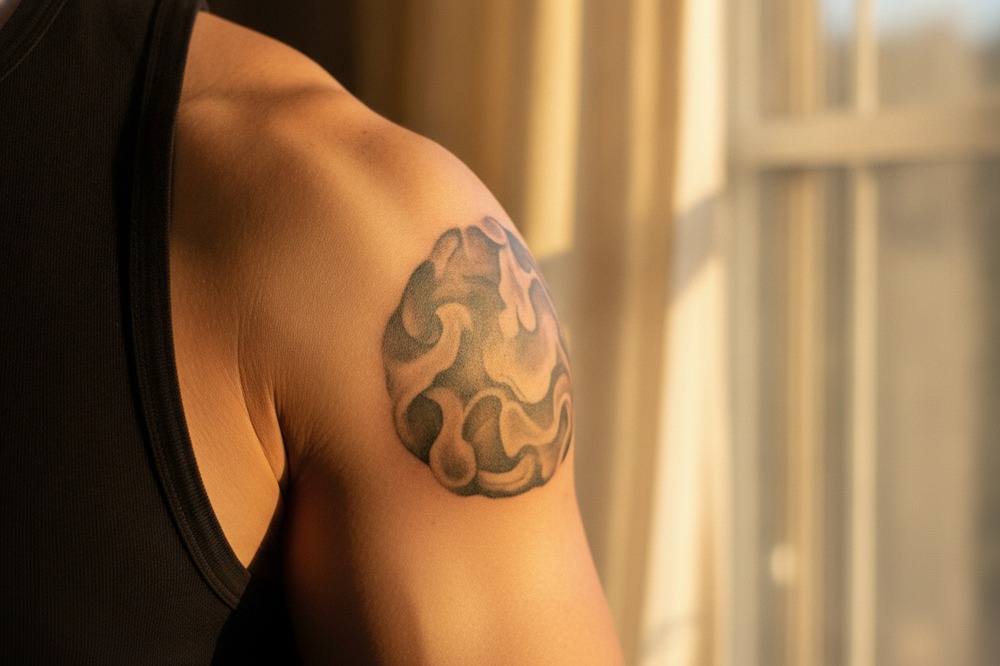
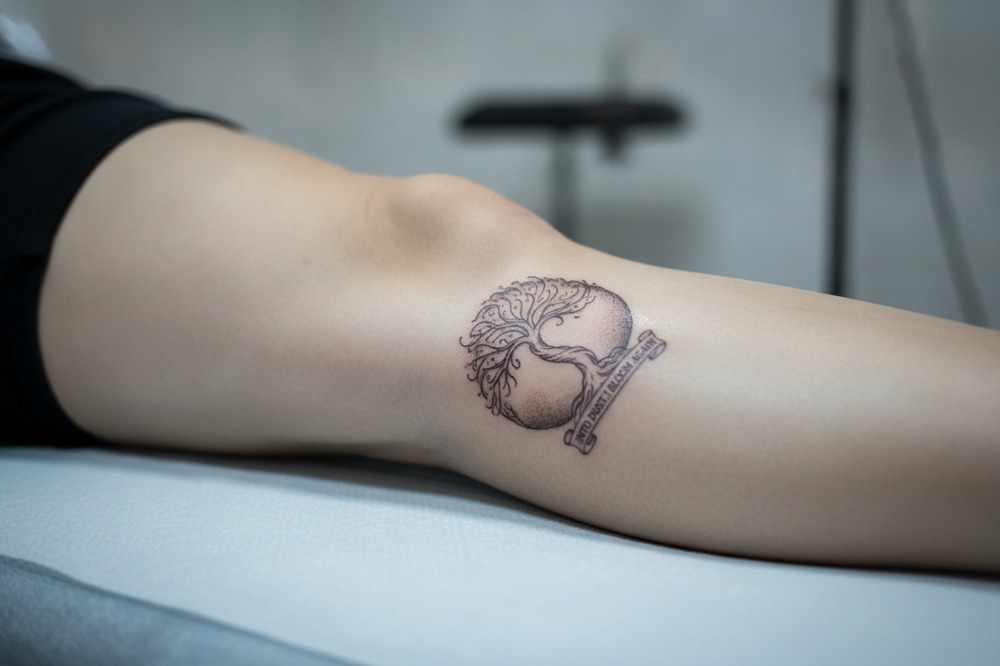
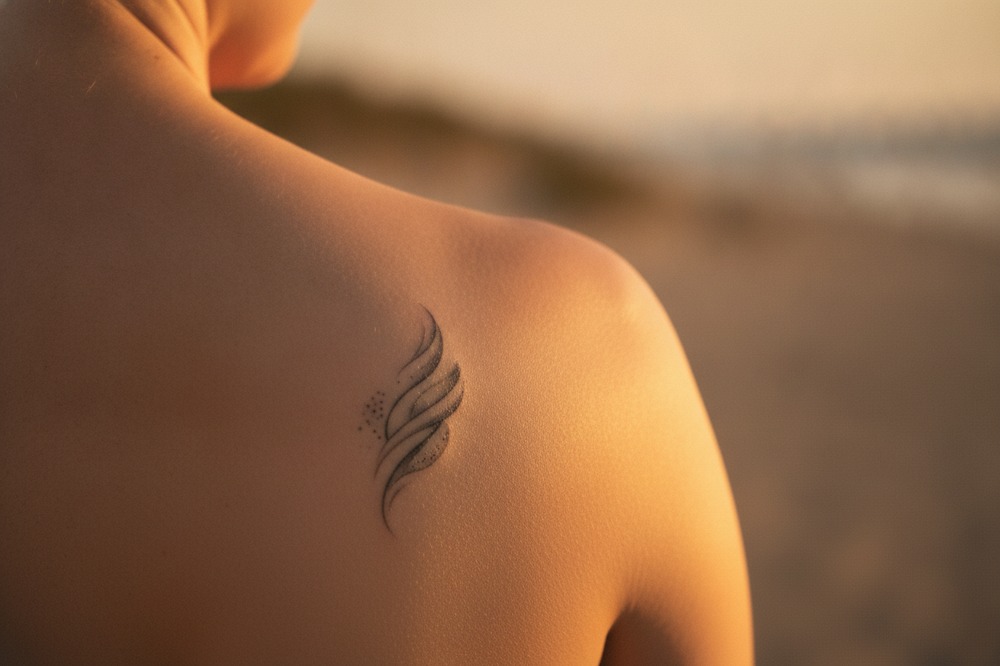
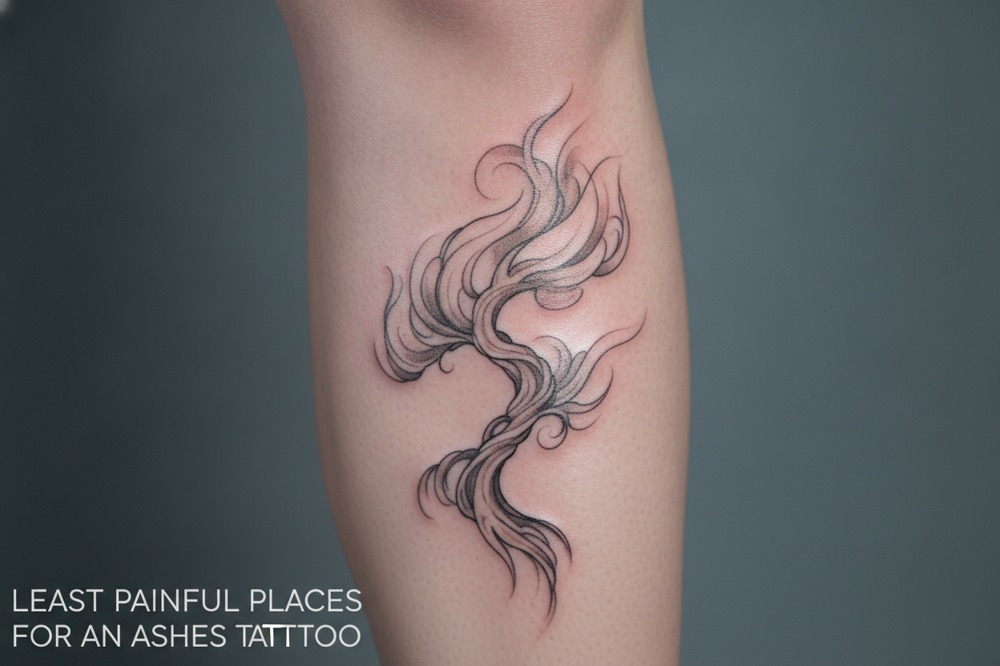
If I had to rank the gentlest spots, the outer forearm sits near the top. It’s flat, there’s muscle underneath and the skin isn’t especially thin. The outer and back of the upper arm is similar, plenty of padding and no bone in the firing line. The calf is a good one, especially the outer and back of it. The outer thigh ranks among the most forgiving areas on the whole body, which is why big pieces often go there. Then there’s the upper back and the meat of the shoulder, away from the shoulder blade itself.
What these all share is simple. Muscle or fat between the needle and the bone, thicker skin and nerves that aren’t packed tight near the surface. Compare that to the ribs, the sternum, the top of the foot, the inner wrist or the ankle bone, where the skin is thin and there’s bone right underneath. Those areas have their own beauty for a memorial, but they’re not the ones to choose if a soft session is your priority. There’s a proper breakdown of how each spot rates in my tattoo pain by body area guide if you want to weigh up somewhere specific before you decide.
Why Do Some Spots Hurt Less Than Others?
Pain in a tattoo comes down to three things under the skin. How close the bone is, how thin the skin is and how many nerve endings sit near the surface. Where a spot is padded with muscle or fat, the vibration and the needle spread out into soft tissue instead of rattling against bone. That’s why the outer thigh barely registers for a lot of people while the shin, a few inches away, can be sharp.
The ashes themselves change none of this. This is the bit people get tangled up on, so it’s worth being clear. The ashes are matched to the right particle size, cleaned, sterilised to clinical standards and cleared of contaminants, then carried in the ink. Once that’s in your skin it behaves like any other ink, same sensation, same healing. There’s no extra grit, no added sting. I get into this properly on the page about whether do ashes tattoos hurt more than normal tattoos and the short version is no. So when you’re choosing a low-pain spot, you’re choosing on placement alone, exactly as you would for a tattoo with no ashes in it at all.
Can A Low-Pain Spot Still Suit A Memorial Design?
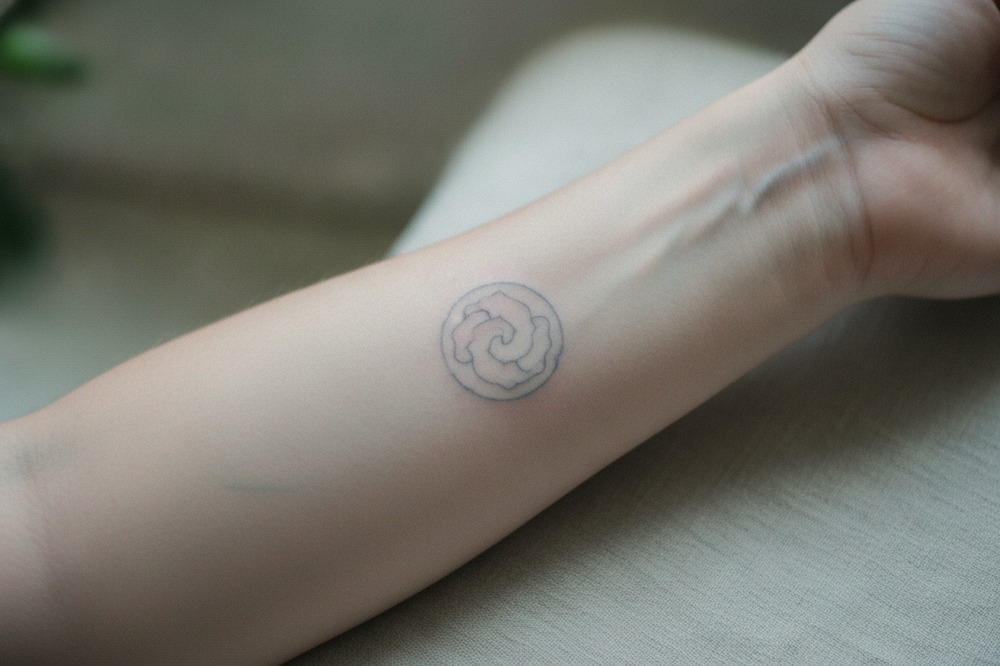
Yes and this is where it gets more interesting than a plain pain ranking. The gentlest areas happen to be some of the best canvases for the kind of designs people want for a loved one. A forearm takes a name and a date, a small line of handwriting or a single flower beautifully and you get to see it every day. The outer thigh has room for a portrait or a larger piece with dates and a quote. The calf suits vertical designs, a stem, a feather, a paw print running down it.
The trick is to let the design and the placement talk to each other rather than picking a spot in a vacuum. If your mum’s signature is the heart of the piece, the flat outer forearm shows the curve of her writing off far better than a curved, bony wrist would and it hurts less into the bargain. If you’re set on a rib piece because it’s near the heart, know going in that it’s one of the tenderer spots and plan the session around that. Placement is half the design conversation anyway and there’s a lot more on matching the two in my tattoo pain by body area notes and across the wider adding ashes into tattoo ink side of things.
Does The Size Or Detail Of The Piece Change How Much It Hurts?
A low-pain spot still asks something of you if the piece is big. Pain isn’t only about where, it’s about how long you sit. A tiny date on the forearm is over in twenty minutes and you’ll barely think about it afterwards. A full portrait on the thigh with fine shading is a longer sit and even a forgiving area gets tender after a couple of hours as the skin warms up. Same area, very different day.
So if you want the softest possible experience, pair a gentle spot with a design that keeps the session short, or break a bigger piece into more than one visit. Fine linework tends to be less intense than heavy solid colour packed into one area, because the skin isn’t worked as hard in the same place. I’ll always talk you through the realistic length before we start and there’s no pressure to do a large piece in one go. This matters more for ashes work than most people expect, because a small amount of the prepared ashes goes into the piece regardless of its size, so a modest, gentle tattoo carries every bit as much of your loved one as a big one does.
How Do You Stay Comfortable Through The Session?
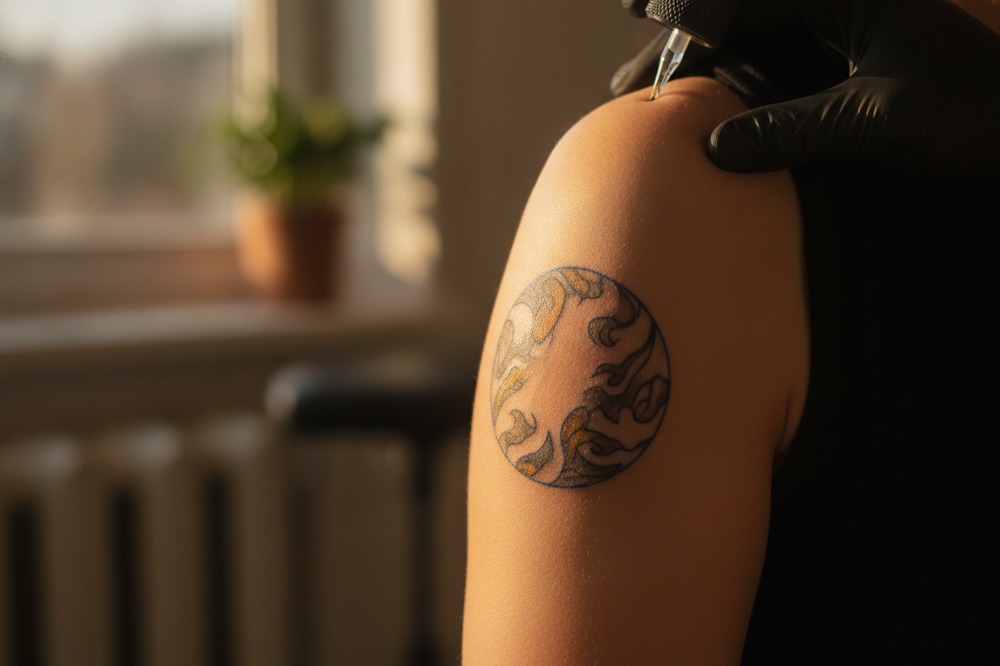
Choosing a soft spot is the biggest lever, but the day itself matters too. Come having eaten a proper meal, because an empty stomach is what turns a manageable tattoo into a light head. Sleep the night before if you can. Wear something that gets the chosen area free easily without you having to shuffle about. If it’s your forearm, a short sleeve or something loose. If it’s the thigh, loose shorts.
The worst of the discomfort for most people isn’t the needle, it’s the nerves before it starts. A racing mind makes everything feel sharper. Slow breathing genuinely helps and so does knowing what’s coming, which is half of why the pain feels smaller once you’re in the chair. If anxiety is the real hurdle rather than the pain itself, I’ve written more on settling it in the piece on managing tattoo anxiety before an appointment. For a full picture of what to expect from the sensation itself, the ashes tattoo pain guide pulls all of this together in one place.
What Happens With The Ashes On The Day?
Here’s the part people don’t always know to ask about and it matters for feeling settled. Whatever spot you choose, nothing to do with your loved one’s ashes happens out of your sight. I know how much that reassurance means when you’re handing over something irreplaceable. Some people want to watch every second. Others can’t look and would rather glance away and both are completely fine. The ashes stay on the bench in front of you the whole time, never carried off to a back room.
The simplest thing is to bring the whole container along and I’ll measure out what I need myself, roughly a teaspoon’s worth, so you never have to handle the ashes if that feels like too much. If you’d sooner do it at home, you can measure out a small amount, about a teaspoon’s worth and just bring that instead. Either way the rest goes home with you the same day. I’ve specialised in ashes tattoos for 20 + years, within a tattooing career of over 30 + years and the whole thing is done in a private one to one studio, so it’s just you and me, no busy shop floor, no audience.
FAQ
What Is The Single Least Painful Place For An Ashes Tattoo?
The outer forearm and the outer thigh are the two most consistently gentle spots. Both have muscle or fat underneath, thicker skin and no bone right beneath the needle. If your priority is the softest possible session, start with one of those and see whether your design fits it well.
Do Ashes Make A Low-Pain Spot Hurt More Than It Would Otherwise?
No. The prepared ashes are blended into a bespoke, particle-matched ink and behave like ordinary ink once tattooed. A low-pain area feels exactly the same whether the ink has ashes in it or not, so you choose your spot on placement alone.
Is A Small Ashes Tattoo In A Gentle Spot Less Meaningful Than A Big One?
Not at all. A small amount of the prepared ashes goes into the piece no matter its size, so a modest tattoo on your forearm holds just as much of your loved one as a large one. Many people prefer something small and gentle they can see every day.
Which Spots Should I Avoid If I Want The Least Pain?
The ribs, sternum, spine, top of the foot, ankle, inner wrist and elbow tend to be the sharpest, because the skin is thin and bone sits close underneath. They can make lovely memorial pieces, but they’re not the ones to pick if a soft session is what you’re after.
Does Placing The Tattoo Somewhere Gentle Still Let Me See It Often?
Yes. The forearm, outer upper arm and calf are all easy to keep on view, so a low-pain spot and a visible one usually go hand in hand. If you’d rather keep the piece private, the outer thigh and upper back are gentle and easily covered.