
Can You Swim After an Ashes Tattoo, Is It Safe?
Key Takeaways
- You cannot swim after an ashes tattoo until it is fully healed, which for most people means two to four weeks in total.
- The first fourteen days are fixed: seven days sealed under the second skin, then seven days of Bepanthen while the surface closes over, with no submersion at any point.
- Second skin dressings are waterproof for showering but are not rated for submersion, and adding a plaster or extra film on top does not buy an earlier swim.
- The ashes make no difference to the timeline, because once prepared and blended into the ink they behave in the skin exactly like ordinary pigment.
- Sea water is no safer than a pool, as it carries bacteria, draws moisture from healing skin and rubs at the tattoo through wave movement.
- Hot tubs are the highest risk of all, since warm recirculated water breeds the bacteria that cause skin infections and the heat opens the skin up.
- A tattoo is ready for water when there are no scabs, no peeling or flaking, no shiny raw patches and nothing tender or red.
- Soaking a fresh ashes tattoo can lift scabs early and pull flecks of pigment with them, which on a memorial piece means going back over skin that already holds part of someone who has died.
- Spreading redness, heat, worsening swelling, weeping, pus, a smell or a fever need a GP or pharmacist rather than waiting it out.
- Bubblegum Ink prepares the ashes in front of the client, either taking what is needed from the whole container or working from around a teaspoon brought from home.
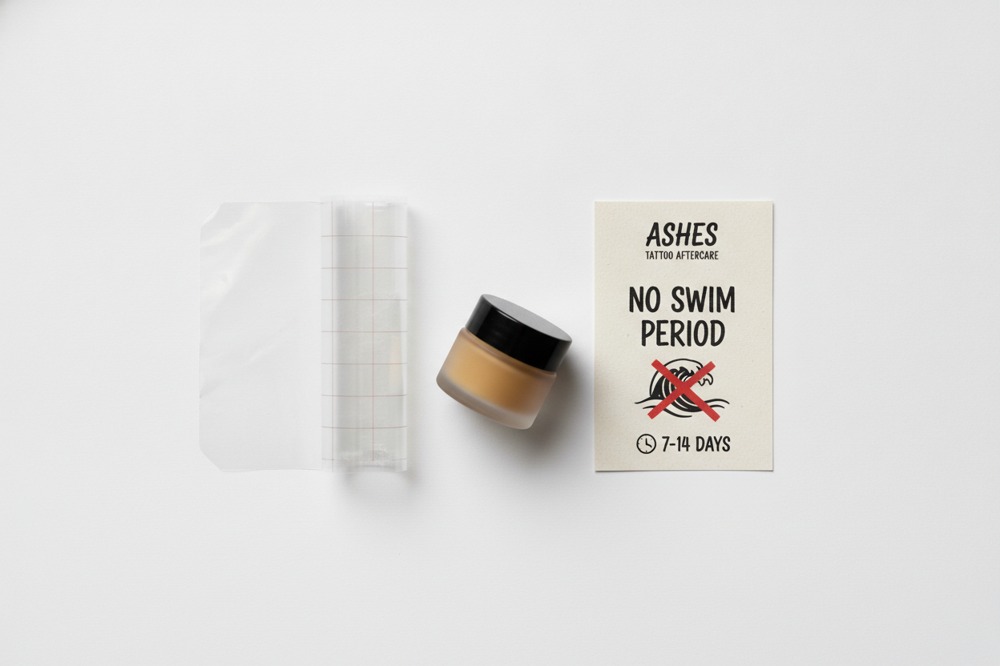
No, not until it’s fully healed. For the first seven days the tattoo is sealed under a waterproof second skin, and even though that film is happy to get wet in the shower, it isn’t rated for submersion, so no pool, sea, lake, river or hot tub while it’s on. Once it comes off on day seven you move onto a week of Bepanthen while the surface finishes healing, and swimming stays off the table through that week too. Put together, that’s a firm two weeks before submersion is even worth thinking about, and realistically it falls in the same two-to-four-week range most fresh tattoos need, with your own skin as the real signal once that first fortnight is behind you.
The ashes themselves change nothing here. Once your loved one’s ashes are prepared and blended into a bespoke, particle-matched, high-quality tattoo ink, the healed result sits and behaves in the skin the same as any other tattoo, so the swimming timeline is the same too. What matters is protecting the wound and the healing skin underneath, not the pigment.
A quick shower is a different thing entirely, and with the second skin sealed on it’s genuinely a non-issue for the first week. It’s soaking that’s the problem, both while the film is on and in the week after, when the tattoo is bare and using Bepanthen. So let’s go through what swimming does to healing skin, how long you really need to hold off and what to do if you’ve booked a holiday for the week after your appointment. If you want the shower side spelled out fully, can you shower after an ashes tattoo covers it in detail.
Why Can’t You Swim With A Fresh Ashes Tattoo?
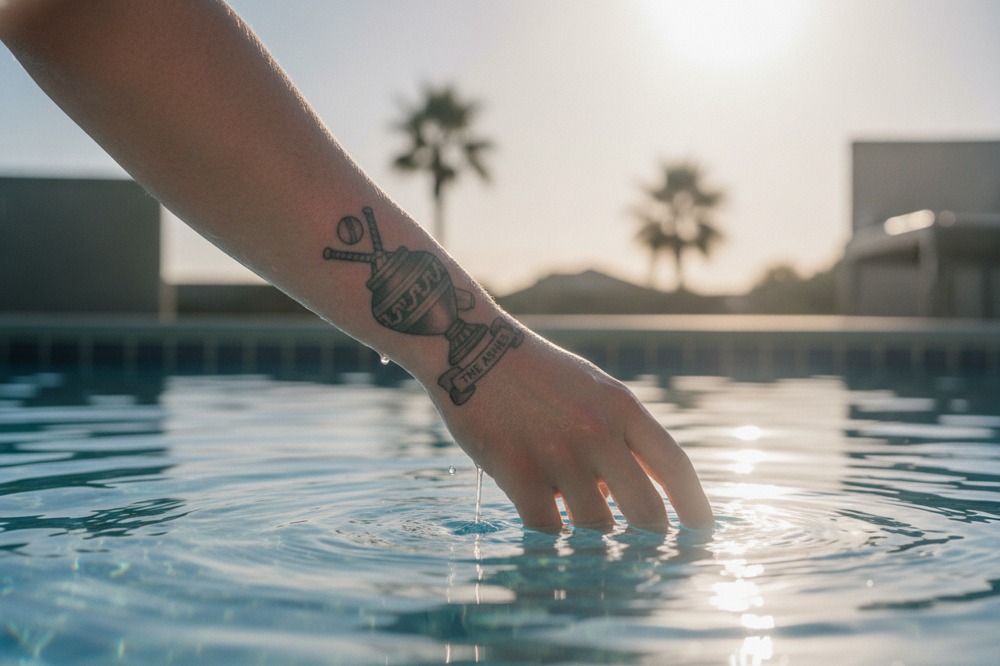
Think of your new tattoo as a graze that covers a bit of surface area. The needle has broken the skin thousands of times and until that skin knits back together it can let things in and out. Water works against it in a few ways at once, and which risk applies depends on which stage you’re at.
While the second skin is sealed on, the tattoo itself is protected, but submerging it risks working water in under the edges of the film. If the seal is compromised, pool chemicals, sea water or hot tub bacteria can sit trapped against the wound underneath, which is worse than no covering at all. Once the film comes off on day seven and you’re into the week of Bepanthen, the skin is bare and this is where soaking softens and lifts the scabs and the thin flaky layer that forms over a healing tattoo. If those come away before they’re ready, they can pull flecks of pigment with them, and for an ashes piece that pigment is carrying the ashes you brought in. Patchy healing on an ordinary tattoo is annoying. On a memorial piece it’s the last thing you want, because a touch-up means going back over skin that already holds part of someone you’ve lost.
Then there’s what’s in the water. Swimming pools are dosed with chlorine, which stings broken skin and dries it out. The sea, lakes and rivers carry bacteria that a healing wound has no defence against. Hot tubs are the worst of the lot: warm, recirculated water is a breeding ground for the kind of bacteria that cause skin infections and the heat opens everything up. An infected tattoo doesn’t just hurt and scar, it can wreck the look of the piece for good.
How Long Do You Have To Wait To Swim After An Ashes Tattoo?
The first fortnight isn’t up for negotiation. Seven days sealed under the second skin, then seven days of Bepanthen while the surface closes over, and swimming is a no for the whole fourteen days regardless of how the tattoo looks.
After that, the honest answer is: until it’s genuinely healed on the surface, which for most people falls between two and four weeks in total. Not a fixed date regardless of what your skin is doing, but a guide, with your own healing being the real signal once you’re past that first two weeks. The piece is ready for water when there are no scabs left, no flaky or peeling skin, no shiny raw patches and nothing that feels tender or looks red. If any of that is still going on, the deeper layers underneath are still repairing even if the top looks alright, so give it longer. Bigger pieces and tattoos on spots that flex and stretch like elbows, knees or feet, tend to take the longer end of that range. If you want to understand the full timeline from fresh to fully settled, how long does an ashes tattoo take to heal breaks it down stage by stage.
Don’t rush it because a date’s coming up. Water is one of the few things that can undo good healing in a single afternoon.
Is The Sea Different From A Swimming Pool For A Healing Tattoo?
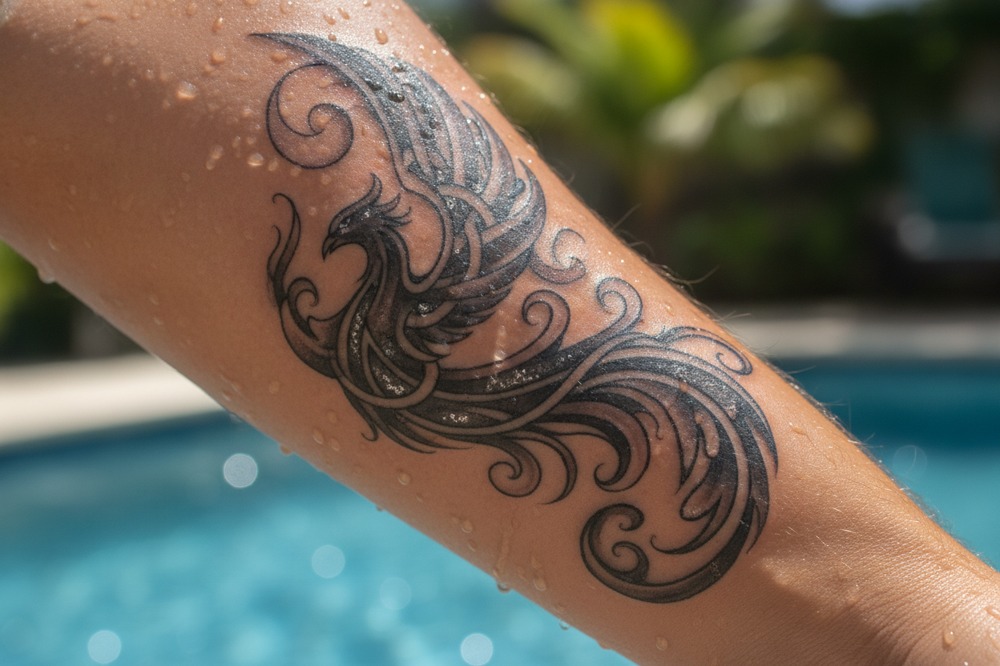
People often assume salt water is cleaner or somehow kinder to a wound. It isn’t, not while a tattoo is healing. Sea water carries bacteria and warmer coastal water carries more of it. The salt itself draws moisture out of skin that needs to stay balanced and being tossed around by waves rubs and irritates a piece that wants to be left alone.
Pools have the chlorine problem instead. Chlorine is there to kill bacteria, which sounds reassuring, but on an open tattoo it burns, dries and can fade fresh pigment. Neither is safe until you’re healed, whether that healing skin is hidden under the second skin in week one or bare and using Bepanthen in week two. And the same goes for the freshwater options people forget about: a lido, a lake swim, a wild-swimming spot in a river. All of them soak the wound and all of them carry something you don’t want getting in. Once the tattoo has fully closed over, the sea and the pool are both completely fine again, holiday, sunny bank holiday and all.
What About Hot Tubs, Saunas And Baths After An Ashes Tattoo?
These get lumped in with swimming and they deserve their own mention because the heat makes them riskier, not less. A hot tub combines everything a healing tattoo hates: warm standing water, other people’s bacteria and heat that swells the skin and opens the pores. Skip it entirely until you’re healed, longer than you’d wait for a normal pool if anything.
Saunas and steam rooms don’t submerge the tattoo, but the heavy sweating irritates it and the heat isn’t helping, so leave those a couple of weeks too. Long soaks in the bath count as swimming for this purpose, both while the second skin is sealed and once you’re into the Bepanthen week. A quick wash standing in the shower keeps the tattoo clean without soaking it, which is exactly what you want throughout. If you’re not sure where the line sits, can you shower after an ashes tattoo covers the difference between a safe rinse and a soak in detail.
How Do You Protect An Ashes Tattoo Around Water While It Heals?
The simplest protection is to let the second skin do its job for the first week, then keep things simple with Bepanthen for the second, and just wait. But real life has holidays and hot weather in it, so here’s the practical side.
If you’re near a pool or beach on a warm day, keep the tattoo covered and out of direct sun, because sunburn on a fresh piece is its own problem on top of the water. Your second skin dressing is genuinely waterproof for showering, but that’s not the same as being rated for submersion, so don’t be tempted to test it in a pool or the sea while it’s still on, and don’t add a waterproof plaster or a second film dressing of your own on top of it either, hoping that buys you an earlier swim. Once the second skin is off and you’re on Bepanthen, wash gently with plain warm water, pat dry with a clean towel and keep applying a proper layer of Bepanthen. Getting that week right does more to protect the piece than any dressing ever could.
Once you’re fully healed, none of this applies and you can swim as much as you like. Sun is the one lasting thing to be mindful of even long after: repeated strong sun fades a tattoo over the years, so a decent sunblock on a healed memorial piece keeps it sharp for the long haul.
What If You’ve Already Been Swimming Too Soon?
If you got in the water while the second skin was still on, don’t panic, but check the seal as soon as you’re out. If it’s lifted at the edges or water’s clearly got underneath, it needs to come off properly and be replaced rather than left to sit wet against the skin, so call the studio for guidance rather than guessing.
If it happened once the film was off and you were in the Bepanthen week, get out, rinse the tattoo with clean water, pat it dry and go back to your normal routine with the Bepanthen. Then watch it over the next few days. The signs to keep an eye on are spreading redness, heat, swelling that’s getting worse rather than better, weeping or pus, or a smell. Any of those, or a fever, and you want to see a GP or pharmacist rather than wait it out, because an early infection is far easier to sort than a settled one. A little extra redness or a scab that lifted is usually nothing that a bit of care won’t fix. For the full run-down on healthy healing versus warning signs, the ashes tattoo aftercare guide is worth a read and it links out to everything else you might need.
Who’s Behind The Advice And How Are The Ashes Handled?
A quick word on trust, because a memorial tattoo isn’t like any other. Nothing about your loved one’s ashes is done out of your sight. Nothing is posted off to be prepared elsewhere, nothing is taken into a back room and nothing is handled where you can’t see it. The ashes stay in view the whole time. When it comes to preparing them, you’ve got a simple choice: bring the whole container and Paul takes out what he needs himself, in front of you, which suits anyone who’d rather not handle the ashes, or measure out a small amount at home, roughly a teaspoon’s worth and bring just that. Either way only a little is used and the rest goes home with you. If you’d rather look away during that part, that’s completely understood.
Paul has specialised in cremation ashes tattoos for 20 + years, within a tattooing career of 30 + and works from a private, appointment-only studio in Sandbach where it’s just you and him, not a busy shared floor. That experience is why the healing and aftercare side is taken as seriously as the tattoo itself. If you’re still choosing the piece, memorial tattoo design ideas is a good place to gather your thoughts.
Book A Consultation Or Ask A Question
The next step is easy. Call the studio on 01270 385001 or email info@bubblegumink.com to book a consultation and you can talk through the design, the healing and the timing of any trips or holidays before you commit to a date. If you’ve just got one thing you want to check first, ask it. No question about the process or the aftercare is too small.
FAQ
How Long After An Ashes Tattoo Can I Go In A Swimming Pool?
At least fourteen days, seven with the second skin sealed on and seven more through the Bepanthen week, and often longer than that. The real marker beyond those two weeks is full surface healing, not the calendar: no scabs, no peeling, no raw or tender patches. Chlorine stings and dries broken skin, so a pool is only safe once the tattoo has completely closed over.
Can I Swim In The Sea After An Ashes Tattoo If It’s Salt Water?
No, not while it’s healing. Salt water isn’t kinder to an open tattoo. The sea carries bacteria, the salt dries the skin and waves rub at the piece. Treat it exactly like a pool: no submersion for the first fourteen days at least, and wait until you’re fully healed, usually two to four weeks in total.
Will Swimming Wash Out The Ashes In My Tattoo?
Not from a healed tattoo. Once it’s settled, the ashes are held in the skin like any pigment and water does nothing to them. The risk is only while it’s fresh: soaking can lift scabs early and pull flecks of pigment with them, which is why you wait until it’s healed.
Can I Use A Waterproof Plaster To Swim Sooner?
No. Even the second skin dressing you already have, which is genuinely waterproof for showering, isn’t rated for submersion, and an extra plaster or film dressing on top of it won’t change that. They trap sweat and moisture against the wound and give a false sense of safety. There’s no shortcut here, you have to let the tattoo heal properly before any swimming.
Is A Hot Tub Worse Than A Pool For A New Ashes Tattoo?
Yes. Warm recirculated water breeds the bacteria that cause skin infections and the heat opens the skin up. A hot tub is riskier than a normal pool, so avoid it until you’re fully healed and if anything give it a little longer than you would a swimming pool.
Written by Paul.