
Pet Portrait Ashes Tattoo Designs To Inspire
Key Takeaways
- A pet portrait ashes tattoo is a likeness of your dog or cat with a small amount of their ashes prepared and blended into the ink, so they are part of the picture rather than the subject of it.
- The reference photo matters more than the style, and a photo taken at your pet’s eye level beats one shot from above, which foreshortens the nose and shrinks the eyes.
- Bringing two or three photos lets Paul Cutler take the expression from one and the ear markings or coat colour from another rather than forcing everything from a single imperfect image.
- Head and shoulders is the most common crop, an eyes-only study works small and carries the most emotion, and a full body pose needs the thigh, back or a longer stretch of arm.
- Black and grey realism holds fur detail as it ages and is usually the truer choice for a black or dark coated pet, while colour realism suits a distinctive coat but may need a top-up over the years.
- Detailed portraits need flat, stable skin with room to breathe, so the forearm, outer upper arm, calf and thigh hold up far better over time than a wrist or ankle.
- Bubblegum Ink keeps your pet’s ashes in view on the counter throughout, takes out around a teaspoon where you can watch, and sends the container home with you the same day.
- The ashes are matched to the right particle size, cleaned, sterilised to clinical standards and cleared of contaminants before being blended into bespoke ink prepared in the studio.
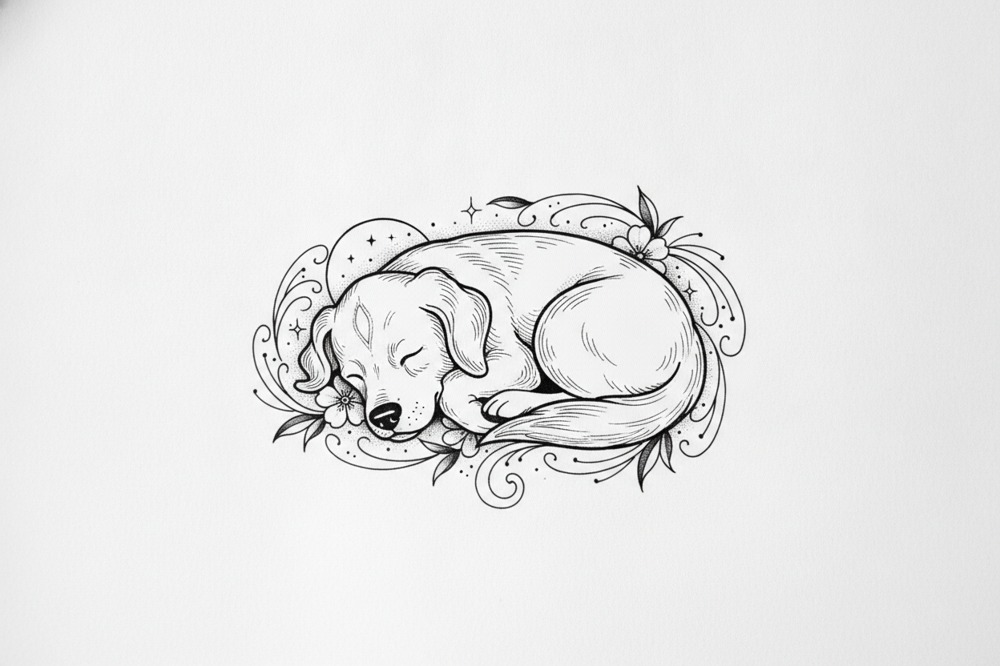
Most people who come to me for a pet portrait ashes tattoo arrive with the same thing on their phone: a slightly blurry photo of their dog or cat that they love more than any of the sharp ones. The idea is simple. A recognisable likeness of your pet, drawn or shaded into the skin, with a small amount of their ashes prepared and blended into the ink so they’re literally part of the picture. The portrait can be a realistic black and grey study, a soft colour piece, a fine line outline, or a stylised version that leans on one feature you’d know anywhere. What makes a good one isn’t the fanciest style. It’s the right photo and the right choice about which part of your pet to make the focus.
So before you settle on a style, it helps to think about what you want to look at every day. A face? Those specific eyes? The whole daft pose they used to do on the sofa? Each of those points you towards a different kind of portrait and that’s where the real decisions start.
Which Photo Makes The Best Pet Portrait Ashes Tattoo?
The photo does more of the work than the style you pick. A portrait can only be as good as the reference it’s built from, so the first thing I look at is what you’ve got.
Sharp beats pretty. A clear, well lit photo where you can see the texture of the fur and the shape of the eyes will always make a stronger tattoo than a soft, dark one taken across the room. Phone photos are fine. What matters is that the detail is there to read. If the light is flat and the eyes are just dark dots, the portrait ends up flat too.
Get down to their level. The best pet reference photos are taken at eye height, not from a human standing above looking down. Looking down foreshortens the nose and shrinks the eyes, which is why so many top-down photos make a poor portrait. If you’re choosing between a few pictures, pick the one shot straight on or from just below.
Bring more than one. Even when you have a clear favourite, having two or three photos helps enormously. One might have the perfect expression while another shows the ear markings better or the exact colour of the coat. I can pull the best of each into a single portrait. You don’t have to force everything into one imperfect image.
And don’t panic if your only photo isn’t perfect. Missing catchlights in the eyes, a bit of motion blur, a background that needs removing, these are all things that get sorted at the drawing stage. The photo is the starting point, not the finished plan.
What Styles Suit A Pet Portrait Tattoo?
Style should follow your pet and your own taste, not a trend. Here’s how the common approaches tend to work for animals specifically.
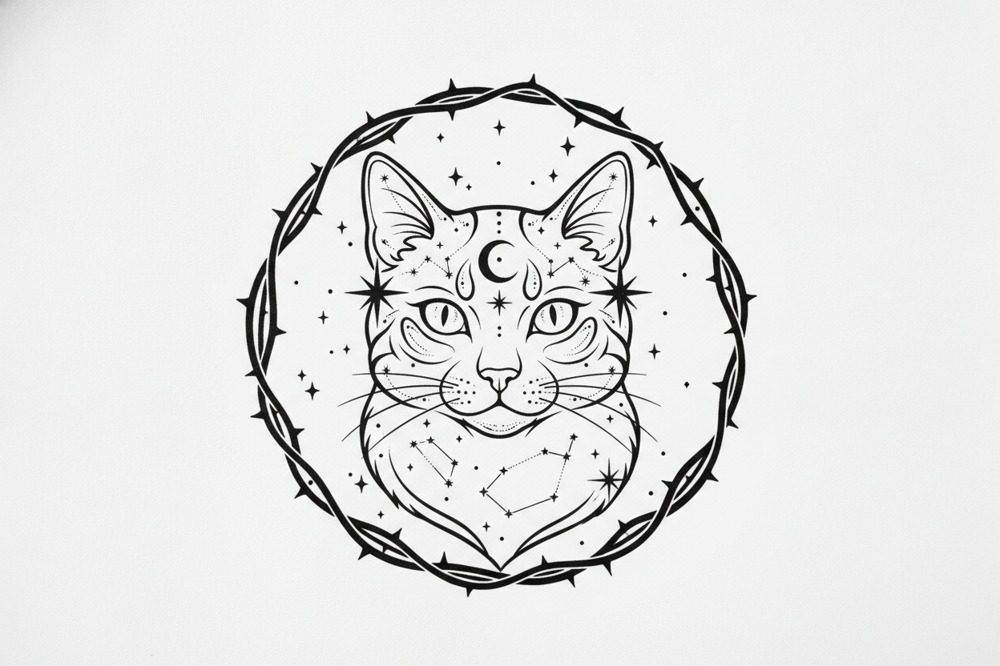
Black and grey realism is the classic choice for a reason. It handles fur beautifully, holds detail well as it ages and suits almost any breed. For a black cat or a dark dog it’s often the most honest option, because you’re working with tone and texture rather than fighting to invent colour that isn’t there.
Colour realism comes into its own for pets with a distinctive coat: a ginger tom, a golden retriever, the specific tan and black of a particular breed. If the colour is part of how you picture them, it’s worth doing in colour. Just know that colour asks a little more of the aftercare and can need a top-up over the years.
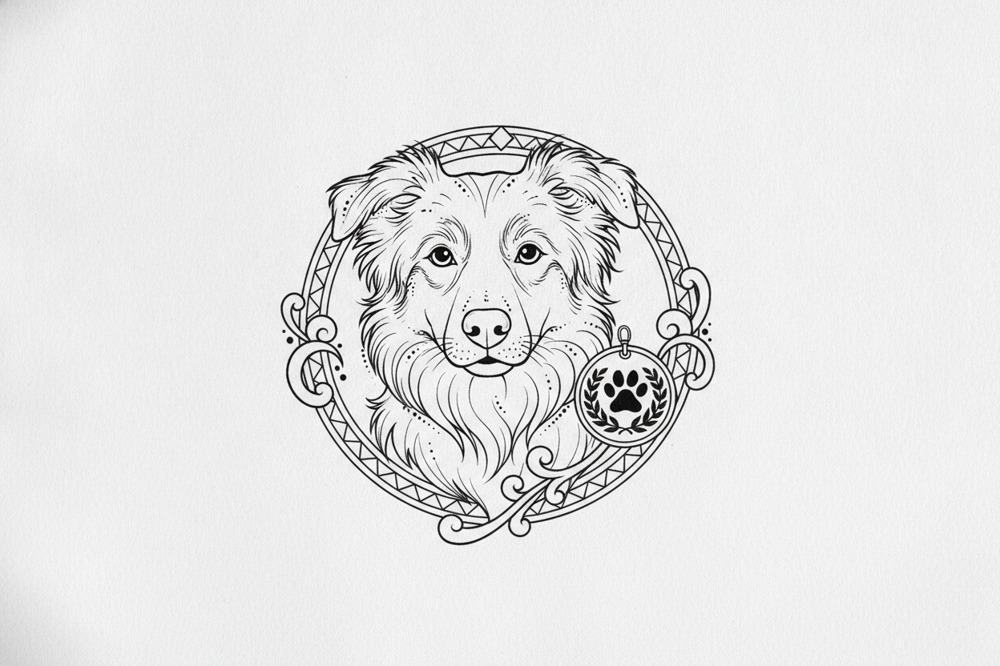
Fine line and single-needle portraits give a softer, quieter feel. They work well small and suit people who want something subtle rather than a bold statement piece. The trade-off is that very fine work carries less detail, so a fine line portrait leans more on capturing the shape and expression than on rendering every whisker.
Watercolour and illustrative styles pair a realistic face with loose colour washes or line work behind it. Some people find pure realism almost too much to look at on a lost pet and the softer illustrative treatment gives them the likeness without the full weight of it. If a straight portrait feels like a lot, this middle ground is worth a look. There are more approaches worth browsing in these memorial design ideas if you’re still weighing up direction.
Should The Portrait Be A Face, The Eyes, Or A Full Body?
This is the question people don’t expect and then can’t stop thinking about. How much of your pet goes in the picture changes everything about the tattoo.
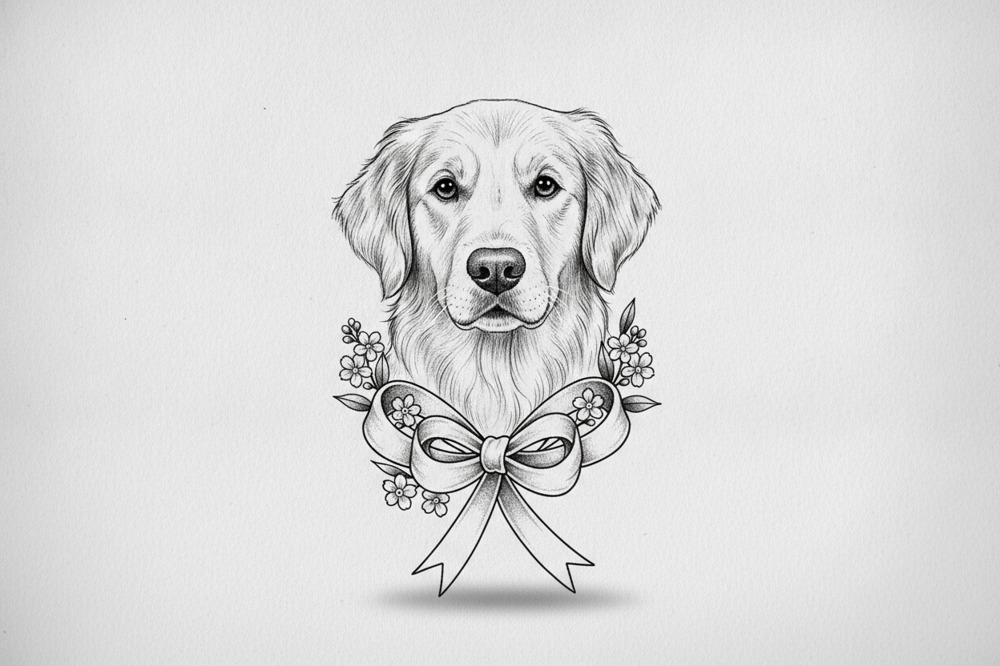
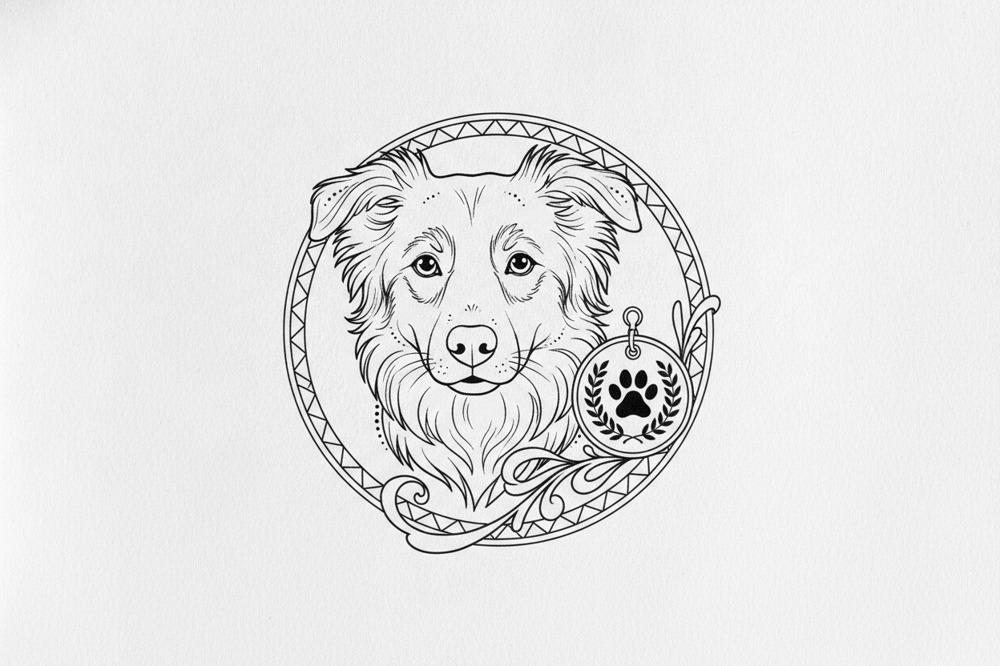
A head and shoulders portrait is the most popular by far. It’s the view you saw most, it holds the expression and it fits comfortably on a forearm, upper arm or calf. If you want one design that reads instantly as your dog or cat, this is the safe, strong choice.
An eyes-only or close-up crop is a powerful option when it’s their gaze you miss most. A tight study of just the eyes and a bit of surrounding fur can carry more emotion than a full face and it works small and discreet. It suits pets whose expression lived in their eyes, which honestly is most of them.
A full body portrait captures a pose rather than a face: the way they sat, the curl of a tail, a particular stance at the door. It needs more room, so think thigh, back or a longer stretch of arm and it works well when the shape of them, not just the face, is what you picture. Two pets can be worked into one full body scene too, sitting together the way they did.
There’s no wrong answer here. It comes down to which mental picture of them comes to you first when you close your eyes.
How Do You Add Names, Dates Or Words To A Pet Portrait?
A lot of portraits gain a small piece of text and where it sits matters as much as what it says. Rushed lettering can undo a lovely portrait, so it’s worth planning together rather than adding it on the day as an afterthought.
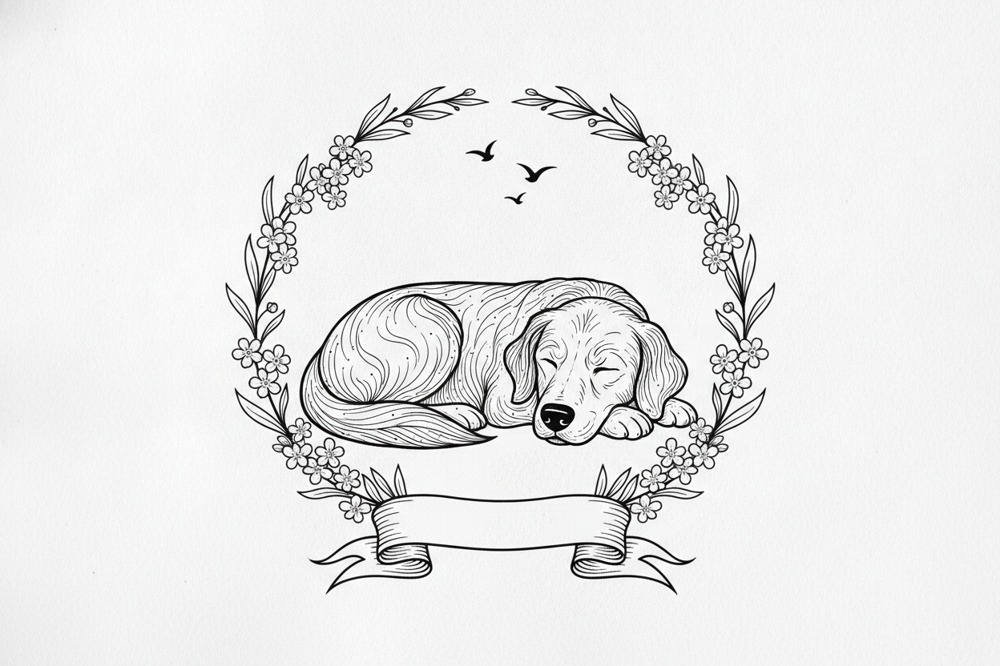
Names usually sit best tucked below the chin, curved along the base of the design, or off to one side rather than stamped across the middle. Dates work the same way, small and quiet, often a birth and passing year on a fine banner or simply floating beneath the face.
If you want a line rather than a name, a short phrase can frame the portrait without crowding it. People often browse pet memorial tattoo quotes for something that fits their pet’s character rather than a generic line. Keep it short. One good line under a portrait reads far better than a paragraph.
Some people fold in a small symbol instead of, or alongside, words. A rainbow bridge pet tattoo ideas motif behind or beneath the portrait is a gentle way to say what a date can’t and it sits naturally with a full body or scene-style piece. Whatever you choose, we mock up the text with the portrait before any needle touches skin, so you see the whole thing balanced first.
Where Should A Pet Portrait Ashes Tattoo Go On The Body?
Placement isn’t just about looks. The size of the portrait and the amount of detail you want dictate where it can go and still hold up over time.
Detailed realistic portraits need room to breathe. The forearm, outer upper arm, calf and thigh are the reliable spots, because there’s flat, stable skin and enough space for the shading to sit properly. Cram a detailed face onto a small, curved area like a wrist or ankle and the fine detail blurs together as the years pass. A portrait is a long game, so give it the room it needs.
Smaller crops and fine line pieces have more freedom. An eyes-only study or a simple line portrait can work on the inner forearm, the shoulder or the ribs. If you want something you can cover or keep private, the upper arm and ribs are easy to hide day to day.
Think about how often you want to see it too. Some people want the portrait somewhere they’ll catch it constantly, the inner forearm being the obvious one. Others want it somewhere quieter that they choose when to look at. Neither is more right. There’s no wrong reason to pick a spot on your own body. If you’re still deciding on the whole approach, the pet ashes tattoos guide walks through the wider picture of how these tattoos come together.
How Are Your Pet’s Ashes Kept Safe During The Portrait?
When you come in, the ashes don’t disappear into a back room. They sit on the tray on the counter in front of you, in the container you brought, in plain sight the whole time. I take out the small amount I need where you can watch me do it. Nothing happens out of your view. If holding or handling the ashes feels like too much, I’ll do that part gently while you look away and I’ll tell you when it’s done.
That small amount, roughly a teaspoon’s worth, gets matched to the right particle size, cleaned, sterilised to clinical standards and cleared of contaminants before it goes anywhere near the ink. It’s then blended into a bespoke, particle-matched, high-quality tattoo ink that I prepare for this purpose. Once it’s in your skin it heals and feels exactly like an ordinary tattoo. There’s no extra sting because it holds your pet.
You’ve got two easy ways to handle bringing the ashes and both leave you with the rest to take home. Bring the whole container along and I’ll measure out what’s needed myself, which suits anyone who’d rather not touch them. Or set aside a small amount, about a teaspoon, at home and just bring that. Either way, the container goes back home with you the same day. Only that tiny portion stays behind in the portrait.
The experience behind this matters most on a piece like a portrait, where a likeness can go wrong in a dozen small ways. I’ve tattooed for over 30 years and I’ve spent 20 + of them specialising in ashes work specifically. That means a portrait built the way any good portrait should be, with the ashes side handled carefully and the appointment kept private, one to one, in my own studio rather than on a busy shared floor.
FAQ
Can You Do A Pet Portrait Ashes Tattoo From A Blurry Or Old Photo?
Often, yes. A blurry or old photo can still work as long as the basic shape of the face and the eyes are readable. I redraw the portrait at the design stage, so soft focus, poor light or a busy background get corrected then. If you have more than one photo, bring them all, because I can borrow the sharper details from one to fix the weaker areas of another.
How Much Detail Can A Small Pet Portrait Ashes Tattoo Hold?
Less than people expect, which is why size matters. A small portrait works best when it leans on one strong feature, the eyes or the overall shape, rather than trying to render every whisker and hair. If you want fine, realistic detail across the whole face, it needs a larger area like the forearm or calf. For a small, private piece I’d usually suggest a simpler crop or a fine line treatment that stays clean as it ages.
Can Two Pets Go In One Portrait Ashes Tattoo?
Yes, two pets can share one portrait, either as two faces together or a full body scene with both. I can blend ashes from each pet into the piece so they’re both truly in it. It’s worth allowing a bit more space for a double portrait so neither face gets crowded, so we’d talk through placement and size before starting.
Does A Colour Pet Portrait Fade Faster Than Black And Grey?
Colour does tend to soften a little sooner than black and grey and it can benefit from a top-up over the years, though good placement and proper aftercare slow that down a lot. For a pet with a distinctive coat colour it’s usually worth it. For a very dark or black pet, black and grey is often the truer and longer-lasting choice anyway.
Do I Need To Decide The Style Before My Appointment?
No. It helps if you have a rough idea, but working out the style, crop and placement is part of what we do together beforehand. Bring your photos and your thoughts on what you miss most about them and we shape the portrait from there. Nothing is set until you’re happy with the drawing.
Still circling the same worry you started with, whether that photo is good enough or which view of your pet is the right one to keep? That’s exactly the conversation to have before anything is booked, not after. Send me your photos and tell me a little about your dog, cat or other pet and I’ll tell you honestly what will make the strongest portrait and how their ashes fit into it. You can call the studio on 01270 385001 or email info@bubblegumink.com. There’s no rush and no pressure. When you’re ready, I’m here.
I’m Paul Cutler and I work from a private, appointment-only studio in Sandbach, Cheshire. You can read more about me and Bubblegum Ink