
Pet Memorial Tattoo Placement Designs & Ideas
Key Takeaways
- Pet memorial tattoo placement comes down to three things: how big the design needs to be, how private you want it, and whether you want to see it daily or keep it for quieter moments.
- The wrist and inner forearm are the two placements Bubblegum Ink tattoos most often for pets, because they suit the small, simple designs pet memorials usually are.
- A pet portrait needs a flat, roomy area such as the outer forearm, upper arm or calf, so the eyes and muzzle keep their detail as the tattoo heals.
- A paw print stays legible at almost any size, which makes the wrist, ankle, behind the ear and the back of the neck all workable.
- Finger tattoos fade and blur faster than anywhere else on the body, so an ankle, inner forearm or the back of the calf holds small detail far longer.
- Behind the ear, the inner bicep and the ribs are the most discreet placements, and a hidden piece can still be an ashes piece.
- No placement is ruled out by the ashes, because once prepared and blended into the ink they behave like ordinary tattoo ink and heal the same way wherever the piece sits.
- Clients bring a teaspoon of their pet’s ashes measured out at home, or the whole container for Paul Cutler to take what he needs, with the rest going home with them.
- Anyone planning to memorialise more than one pet over time should say so at the first appointment, so the first piece is placed leaving room alongside it.
Most people who come to me for a pet piece already know roughly what they want inked, a paw print, a little portrait, a name and they’re stuck on where it should go. The honest answer is that placement depends on three things: how big the design needs to be, how private you want it and whether you want to glance at it every day or keep it for quieter moments. A small paw or a single name sits happily on a wrist, an inner forearm or behind the ear. A detailed portrait needs a flatter, roomier canvas like the outer forearm, the upper arm or the calf, so the face doesn’t get lost. Below I’ll walk through the spots people choose most for a dog, a cat or a smaller pet and why each one works.
Since these are ashes pieces, there’s one more thing that quietly shapes placement and I’ll get to it: a small amount of your pet’s ashes goes into the ink, so the spot you pick is where they literally stay with you.
Where Do Most People Put A Pet Memorial Tattoo?
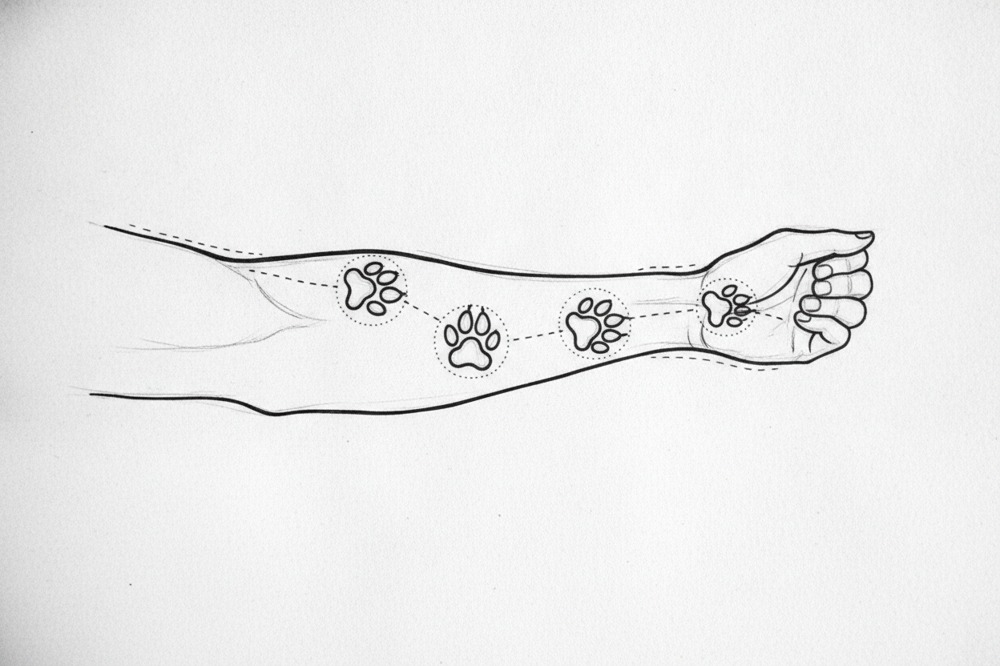
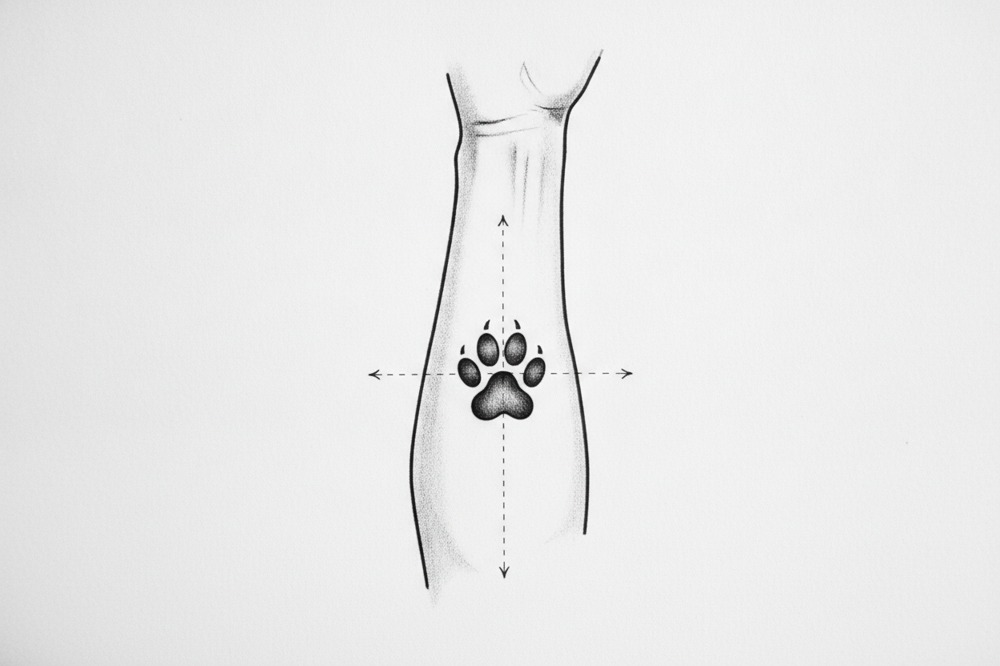
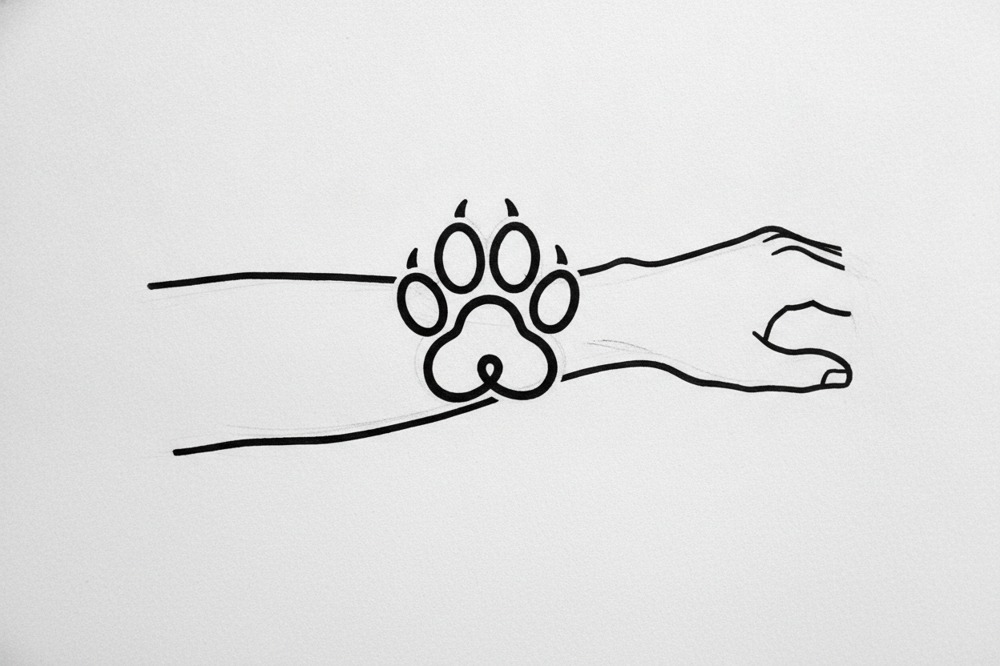
The wrist and inner forearm are the two I ink most often for pets. There’s a reason. They’re close, you can turn your arm over and see your dog’s name or a paw print in a second and they suit the small, simple designs that pet memorials usually are. The inner wrist takes a single paw, a heart with a name inside, a tiny silhouette. The inner forearm gives you a bit more room, enough for a name in a pet’s collar-tag font, a small portrait, or a paw with dates underneath.
Ankles and the top of the foot come up a lot too, especially for people who want something they can cover for work but still know is there. A cat’s whisker outline round the ankle, a paw walking up the side of the foot, these sit well because the shape follows the limb.
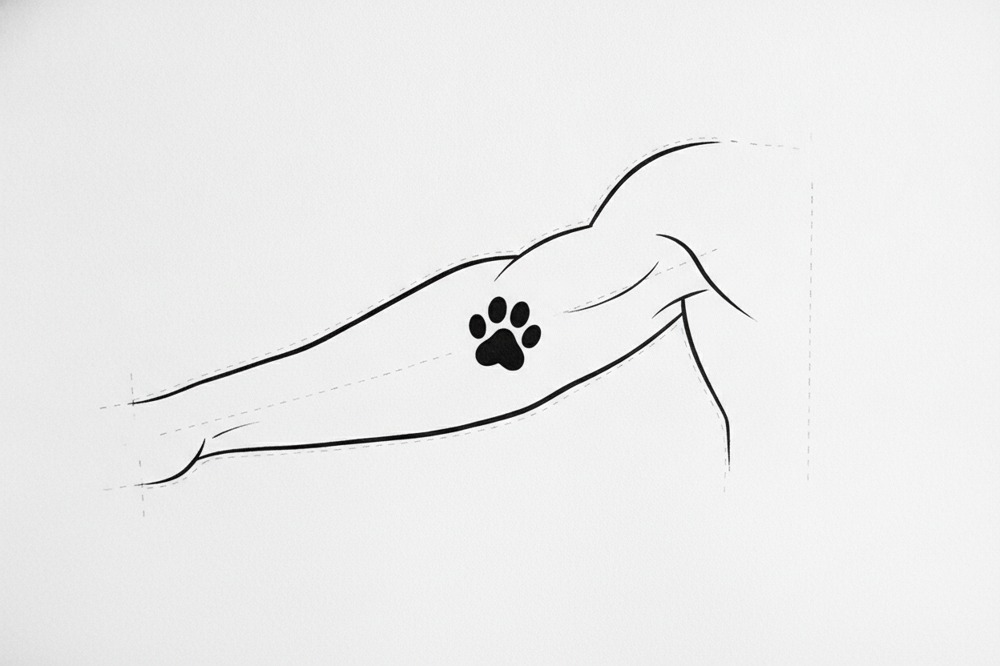
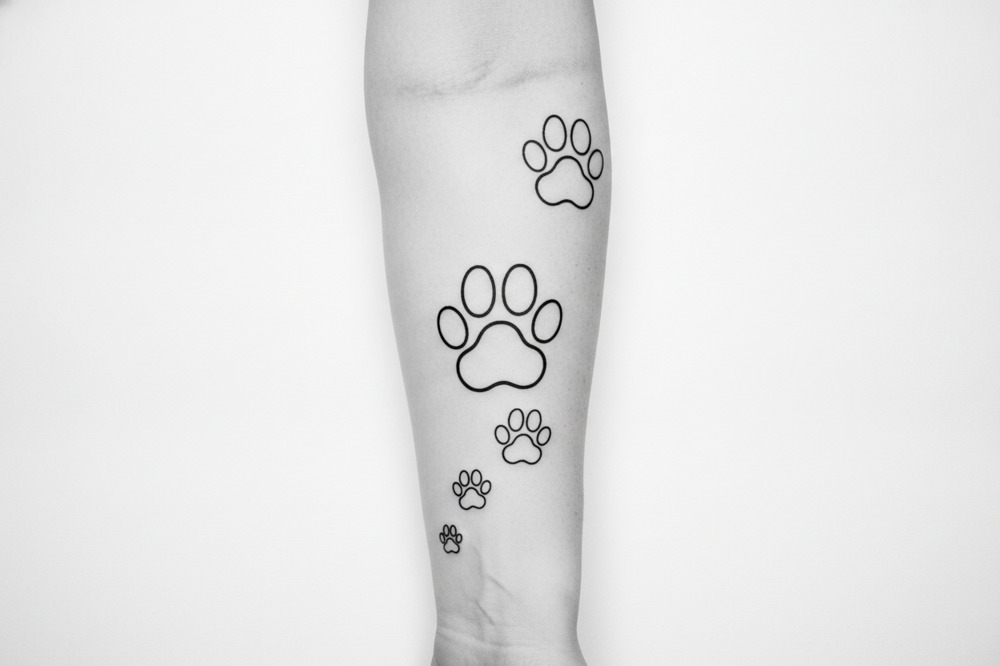
The upper arm and shoulder are the go-to when the design’s bigger, a full portrait, or when you’re memorialising more than one animal and need the space. If you’re thinking along those lines, it’s worth reading up on multiple pet memorial tattoo ideas before you settle on a spot, because two or three animals together change how much room you need.
Does The Type Of Design Change Where It Should Go?
Yes and this is the part people skip. A paw print and a photorealistic portrait want completely different homes.
Paw prints are forgiving. They’re small, they read clearly at any size and they look right almost anywhere, wrist, ankle, behind the ear, the back of the neck, even a finger if you accept it’ll soften over the years. A portrait is fussier. Faces need fine detail in the eyes and the muzzle and that detail needs flat skin with a bit of stretch to it. Cram a spaniel’s face onto a narrow wrist and the features crowd together. Give it the outer forearm or the calf and it breathes.
Names and dates sit best where the skin runs in a straight line, along the forearm, down the ribs, across the collarbone, so the lettering doesn’t warp. Curved designs like a paw trail, a leash loop or a cat curled into a circle suit rounded areas: the shoulder, the hip, the ankle. If you’re still weighing up what the design itself should be before you fix the spot, browse some pet ashes tattoo ideas and inspiration first, because the design and the placement really are decided together.
Which Spots Work Best For A Small Or Hidden Pet Tattoo?
Plenty of people want their pet with them without it being on show. Behind the ear is the most discreet, room for a tiny paw or a single initial, hidden by hair and it’s a spot that feels quite tender, tucked away like that. The inner bicep is another one nobody sees unless you lift your arm. The ribs take a longer design, a name in handwriting, a small silhouette and stay covered under any top.
Fingers and the side of a finger suit the very smallest marks, a dot-work paw, a single heart, though I’ll always tell you honestly that fingers fade and blur faster than anywhere else because of how much the skin there is used. If you want small and lasting, the ankle or the back of the calf holds detail better than a finger ever will.
One thing worth knowing: a hidden pet piece can still be an ashes piece. The placement being private doesn’t change the process at all.
How Does The Ashes Part Affect Where I Put It?
Here’s what happens on the day, because it does bear on placement. A small amount of your pet’s ashes, roughly a teaspoon’s worth, gets matched to the right particle size, cleaned, sterilised to clinical standards and cleared of contaminants, then blended into a bespoke, particle-matched, high-quality tattoo ink of my own. Once that’s tattooed into your skin it behaves like ordinary ink, same feeling, same healing. So no spot is off-limits because of the ashes. A wrist works the same as a shoulder.
What it does mean is that the place you choose becomes permanent in a way that matters more than usual. This is your dog, your cat, staying with you in that spot. That’s why I’ll talk placement through properly rather than rush it and why people often pick somewhere they can rest a hand, the inner wrist, the forearm, over the collarbone. Somewhere they can reach.
The ashes never leave the room while I work. I keep the wrapped container and the small tray right there on the counter in front of you, in plain sight, the whole time. Nothing goes into a back room. If handling your pet’s ashes feels like too much, I’ll measure out what’s needed myself, gently, while you watch or look away, whichever you’d rather.
What Should I Bring On The Day?
A practical tip first: a small sealed container, a clean film canister, a little screw-top pot, even a spoon from home to measure with, makes the whole thing simpler. You’ve got two ways to do it. Bring the entire container along and I’ll take out the small amount I need myself, which suits anyone who’d rather not touch the ashes. Or measure out roughly a teaspoon’s worth at home and just bring that little pot. Either way, the rest goes home with you, you never leave the whole lot with me.
Bring a clear photo too if you want a portrait or a specific paw. A phone picture is fine. The clearer the image, the better I can place and size the design to suit the spot you’ve chosen.
I’ve tattooed for over 30 years and 20 + of those I’ve spent specialising in ashes work specifically. That experience mostly shows up in this exact conversation, steering someone away from a spot that’ll blur, sizing a portrait so it lasts, matching the placement to the animal. If you want the fuller picture of how these pieces come together, the pet ashes tattoos guide covers the whole process and for placement across memorial work generally there’s more in these memorial tattoo design ideas.
Can I Combine Placement With Other Memorial Details?
Often the best placements aren’t just about the animal, they’re about how the design links to something else you carry. A pet paw sitting just below a name you already have inked. A collar tag placed over the heart. A little portrait on the forearm with room left beside it in case, one day, you add another pet. Thinking a step ahead about that spare space saves you a cramped design later.
Collarbone and chest placements work well when you want your pet close to the heart, literally. Ribs suit a longer, quieter design you keep private. The back of the upper arm is a good middle ground, big enough for detail, easy to cover, easy to show. If you’re planning to memorialise a whole household of animals over time, pick a placement with room to grow rather than filling one small spot completely.
There’s no single right answer here. The spot that suits your neighbour’s labrador won’t be the one that suits your cat. That’s the point of talking it through.
FAQ
Where Is The Least Painful Place For A Pet Memorial Tattoo?
The outer forearm, the upper arm and the calf tend to be the most comfortable, because there’s muscle underneath and fewer nerves close to the surface. Wrists, ankles, ribs and behind the ear are bonier and thinner-skinned, so they’re sharper, though pet pieces are usually small enough that even the tender spots are over quickly. If it’s your first tattoo, I’d steer you toward a fleshier area to start.
Can I Get A Pet Memorial Tattoo In The Same Spot As An Old Pet’s?
Yes and a lot of people do exactly that, keeping all their animals grouped on one forearm or one shoulder. If you know more pets may join it over the years, tell me at the start so I can place the first one leaving space alongside it. Adding to an existing area works far better when it’s planned than when we’re squeezing a new paw into a gap.
What’s The Best Placement For A Pet Portrait Versus A Paw Print?
A portrait wants a flat, roomy canvas, the outer forearm, upper arm or calf, so the eyes and muzzle keep their detail. A paw print goes almost anywhere because it stays legible small: wrist, ankle, behind the ear, the back of the neck. As a rule, the more detail a design carries, the bigger and flatter the spot it needs.
Will A Small Pet Tattoo On My Wrist Or Finger Fade Faster?
Fingers fade and blur the fastest of anywhere, because the skin there takes so much daily wear, so I’m always honest that a finger piece won’t hold fine detail for long. Wrists hold up much better than fingers. If you want small and lasting, an ankle, an inner forearm or the back of the calf keeps its detail longer than either.
Does It Matter Where I Put It If It Contains My Pet’s Ashes?
Not technically, once the prepared ashes are blended into the ink it behaves like ordinary ink and heals the same wherever you place it, so every spot is available. What people find is that the ashes make the choice feel more meaningful, so they often pick somewhere they can reach and rest a hand on, like the inner wrist or over the heart.
More about me and how I work or just send a question, there’s no pressure to book.