
Grandparent Memorial Tattoo Placement Ideas For Inspiration
Key Takeaways
- The inner forearm, inner wrist, over the heart, the ribs and the upper back are the placements chosen most often for a grandparent memorial tattoo.
- The inner forearm is the most requested spot, holding a full line of a grandparent’s handwriting without cramping it.
- A signature runs wide and low, so it suits a wrist, the length of the inner forearm or the collarbone, and loses its character if forced into a tall narrow space.
- Placement does not change how ashes are used, because the prepared ashes are blended through the ink rather than concentrated in one spot, so a wrist heals the same as a shoulder.
- For two grandparents, Bubblegum Ink suggests either one joined piece on the forearm, upper back or thigh, or a matched pair placed on each wrist or each forearm.
- The inner forearm, outer thigh and upper arm are the easiest placements to sit through, which matters for the many grandchildren having their first tattoo in their forties or later.
- Clients bring the ashes to the appointment and either hand over the whole container or bring around a teaspoon measured out at home, with the rest going back with them the same day.
The inner forearm, the wrist, over the heart, the ribs and the upper back are the spots people choose most for a grandparent memorial tattoo. The right one comes down to how much you want to see it day to day, how big the design is and whether it’s the sort of piece you want private or on show. A signature or a short quote from your nan sits well on a wrist or inner arm. A portrait or a bigger scene wants the room a forearm, shoulder or thigh gives it.
Most grandparent pieces I do aren’t huge as they tend to be quiet, personal things: a name, a date, a few words in their hand, a flower they grew, a bird they loved. That size and that mood shape where they go, so let me walk through the spots that suit them and why.
Where Do People Usually Place A Grandparent Memorial Tattoo?
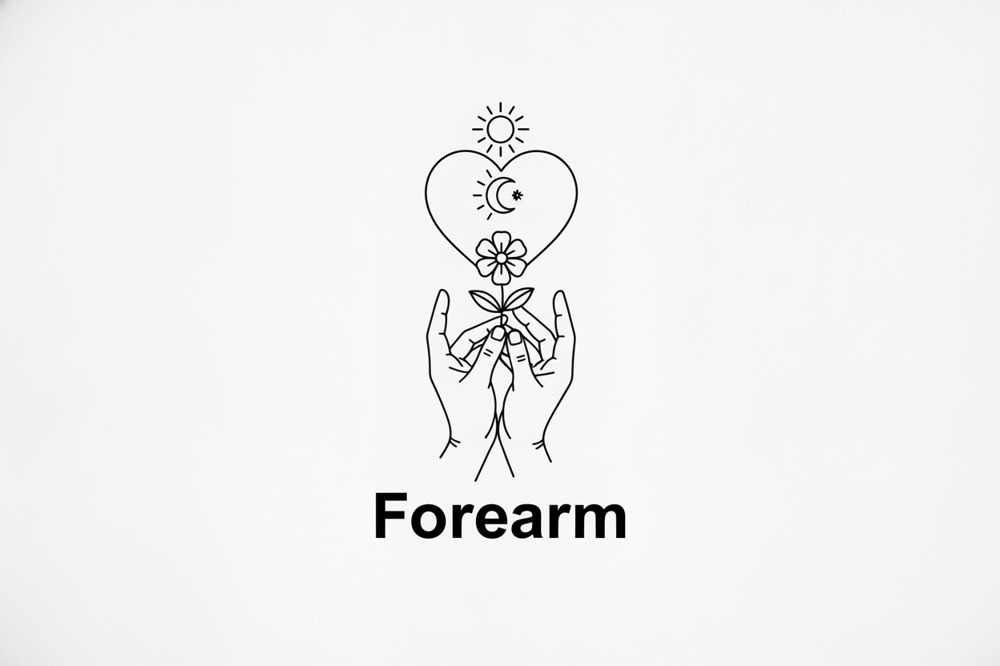
The inner forearm is the one I’m asked for most. It’s easy to glance at, easy for you to read the right way up and there’s enough flat skin for a name and dates or a short line of handwriting without it feeling cramped. If your grandad wrote you a birthday card every year and you’ve kept his blocky capital letters, that inner forearm holds a full line of it beautifully.
The inner wrist is the smaller, more private cousin of that. It fits an initial, a single date, a tiny flower or one word. People who want their nan close but not announced to the room tend to land here. It’s a spot you see when you check the time or hold a cup of tea, which is part of why it feels right for a grandparent.
Over the heart, on the left of the chest, is chosen when the feeling matters more than showing it off. Nobody sees it unless you want them to. It suits a name, a small portrait or a symbol that meant something between the two of you. If you want a fuller look at how grandparent designs and placements go together, the the grandparent memorial tattoos guide covers the shapes people pick alongside where they put them.
Which Placement Suits A Grandparent’s Handwriting Or Signature?
Handwriting is its own thing for placement, because the shape of the writing decides the shape of the space you need. A signature tends to run wide and low, so it fits a wrist, the inside of the forearm along the length of it, or the collarbone where it can stretch out. Cramming a signature into a tall narrow spot squashes it and loses the character in the letters, which is the whole point of keeping their hand.
A short phrase like “love you always Nan” or “see you later, chick” works down the forearm or along a rib. Longer notes, say a couple of lines lifted from a letter, want a back, an outer arm or a thigh where the lines can breathe and stay legible for years. Fine handwriting laid too small on a busy, flexing spot can blur as it settles, so I’ll often nudge a delicate script somewhere flatter. If handwriting is the route you’re leaning toward, it’s worth reading around grandma memorial tattoo ideas and grandpa memorial tattoo ideas to see how a name in their own writing sits against a portrait or a symbol.
Where Should You Put A Tattoo For More Than One Grandparent?
This comes up a lot, because grandparents often go within a few years of each other and people want them together. You’ve got two honest approaches. One is a single joined piece: two names, two sets of dates, maybe a shared symbol like a pair of birds or two flowers, placed somewhere with room such as the forearm running lengthways, the upper back or the outer thigh. The other is a matched pair placed either side of the body, say one grandparent on each inner forearm, or one on each wrist, so they sit as a set but stay distinct.
If you’ve lost a nan and a grandad who were a couple, I’d usually suggest a spot that lets the design read as “them” rather than two separate tattoos crammed side by side. Chest, upper arm and back all give that. When it’s four grandparents, or grandparents alongside a parent, a larger area planned as one layout stops it turning into a scattered collection over the years. Thinking about the overall composition early saves you from painting yourself into a corner and browsing memorial tattoo design ideas helps you picture how several elements can share one space.
Does It Matter Where The Ashes Go In The Tattoo?
A question I hear a fair bit: does the placement change how the ashes are used, or does one spot “hold” them better? It doesn’t. A small amount of your grandparent’s prepared ashes goes into a bespoke, particle-matched, high-quality tattoo ink and once it’s in the skin it behaves like any other ink, so it heals the same on a wrist as it does on a shoulder. The ashes aren’t concentrated in one dot you have to protect; they’re blended through the ink used for that part of the design.
What that means for you is freedom. Pick the placement for how it feels and how it wears, not out of worry that a busy spot will somehow lose them. The only real placement factor with any tattoo is that areas that flex hard or rub constantly, like the side of a finger or the top of a foot, hold fine detail less well over decades. That’s a longevity point and it applies to the whole design, not to the ashes specifically.
What If This Is Your First Tattoo Later In Life?
A lot of grandchildren who come to me are getting their first tattoo in their forties, fifties or later, purely because they lost the person and wanted this one thing. Placement matters differently for you. You might want somewhere you can cover for work or family who wouldn’t understand, which points to the upper arm, the shoulder, the back or the ribs rather than a hand or lower forearm. Or you might want it exactly where you’ll see it every morning and not care who else does.
Comfort plays in too. The inner forearm, outer thigh and upper arm are among the more manageable spots to sit for, which is worth knowing if you’re anxious about the sensation of a first tattoo. The ribs and the top of the foot are sharper going. None of it is unbearable and the pieces we’re talking about are usually small, so the sitting is short. If you’d rather ease in, a wrist or forearm design gets you a meaningful tattoo without a long session.
How Do You Keep The Ashes In View While Choosing A Placement?
The part people quietly worry about is what happens to the ashes on the day, so let me be plain about what I don’t do. Nothing gets taken off to a back room. Nothing gets posted to me beforehand. Nothing gets handled somewhere you can’t see. Your grandparent’s ashes stay in front of you the whole time, on the same table we’re working at and everything I do with them happens where you can watch.
On the day, the easiest thing for most people is to bring the whole container along and let me take out the small amount needed myself, right there in front of you. That suits anyone who’d rather not touch the ashes at all. If you’d prefer, you can measure out a small amount at home, roughly a teaspoon’s worth and just bring that instead. Either way the rest goes home with you the same day. And if looking is too much in the moment, tell me and I’ll do that part gently while you look away. I’ve specialised in ashes tattoos for 20 + years, inside a tattooing career of over 30 and that time has mostly taught me to read when someone needs a minute. The studio is private and appointment-only, so it’s just you and me, not a busy shop floor with people watching.
FAQ
What’s The Best Placement For A Small Grandparent Memorial Tattoo?
Inner wrist, inner forearm or over the heart tend to suit small grandparent pieces best. A single date, an initial, a tiny flower or one word in their handwriting all sit cleanly on a wrist, while over the heart keeps something equally small completely private. Very small designs on high-movement spots like fingers can soften over the years, so a flatter, more stable area holds fine detail longer.
Where Should I Place My Nan’s And Grandad’s Names Together?
Somewhere with enough length or width to read as one piece rather than two crowded tattoos, such as the inner forearm running lengthways, the upper back, the chest or the outer thigh. If you’d rather keep them distinct, a matched pair works well, for example one name on each inner forearm or each wrist, so they’re a set but not squeezed into a single tight space.
Can I Put A Grandparent Memorial Tattoo Somewhere I Can Cover For Work?
Yes and it’s a common request, especially for a first tattoo later in life. The upper arm, shoulder, upper back, chest and ribs all sit comfortably under normal clothing, so you decide who sees it. If you want it visible instead, the inner forearm and wrist keep it in your own eyeline every day while staying easy to cover with a sleeve when you need to.
Does Placement Change How The Ashes Are Used In The Tattoo?
No. A small amount of prepared ashes is blended into a bespoke, particle-matched tattoo ink and once it’s in the skin it heals like any tattoo wherever you place it. The ashes aren’t held in one spot you have to protect, so choose the placement for how it feels and how it wears over time, not out of concern for the ashes themselves.
Which Grandparent Tattoo Placements Are Easiest To Sit Through?
The inner forearm, outer thigh and upper arm are generally among the more manageable spots, which helps if it’s your first tattoo. The ribs and the top of the foot are sharper. Because grandparent memorial pieces are usually small, the session is short either way, so even a more sensitive placement doesn’t mean a long time in the chair.
I’m Paul Cutler, founder of Bubblegum Ink ® and I’ve tattooed for 30 + years with the last 20 + spent specialising in cremation ashes tattoos. Read more about me.
If you’re weighing up where to put yours, call the studio on 01270 385001 or email info@bubblegumink.com and we’ll talk it through.