
Choosing an Ashes Tattoo Design That Matters
Key Takeaways
- Almost any design can hold prepared ashes, so the image is chosen first for what it says about the person, and the ashes go into whatever is picked.
- The ashes are blended through the ink rather than sitting in one spot, so no design needs to be built around them.
- Designs that age well have strong silhouettes, clear shapes and space around the lines, because hair-thin detail softens and blurs as skin settles.
- Going smaller is the most common mistake with a detailed image, since fine internal detail needs more room, not less, to stay readable years later.
- The designs people are happiest with years on are tied to something specific and ordinary about that person, a flower they grew, a car registration, a line of their handwriting, rather than a generic symbol.
- An ashes design can be built alongside or into a tattoo you already have, and bringing photographs of the existing piece helps match line weight and ageing.
- Around a teaspoon of ashes is used, the ashes stay in the room and in view throughout, and everything unused goes home with the client.
- Paul Cutler of Bubblegum Ink has focused on ashes work for 20+ years, within a tattooing career of over 30.
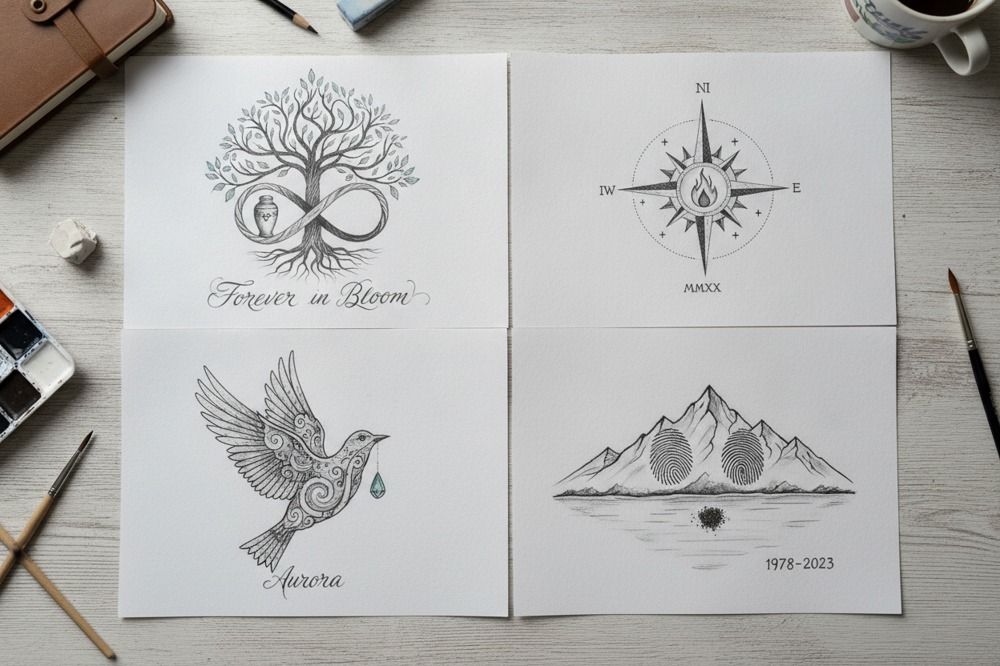
Start with what the design means to you, not with what looks good on a tattoo chart. Almost any design can hold a small amount of prepared ashes, so the choice is really about which image says the most about the person you’ve lost and sits well on the part of the body you have in mind. A single stem of their favourite flower, their dog’s name in your own writing, a compass, a wave, a short line of a song. The ashes go into the ink either way, so pick the picture first and let the rest follow.
Most people arrive with half an idea and a photo on their phone and that’s plenty to work with. The job from there is turning that half idea into something that reads clearly on skin, ages well over the years and carries the meaning you want it to carry. Below is how I’d think it through if you were sitting across from me.
What Makes A Good Ashes Tattoo Design?
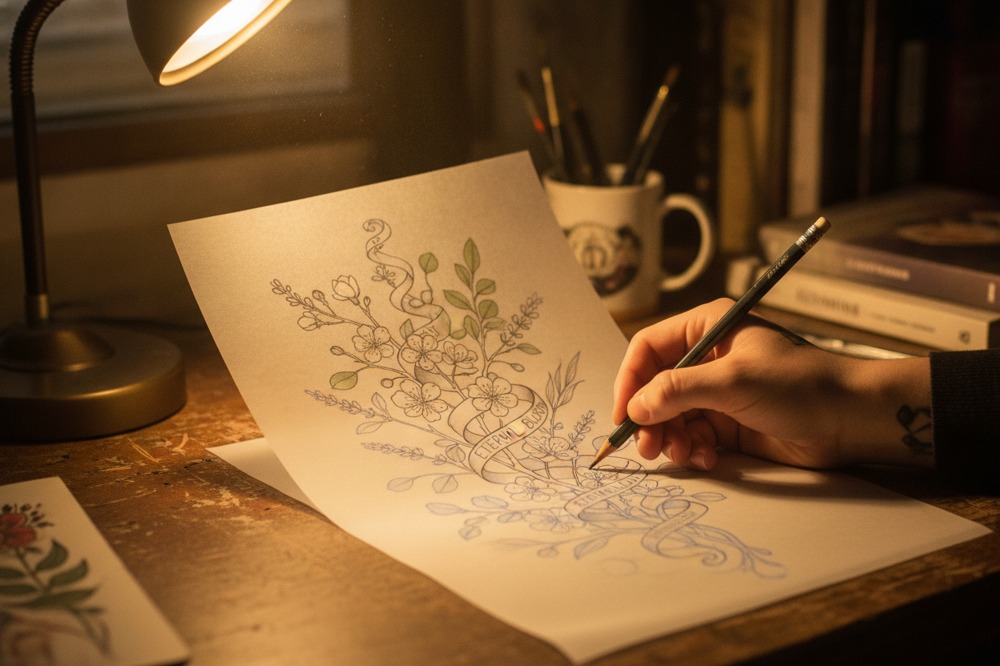
A good ashes tattoo design is one that still looks like itself in ten years. Skin isn’t paper. Very fine detail and hair-thin lines soften as a tattoo settles and heals, so a design that leans on tiny intricate marks can lose its shape over time. That doesn’t mean simple and plain. It means the core image needs to hold up: a strong silhouette, clear shapes, a bit of breathing room around the lines.
Because a small amount of prepared ashes is blended into the ink, the ashes end up spread through whatever you choose rather than sitting in one spot. So you don’t need a design built “around” the ashes. You choose the image you love and the ashes live inside its lines. A robin’s breast, the petals of a rose, the outline of a mountain they walked, the letters of a name. All of it carries them.
Think about placement early too, because it shapes the design as much as taste does. A long thin quote suits a forearm or collarbone. A round emblem suits an inner wrist or behind the ear. If the meaning matters more than showing it off, the inside of the upper arm or the ribs keeps it private. Design and placement are one decision, not two.
Should An Ashes Tattoo Design Be Small Or Detailed?
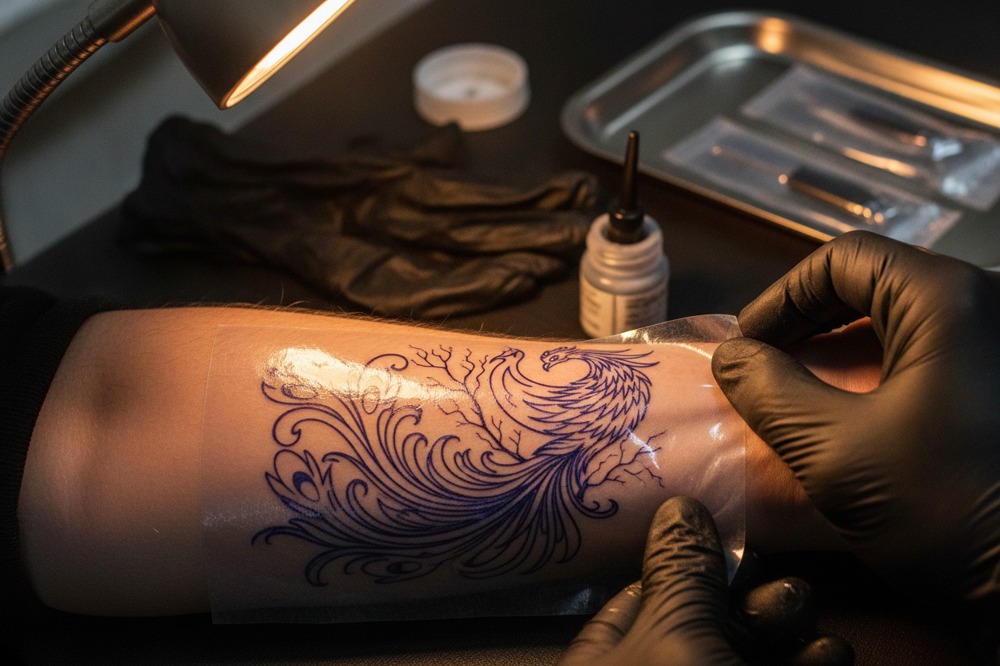
Size is where a lot of people talk themselves into the wrong choice. There’s an instinct to keep a memorial piece tiny and discreet and small can be lovely. A pea-sized paw print, a date in fine numerals, a single initial. But go too small on something with fine internal detail and the lines will eventually blur into each other. A small design works best when it’s a clean, simple shape.
Want detail? Give it room. A portrait, a full flower with shading, a scene with a horizon all need enough space for the shading to sit and stay readable as it heals. If you’re set on a detailed image but want it modest, that usually means going slightly bigger than feels comfortable at first, not smaller. I’ll be straight with you in the studio about which of your ideas will hold and which will fight the size you’ve picked.
The ashes don’t change any of this. The same amount blends into a small wrist piece as into a larger back piece, so size is purely about the image doing justice to the person, not about fitting the ashes in. If you’re weighing designs against budget, the size and detail are what move the price and I’ve set out how that works on ashes tattoo cost uk.
How Do You Match The Design To The Person You’ve Lost?
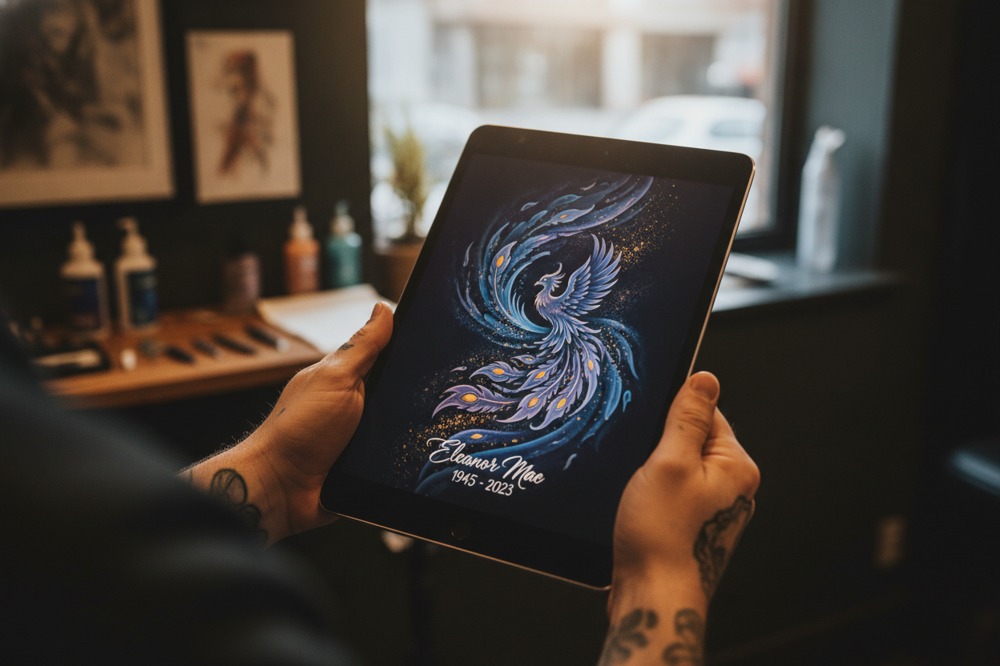
The designs people are happiest with years later almost always tie back to something real, not something generic. A little robin because they believed in them. Sweet peas because they grew them every summer along the back fence. The registration of the classic car in the garage. A recipe card line in their own shaky handwriting. Those specific things do more work than any polished symbol because they’re unmistakably that one person.
So before you settle on an image, jot down the ordinary details. What did they always say? What did they wear, drive, grow, listen to? What’s the thing that, if a stranger saw it, wouldn’t mean much, but to you means everything? That’s usually where the design is hiding. Their handwriting is one of the strongest routes of all and there’s a whole page on turning a card or note into a piece over on adding ashes into tattoo ink that covers how the writing and the ink come together.
If more than one person or pet is being remembered, you can carry them in one design. Two names woven together, a pair of birds, initials inside a shared shape. The ashes for each can be kept separate in the preparation so nothing gets muddled.
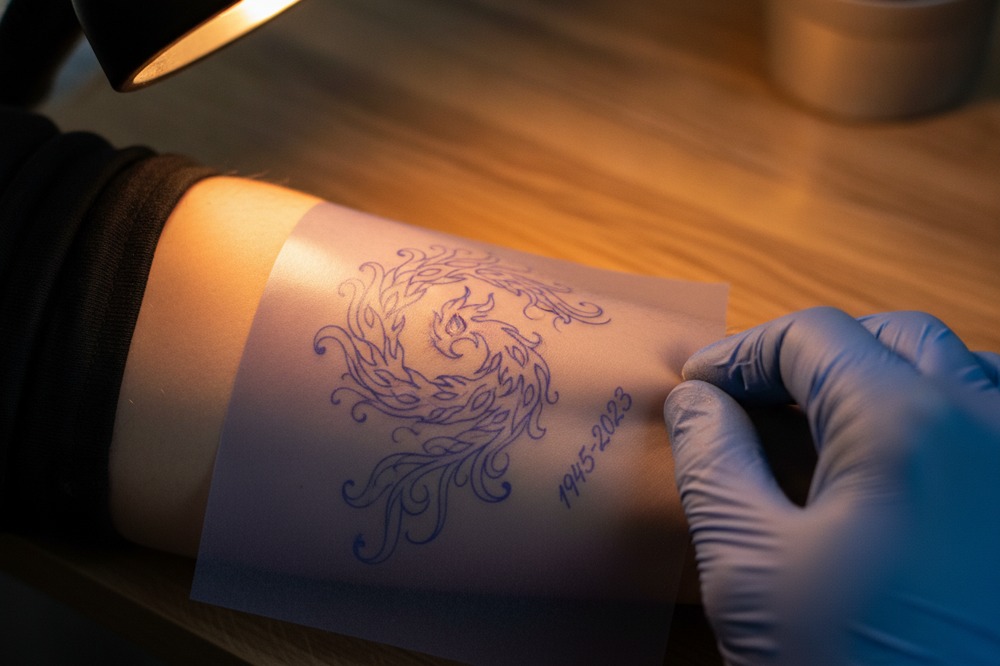
What Design Choices Do People Regret With Ashes Tattoos?
The regrets I hear about aren’t dramatic. They’re small, avoidable ones. Rushing the choice while grief is raw and picking something that felt right that month but not later. Cramming too many elements into one piece so none of it stands out. Copying a design they saw online that meant something to that family but nothing to theirs. Going so small that the detail they loved disappeared as it healed.
One more worth naming: trying to make the tattoo do everything at once. A name, dates, a portrait, a quote and a symbol crammed together rarely works. Pick the one thing that matters most and let it lead. You can always add a second, smaller piece later. There’s a fuller rundown of the pitfalls on ashes tattoo mistakes to avoid and it’s worth a read before you commit.
Take your time. An ashes tattoo is permanent and you only get one go at using that portion of ashes on that piece, so a week or two more thinking is never wasted. I’d rather you came back with a clearer idea than book you in before you’re ready.
Can You Build An Ashes Design Around A Tattoo You Already Have?
Yes, often. If you already have a tattoo that connects to the person, an ashes design can be built to sit alongside it or extend it, so the two read as one story rather than two separate marks. A memorial piece that continues a sleeve, a small addition that ties into something you had done together, a date added beneath an existing image.
In some cases the ashes can go into a fresh element added to existing work rather than a standalone piece. Whether that suits your skin and the age of the older tattoo is something to look at in person. There’s detail on the options and the limits on can you add ashes to an existing tattoo, which is worth reading if you’re thinking of building onto work you already carry.
When you plan a design as a companion to something you already have, bring photos of the existing piece to the design chat. Matching the style, the line weight and the ageing of the older tattoo makes a real difference to how well the new part settles in beside it.
What Happens With The Ashes While We Settle The Design?
Here’s the part people quietly worry about and it matters more than the design itself for a lot of them. Being able to see the ashes the whole time is what lets people relax enough to enjoy the day rather than dread it. Some want to watch every step. Others can’t bear to look and would rather glance away at the moment the ashes are handled. Both are completely normal and either is fine here.
So nothing happens out of sight. The ashes stay in the room and in view the whole time, never taken off to a back room. A small amount, roughly a teaspoon’s worth, is what’s needed for the tattoo and the rest goes home with you. That prepared amount is matched to the right particle size, cleaned, sterilised to clinical standards and cleared of contaminants, then blended into a bespoke, particle-matched, high-quality tattoo ink. Once it’s in your skin it feels and heals like any ordinary tattoo. Having spent over20 years focused on ashes work inside a tattooing career of over 30, I take real care over this part, because getting it gently right is often what people remember most.
On the day you’ve got a simple either/or on the ashes. Bring the whole container and I’ll measure out what’s needed myself if you’d rather not handle them, or measure a small amount, about a teaspoon’s worth, at home and just bring that. Whichever you choose, the rest goes back home with you and if you’d rather not watch that step it’s done quietly while you look away.
How Do You Turn A Rough Idea Into A Finished Design?
Most designs start as a conversation, not a drawing. You tell me who they were and what you’re drawn to, we look at your photos and references together and I sketch from there. If you arrive with nothing but a feeling, that’s fine. We work backwards from the details of their life until an image shows up.
You don’t need to know tattoo language or arrive with anything polished. A blurry photo, a saved image, a name written on the back of an envelope. That’s enough to start. From there it’s back and forth until the design feels right and sits well where you want it. If you want to read more widely first, the ashes tattoos guide walks through the whole process from choosing to healing.
Frequently Asked Questions
Do I Need To Choose The Design Before I Book?
No. Plenty of people book first and settle the design together nearer the day. A rough idea, a feeling or a photo is enough to start. We shape it into a finished design in the studio and I’d rather you booked without a fixed plan than forced a choice too early.
Can I Change My Ashes Tattoo Design After I’ve Booked?
Yes, right up until the needle starts. Nothing is locked in until you’re happy on the day. It’s common to arrive with one idea and refine it once we’ve talked it through, so bring your thoughts loosely held.
What Ashes Tattoo Designs Age The Best Over Time?
Simple, strong shapes with a bit of space around the lines age best. Clean silhouettes, bold outlines and clear lettering stay readable for years. Very fine internal detail and hair-thin lines are the ones that soften as skin settles, so those need enough size to hold their shape.
Should The Ashes Tattoo Design Show That It Holds Ashes?
That’s entirely your call. Nothing about the design has to reveal it. Most ashes tattoos look like any other tattoo and only you need know what’s blended into the ink. Some people like a private symbol that hints at it, but there’s no need for anything visible.
Can One Design Hold Ashes From More Than One Loved One?
Yes. A single design can remember more than one person or pet, with the ashes for each kept separate during preparation. Woven names, paired birds or initials inside a shared shape are common ways to hold two people in one piece.