
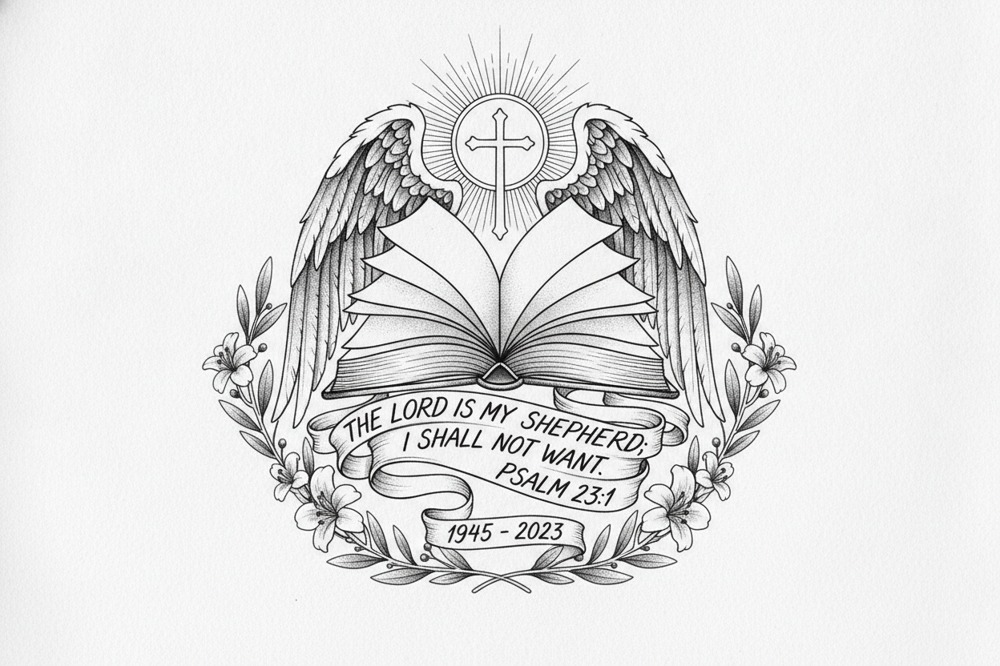
Getting Bible Verses for Memorial Tattoos
Key Takeaways
- The verses chosen most often for memorial tattoos are Psalm 23, Revelation 21:4, John 14:2, Philippians 4:13, 1 Corinthians 13:8 and Isaiah 41:10.
- A verse can be tattooed three ways: the words alone, the words with the citation beneath, or the reference on its own with no text at all.
- The translation should be settled before the placement, because King James wording runs longer than NIV, ESV or NLT and therefore dictates the size the tattoo needs.
- Lifting the key phrase, such as “fear no evil” from Psalm 23 or “no more pain” from Revelation 21:4, keeps the lettering legible at small sizes as the tattoo ages.
- Bubblegum Ink asks clients to bring the verse written out exactly, translation and reference included, since a transposed digit or a word from the wrong version is permanent.
- A verse can be lettered in ink carrying a loved one’s ashes, which Bubblegum Ink prepares by matching particle size, cleaning, sterilising to clinical standards and clearing contaminants.
- Clients bring the whole container or around a teaspoon measured out at home, the ashes stay in view throughout, and everything unused goes back with them the same day.
Most people worrying over which verse to pick are really worried about getting it wrong, that they’ll choose something the person wouldn’t have wanted, or that a favourite line won’t sit right in ink forever. So take the pressure off first: the verse that fits best is the one that already meant something between you and them, not the one that sounds the most profound. Psalm 23, Revelation 21:4, John 14:2, Philippians 4:13, Isaiah 41:10 and 1 Corinthians 13 come up again and again for memorial pieces because they speak to comfort, reunion and love that outlasts death. Any of those can be tattooed in full, shortened to the phrase that matters, or paired with a name, a date or a small design.
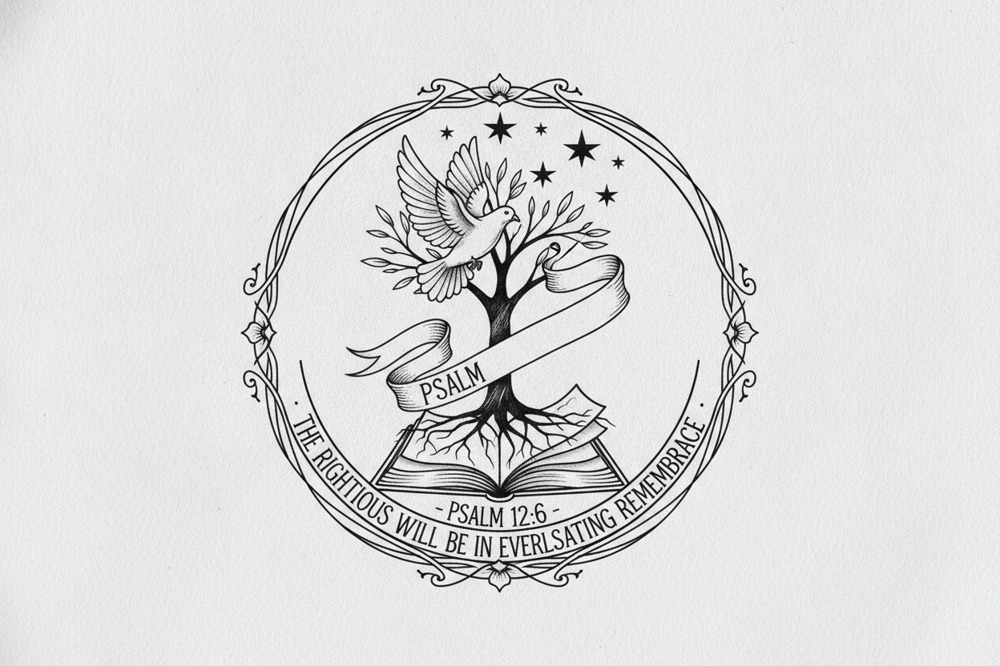
Which Bible Verses Do People Choose Most For A Memorial Tattoo?
Certain passages turn up over and over and it’s worth knowing why before you settle on one. Psalm 23 (“The Lord is my shepherd”) is probably the most common, either the opening line or “though I walk through the valley of the shadow of death, I will fear no evil.” People often heard it read at the funeral, so it carries the day itself.
Revelation 21:4 (“He will wipe every tear from their eyes. There will be no more death or mourning or crying or pain”) gets chosen for its promise that the suffering is over, which matters a lot after a long illness. John 14:2 (“In my Father’s house are many rooms”) speaks to the idea of them being somewhere, waiting. Philippians 4:13 (“I can do all things through Christ who strengthens me”) suits someone who was tough, who fought hard. And 1 Corinthians 13:8 (“Love never fails”) or the wider “love never ends” passage gets picked when the relationship is the whole point.
A few others worth knowing: Joshua 1:9 for courage, Matthew 5:4 (“Blessed are those who mourn, for they will be comforted”), Deuteronomy 31:6 (“He will never leave you nor forsake you”) and Song of Solomon 6:3 for a spouse. If none of the famous ones fit, that’s normal. Sometimes the right verse is one they underlined in their own Bible, or the reading from their wedding.
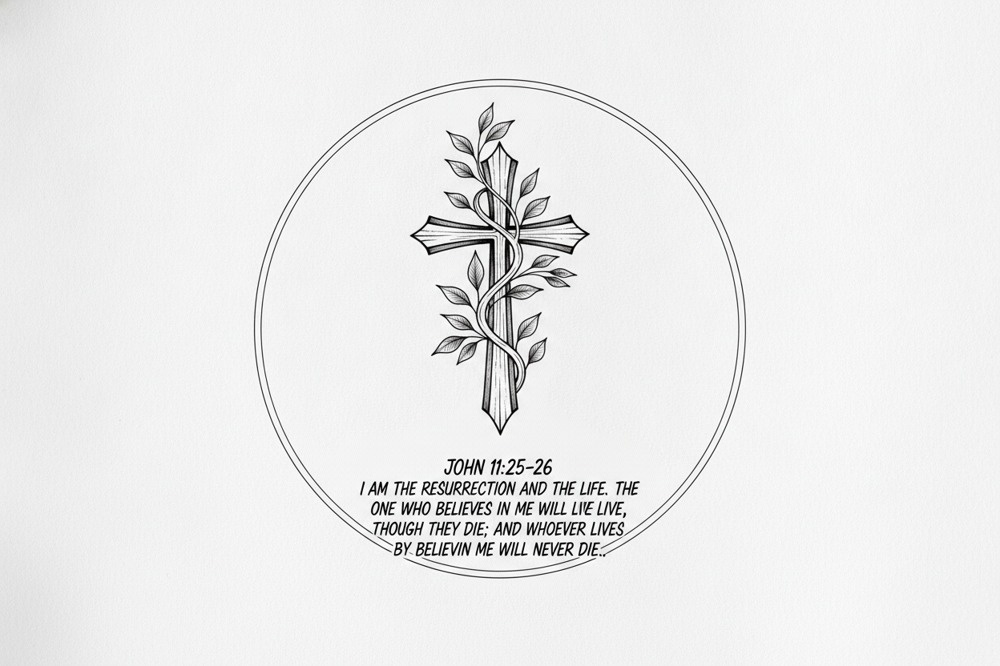
Should You Include The Bible Reference In A Memorial Tattoo?
This is the decision people underthink and then wish they’d got right. You’ve got three ways to do it. You can tattoo the words alone, with no reference. You can tattoo the words plus the citation (“Psalm 23:4”). Or you can tattoo just the reference on its own, no words at all.
Words alone read as a personal message and they don’t announce themselves as scripture to a stranger. That suits people who want the meaning private. Adding the reference underneath, usually smaller, tells anyone who knows the Bible exactly where it’s from and it lets you shorten a long verse to a single line while the citation carries the rest. Just the reference, say “Jeremiah 29:11” tucked on a wrist, is the most discreet of all, a nod only the two of you and anyone who looks it up would understand.
One thing to get correct before the needle goes anywhere near skin: check the exact wording against the translation you mean and check the chapter and verse numbers. A transposed digit or a word from the wrong version is a permanent mistake. I always ask people to bring the verse written out exactly as they want it, translation and all, so there’s no guessing on the day. If you’re weighing up whether a verse or a plainer line suits you better, it can help to look at some meaningful memorial tattoo sayings alongside the scripture you’re considering.
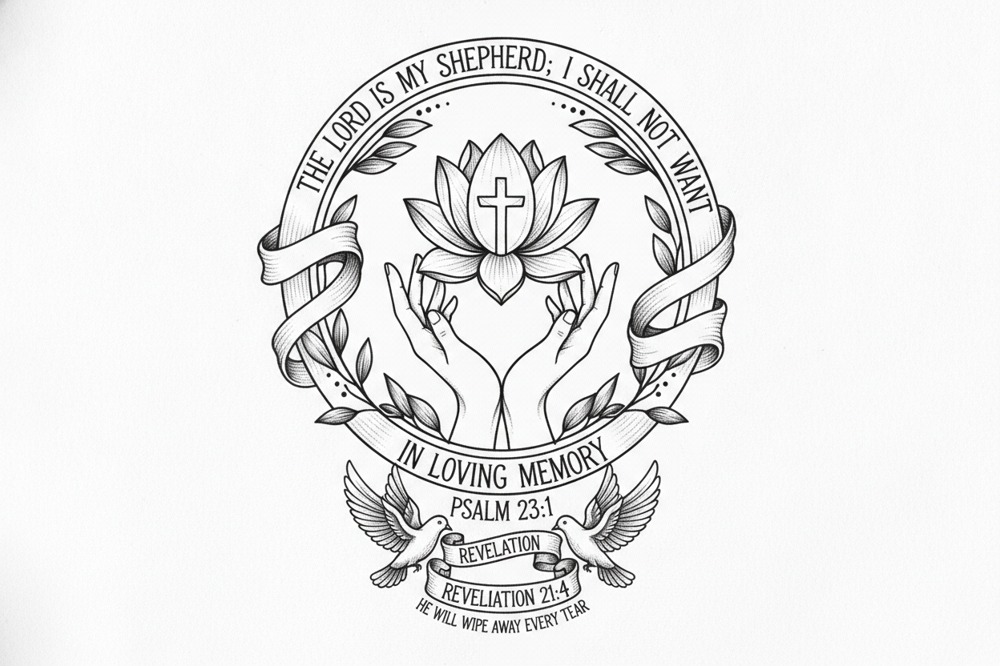
Full Verse Or Just A Phrase From It?
Long verses are beautiful and they’re also a lot of skin. Psalm 23 in full is several lines and needs a decent stretch of forearm, back or ribs to breathe. Cramming it small makes it hard to read and the letters can blur over the years as tattoos settle. So a common move is to lift the phrase that does the emotional work and leave the rest.
“Fear no evil” carries Psalm 23. “No more pain” carries Revelation 21:4. “Love never fails” carries the whole Corinthians passage. A short fragment reads clean at any size, ages better and leaves room to sit it beside a portrait, a flower or a set of dates. If the shortened line still feels too bare on its own, pairing it with the reference underneath restores the context without the length. There’s a wider list of short memorial tattoo quotes that works the same way, giving you the weight of a longer sentiment in a few words.
At the far end of trimming down, some people take a single word from a verse, “Faithful,” “Grace,” “Beloved,” and let that stand for the whole thing. If that appeals, it’s worth browsing some one word memorial tattoo ideas to see how much one word can hold.
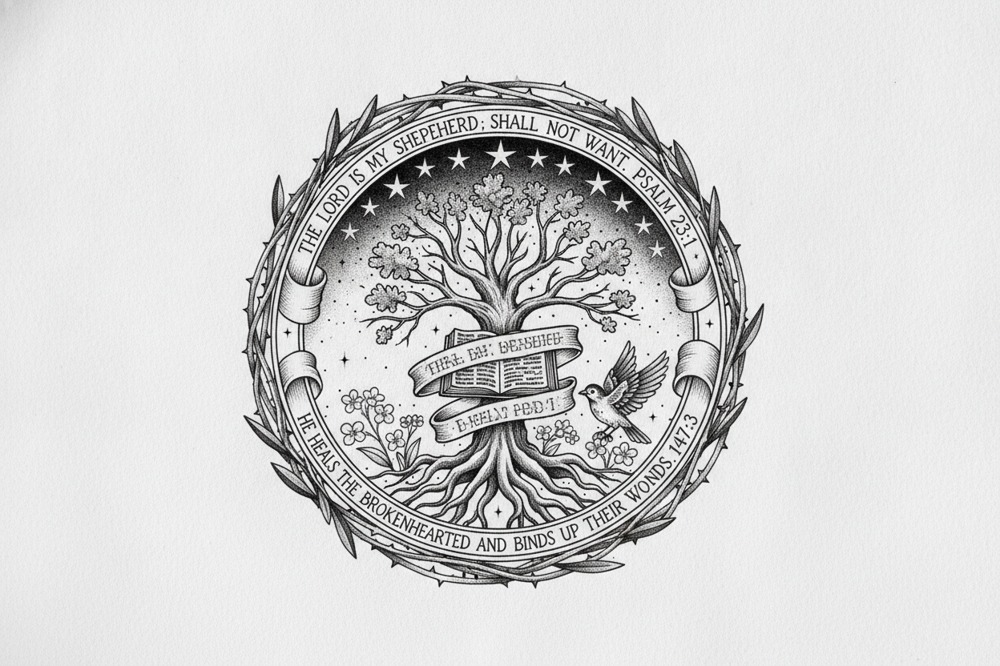
Does The Bible Translation Change How The Tattoo Looks?
Yes and it catches people out. The King James Version reads “Yea, though I walk through the valley of the shadow of death.” The NIV reads “Even though I walk through the darkest valley.” Same verse, different words, different length, different feel. KJV has the old cadence people associate with tradition and funerals. Modern versions like NIV, ESV or NLT read plainer and shorter, which matters if you’re tight on space.
Pick the translation before you pick the placement, because it decides your word count and therefore your size. If the person who died had a Bible they used, match whatever version they read, it’s a quiet way of keeping their voice in it. And if you want the verse in the original feel, some people set a KJV line in a serif or blackletter style, while a modern translation often suits a lighter script. The lettering style is worth settling at the same time as the words, since a flowing script and a bold gothic take up very different amounts of room for the same sentence.
Can You Combine A Bible Verse With Ashes Or A Portrait?
You can and it’s one of the more meaningful ways to do it. A verse alongside a small portrait, a dove, a cross, a set of praying hands, or their dates turns a line of text into a full memorial piece. The scripture gives the meaning and the imagery gives the face or the symbol you picture when you think of them.
Where it goes further is having the verse tattooed using ink that carries a small amount of their ashes. The ashes are matched to the right particle size, cleaned, sterilised to clinical standards and cleared of contaminants, then blended into a bespoke, particle-matched, high-quality tattoo ink. Once it’s in the skin it heals and feels like any ordinary tattoo and every letter of that verse is written with something of them in it. Plenty of people ask, quite rightly, whether this is safe to do and it’s a fair question to read up on before you book. You can go through are ashes tattoos safe for the honest answer on preparation and skin.
The quiet worry most people never say out loud is what happens to the ashes they don’t use. Nothing is taken off to a back room here. The ashes stay in view the whole time, on the table in front of you. If handling them yourself feels like too much, I’ll take out the small amount that’s needed while you watch, or look away if you’d rather and only ever what’s needed goes into the ink.
Where Should A Bible Verse Memorial Tattoo Go On The Body?
Placement follows length. A single short phrase fits the wrist, inner forearm, collarbone, ribs or ankle. A full multi-line verse wants a longer, flatter run of skin, the outer or inner forearm, the upper arm, across the shoulder blade, down the spine or along the ribs. Curved or bony spots like fingers and the tops of feet are harder to keep legible with a lot of small text, so they suit a reference or a couple of words rather than a paragraph.
Think about who reads it, too. Inner forearm faces you, so a verse there is for you to see and steady yourself with. The outer forearm faces the world. Over the heart or on the ribs is the most private, close and kept for you. Once you know the wording and the translation, the placement more or less tells you itself, since the line length decides what will sit flat and stay readable as the years pass.
Having specialised in ashes and memorial work for over 20 years, inside a tattooing career of more than 30, I’ve seen the same lesson prove out plenty of times: a verse given room reads for a lifetime, while one squeezed in to fit a spot it was never suited to is the piece people come back wanting reworked. It’s worth reading through the memorial tattoo quotes guide if you want to see how wording, placement and design decisions fit together before you commit.
What To Bring If You Want The Verse Done With Ashes
Bring the verse written out exactly, translation and reference included, so nothing is left to chance on the day. If you want the ashes worked in, there are two easy ways to handle it. You can bring the whole container along and I’ll take out the small amount needed, roughly a teaspoon’s worth, myself, which suits anyone who’d rather not touch the ashes at all. Or you can measure that small amount out at home beforehand and just bring that.
Either way, only a little is used and the rest goes back home with you the same day. That part matters to people more than they expect: the container leaves with them, still holding almost all of what they brought. You don’t hand your loved one over and hope. You keep them.
FAQ
What Are The Most Popular Bible Verses For Memorial Tattoos?
Psalm 23, Revelation 21:4, John 14:2, Philippians 4:13, 1 Corinthians 13:8 and Isaiah 41:10 come up most for memorial pieces. They tend to be chosen for comfort, the promise of reunion or love that outlasts death. Many people also pick a verse that was read at the funeral or one the person underlined in their own Bible.
Should I Put The Bible Reference On My Memorial Tattoo?
That’s your call and there are three routes. Words alone read as a private message, words plus the citation (like “Psalm 23:4”) tell people where it’s from and let you shorten a long verse and just the reference on its own is the most discreet. Whichever you pick, check the exact wording and the chapter and verse numbers against your chosen translation before it’s inked.
Which Bible Translation Should I Use For A Memorial Tattoo?
Match the translation to the feel you want and, if you can, to the version the person read. The King James Version has the traditional funeral cadence but runs longer, while NIV, ESV and NLT read plainer and shorter, which helps if space is tight. Settle the translation first, because it fixes your word count and therefore the size and placement.
Can I Get A Short Bible Phrase Instead Of A Whole Verse?
Yes and it often works better. Lifting the key phrase, such as “fear no evil” from Psalm 23 or “no more pain” from Revelation 21:4, keeps the tattoo legible at any size and leaves room for a design or dates. You can add the reference underneath so the shortened line still points to the full passage.
Can A Bible Verse Be Tattooed Using My Loved One’s Ashes?
Yes. A small amount of ashes is matched to the right particle size, cleaned, sterilised to clinical standards and cleared of contaminants, then blended into a bespoke, particle-matched, high-quality tattoo ink used to letter the verse. The ashes stay in view throughout, only a small amount is used and the rest of the container goes home with you.
Where Is The Best Place To Put A Bible Verse Memorial Tattoo?
It depends on length. A short phrase fits the wrist, inner forearm, collarbone, ribs or ankle, while a full multi-line verse needs a longer flat area like the forearm, upper arm, shoulder blade, spine or ribs. Curved or bony spots suit a reference or a few words rather than a long passage that has to stay readable for years.
Written by Paul Cutler, founder of Bubblegum Ink ®. Find out more about Paul.