
Horse Memorial Tattoo Placement Designs
Key Takeaways
- The forearm, upper arm, calf and thigh hold a horse memorial tattoo best, because a horse is a long animal and those spots let a design run without being squashed into a curve.
- A galloping or full-body silhouette suits a forearm or calf, while a rearing horse goes tall rather than long and reads better on the upper arm or the side of the calf.
- A horse head study needs a broad flat plane such as the outer thigh, shoulder blade, chest or ribs, because sharply curved skin pulls the eye out of shape and with a portrait the eye is everything.
- Riders who still compete should keep a horse tattoo off saddle-contact skin, boot grip and glove lines, which rules out the forearm, calf and inner thigh in favour of the outer thigh, shoulder, outer upper arm or ribs.
- Stable tradition holds that a horseshoe pointing up keeps the luck in and one pointing down lets it out, and an upward shoe runs cleanest along a forearm or up the side of a calf.
- Bubblegum Ink matches a horse’s ashes to the right particle size, cleans, sterilises and decontaminates them, then blends them into bespoke particle-matched ink that behaves like any ordinary tattoo ink once in the skin.
- Clients bring their horse’s ashes in a small sealed container, only a teaspoon’s worth is used, and the rest goes home the same day.
The forearm, upper arm, calf and thigh hold a horse memorial tattoo best, because a horse is a long animal and those spots give a design room to run without being squashed into a curve. A galloping silhouette suits a forearm or the length of a calf. A close head study wants a flatter, wider area like the outer thigh, shoulder or ribs. Where you put it comes down to the shape of the design, the size you want and whether you’d rather see it every day or keep it private.
That last part matters more than people expect, as a horse is not a small subject. The animal that carried you, the one you mucked out at six in the morning for fifteen years, doesn’t shrink down to a thumbnail on a wrist and still look like itself. So placement and size have to be decided together, not one after the other.
Where Does A Full Horse Silhouette Sit Best On The Body?
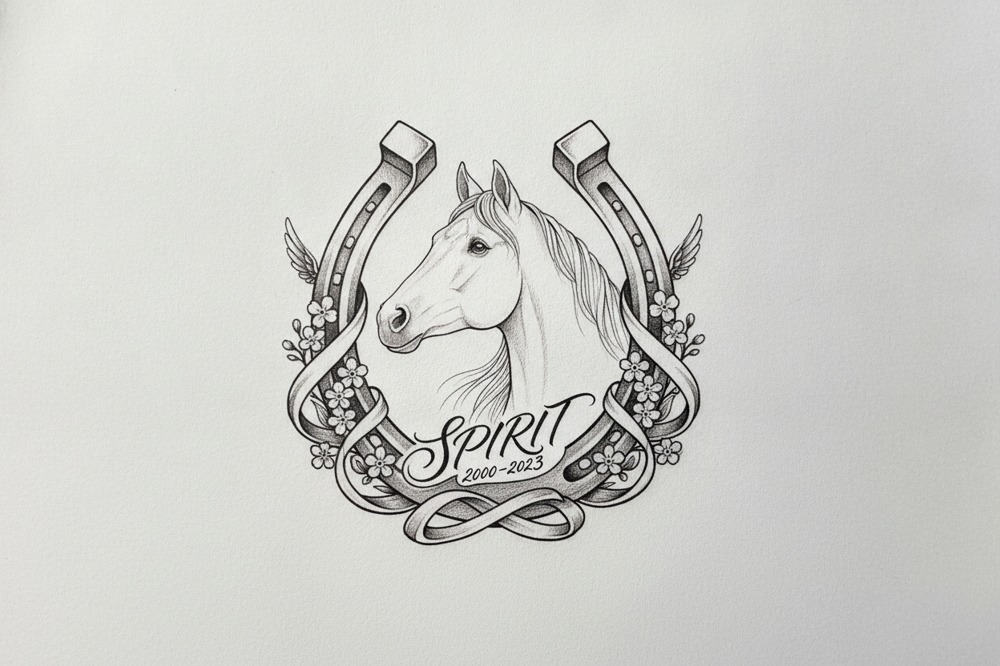
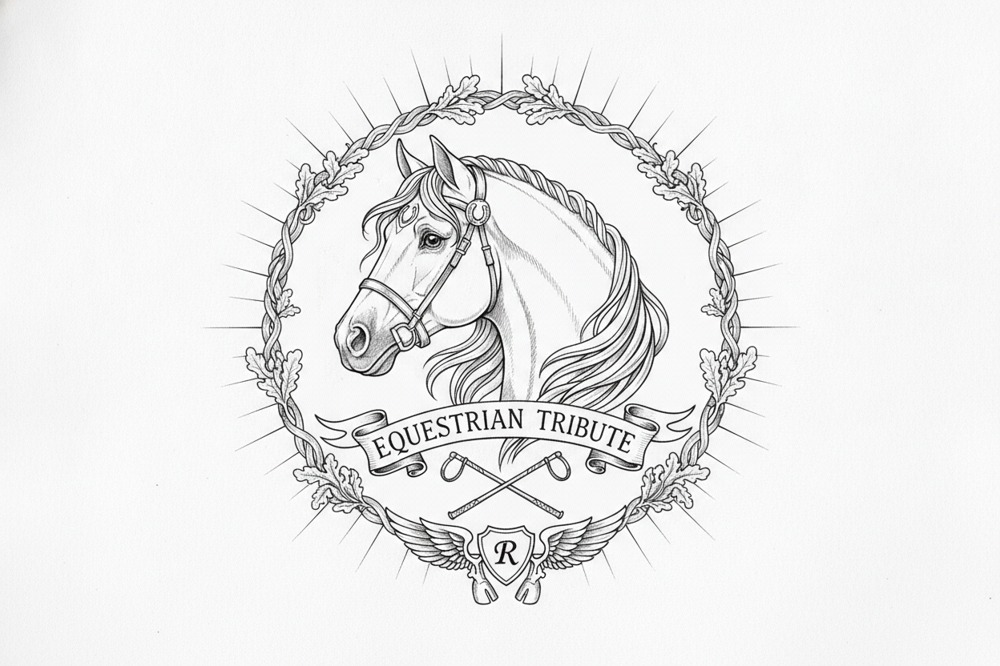
A full-body horse, standing square or mid-stride, needs a long straight run of skin. The outer forearm is a favourite for this. It’s flat, it’s visible when you want it and the horse can face up toward the elbow so it looks like it’s moving forward rather than falling backward. The calf works the same way and takes a bigger piece, so if you want the legs, the tail and the flow of the mane all in there, a calf gives you the room the forearm can’t.
The thigh is the one I steer people toward when they want the whole scene. Not just the horse but the field behind it, a fence line, a low sun. Thighs are broad and forgiving and they hide easily under clothes, which suits anyone who wants this kept for themselves. A rearing horse is different again. That pose goes tall, not long, so the upper arm or the side of the calf reads better than anything horizontal. You can see a lot more of these compositions on the horse memorial tattoo ideas and inspiration page if you’re still weighing up the design itself.
Which Placement Suits A Horse Portrait Or Head Study?
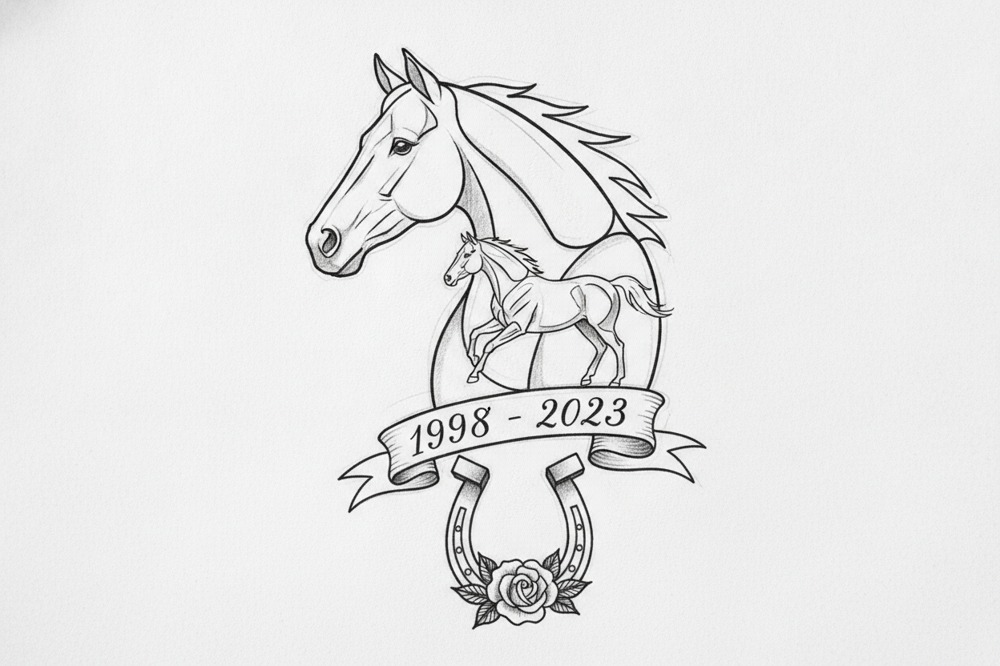
A head-and-neck portrait, the soft eye, the forelock, the whiskers on the muzzle, needs a broad flat canvas so the face isn’t distorted. Skin that curves too sharply will pull the eye out of shape and with a portrait the eye is everything. That’s why the outer thigh, the shoulder blade, the chest and the ribs work so well for these. They’re big flat planes.
The upper arm can take a portrait too if it’s not wrapped too far round the muscle. Keep it on the outer face where the skin sits flatter. I’d avoid squeezing a detailed portrait onto a wrist or ankle, the fine work in the eye and the nostrils gets lost when it’s shrunk that far. If a portrait is what you’re set on, it’s worth reading through the horse portrait ashes tattoo ideas first so you go in knowing the size a good likeness needs.
Where Should A Horseshoe Or Small Horse Memorial Tattoo Go?
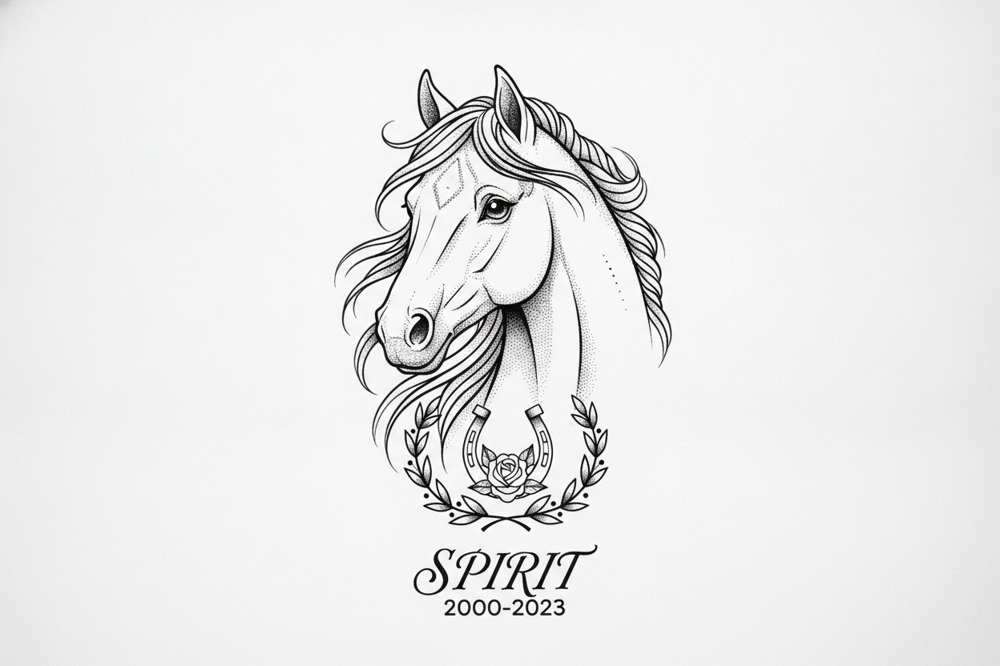
Not everyone wants a big piece. A horseshoe, a small side profile, a single hoof print or your horse’s name in your own hand can go almost anywhere and this is where the private, tucked-away spots come into their own. The inner forearm, the inner wrist, behind the ear, the back of the neck, the ankle, the ribs under the arm. A horseshoe sits especially nicely on the inner forearm or the collarbone.
There’s an old bit of stable superstition worth knowing here. A horseshoe pointing up holds the luck in, a horseshoe pointing down lets it pour out. Plenty of people want theirs open-end up for that reason and the way it points changes which placements look natural, an upward shoe reads cleanest running along a forearm or up the side of a calf. Small doesn’t mean less, either. A tiny hoof print on the inside of the wrist, blended with your horse’s ashes, carries every bit as much weight as a full portrait across a thigh.
Does Where You Ride Or Work Change The Best Placement?
This is the question that only really applies to a horse. If you still ride, still compete, still teach, the placement has to live with that. A forearm piece rubs under a long-sleeve show shirt and a leather glove. A calf tattoo sits right where a tall boot grips and a fresh tattoo under a riding boot for hours is not comfortable while it’s healing. The inner thigh, the same, that’s saddle-contact skin.
So I ask people what their week looks like. If you’re in the yard and the saddle most days, the outer thigh, the shoulder, the upper arm or the ribs tend to be the sensible calls, out of the way of tack and boots and reins. If your riding days are behind you, that opens the forearm and calf right back up. Grooms and farriers who kneel a lot sometimes rethink a knee or shin piece for the same reason. It’s a small thing to think through and it saves you living with a tattoo that catches on the one bit of kit you wear every day. Placement thinking like this crosses over into other memorial work too and there’s broader guidance on it in the memorial tattoo design ideas I’ve put together.
Why Does It Help To Watch Your Horse’s Ashes Being Used?
For a lot of people this is the part that stays with them long after the tattoo has healed. When your horse’s ashes go into the ink, you can watch every second of it. Some people need that. They’ve carried the box home from the yard, they’ve kept it on a shelf and the idea of it disappearing into a back room where they can’t see is the last thing they want. Seeing it done, in front of them, is what lets them let go a little.
Others find they can’t look and that’s just as fine. If handling the ashes is too much, I’ll do that part gently while you sit with someone or turn your head away and nothing is ever taken out of your sight to do it. Twenty of my roughly thirty years tattooing have been spent doing this kind of work and the one thing I’ve learned is that people grieve differently in that chair, so there’s no right way to be in the moment. The ashes are matched to the right particle size, cleaned, sterilised to clinical standards and cleared of contaminants, then blended into a bespoke, particle-matched, high-quality tattoo ink. Once it’s in your skin it behaves like any ordinary ink, same feel, same healing.
What Should You Bring To A Horse Ashes Tattoo Appointment?
A practical tip before anything else, bring the ashes in a small sealed container so nothing spills in the car on the way over. Only a small amount is used, a teaspoon’s worth and the rest goes home with you the same day. You’ve got two ways to handle it. Bring the whole container along and I’ll take out what’s needed myself, which suits anyone who’d rather not touch the ashes at all. Or measure out that small amount at home, using a clean spoon and just bring that across.
Bring a reference photo of your horse too, the clearer the better, a good side-on shot or a close head photo depending on the design. If you’re set on a placement, wear clothing that gets to it easily, sleeves that push up for a forearm, something that lets me reach a thigh or a ribs area without fuss. If you’re still deciding between two spots, come in and we’ll look at both against your body before anything is drawn on. The full run-down of what to expect sits in the horse ashes tattoos guide if you want to read ahead.
FAQ
What’s The Best Placement For A Horse Memorial Tattoo If I Still Ride?
Keep it off the skin that meets your tack and boots. The outer thigh, the shoulder, the outer upper arm and the ribs all stay clear of saddle contact, boot grip and glove lines, so they won’t rub while healing or catch every time you ride. Save the forearm and calf for after your riding days if you compete regularly, since both sit right where sleeves and tall boots press.
How Big Does A Horse Portrait Tattoo Need To Be To Look Right?
A head study needs enough room for the eye, the muzzle and the fine detail around the nostrils to read clearly, which is why the thigh, shoulder, chest and ribs suit it. Shrink a portrait down to a wrist or ankle and that detail blurs as it heals. Bring a clear reference photo and we’ll size it to the spot so the likeness holds.
Where Can I Put A Small Horse Memorial Tattoo?
Small designs like a horseshoe, a hoof print, a name in handwriting or a simple side profile fit almost anywhere. The inner forearm, inner wrist, behind the ear, the ankle, the collarbone and the ribs are all popular for something discreet you can keep private or show when you choose.
Should A Horseshoe Tattoo Point Up Or Down?
Stable tradition says an upward-pointing shoe holds the luck in and a downward one lets it out, so most people choose open-end up. The direction also affects placement, an upward shoe runs cleanest along a forearm or up the side of a calf, while it reads well on the collarbone either way.
Can I Get A Full Horse And Rider Scene, And Where Does That Go?
Yes. A horse-and-rider or a horse in a full field scene needs a broad area, so the thigh, the back or the outer upper arm give the composition room to breathe. Wrapping something that detailed round a slim limb tends to crowd it, so pick the widest flat spot you’re comfortable showing.
Does A Horse Memorial Tattoo Hurt More In Certain Placements?
The ashes make no difference to how it feels, it’s the location that changes the sensation. Fleshier spots like the outer thigh and upper arm are generally more comfortable, while ribs, the inner arm and skin close to bone tend to be sharper. If pain is a worry, a fleshier placement is the easier place to start.