
Why Studios Cannot Mix Raw Ashes Into Tattoo Ink
Key Takeaways
- Raw cremation ashes are calcined bone milled into a coarse grit, not a fine powder, and under magnification the fragments look like shards of glass.
- Tattoo pigment particles are measured in fractions of a micron, while raw ash fragments are hundreds of times larger, unevenly sized and sharp edged.
- Mixing unprepared ashes into ink causes three problems at once: oversized particles the skin walls off or rejects, sharp edges that tear the needle channel and blur the tattoo, and unsterile material entering an open wound.
- Bubblegum Ink matches the ashes to the correct particle size, cleans them, sterilises them to clinical standards and clears contaminants before anything is blended.
- Prepared ashes go into a bespoke, particle-matched tattoo ink made for the purpose, deliberately low in viscosity so that once the ashes are added it matches ordinary tattoo ink.
- Ashes cannot be safely prepared at home, as household tools cannot sterilise them or achieve a consistent particle size, and the ashes used cannot be replaced.
- Ask any studio to explain its preparation, since vagueness or an offer to mix the ashes in raw is reason enough to walk away.
- Ashes stay in the client’s sight throughout the appointment at Bubblegum Ink, with around a teaspoon used and the rest going home the same day.
- Paul Cutler has been tattooing for over 30 years and has specialised in cremation ashes work for over 20 of them.
Raw cremation ashes are mostly bone, not soft powder and even the fine-looking stuff is a coarse grit full of jagged fragments far too big and too sharp to sit safely under the skin. That is the main reason no reputable studio tips ashes straight from the urn into an ink cap. What comes back from a crematorium isn’t a delicate dust and isn’t sterile. It’s calcined bone that has been mechanically processed into a gritty sand, usually using a ball mill and under a decent magnifier it looks like tiny shards of glass. A tattoo needle carries pigment particles measured in fractions of a micron. Raw ash fragments are hundreds of times larger, uneven in size and edged like broken flint. Push that into skin and you’re not depositing pigment, you’re grinding debris into an open wound.
How does Bubblegum Ink do it ? They get matched to the right particle size, cleaned, sterilised to clinical standards and cleared of contaminants before they go anywhere near ink. Skip that and you don’t get a memorial tattoo, you get a mess that scars, blows out or rejects. This is the single biggest thing that separates someone who does this properly from someone winging it and it’s worth understanding in full before you hand anyone your loved one’s ashes.
What Happens If You Mix Raw Ashes Straight Into Ink?
A few things go wrong at once and none of them are cosmetic.
First, the particle size, as tattoo ink is engineered so the pigment sits in the dermis and stays put. Raw ash particles are wildly inconsistent, some like fine sand, some like tiny stones. The big ones can’t settle cleanly. The skin treats them as foreign debris and tries to wall them off or push them out, which is where lumps, bumps and rejection come from. You can end up with a raised, scarred patch instead of a clean line.
Second, the edges, because raw ash is sharp and irregular, it drags and tears the channel the needle makes rather than depositing smoothly. That causes blowouts, where the tattoo spreads and blurs under the skin and it damages surrounding tissue so healing takes longer and looks worse.
Third and this is the one people never think about, raw ashes aren’t sterile. They’ve been handled, stored, poured between containers and exposed to air. They will carry contaminants, so putting unsterilised material into an open tattoo is asking for infection. A studio that mixes ashes raw is skipping the exact step that makes the whole thing safe.
Why Can’t A Normal Tattoo Studio Just Prepare The Ashes Themselves?
Most tattoo studios are brilliant at tattooing and have never touched cremation ashes in their life. That’s not a criticism, it’s a different skill entirely and the equipment and know-how to reduce ash to a safe, consistent, sterile particle isn’t sitting in the average shop.
Getting the particle size right isn’t a case of grinding it a bit finer with whatever’s to hand. Over-process it and you damage what makes it meaningful. Under-process it and it’s still unsafe. There’s a specific window and hitting it reliably takes both the right process and a lot of practice with the material itself. Sterilising to a clinical standard is another thing a normal studio isn’t set up for. Then you’ve got blending, because prepared ashes still have to go into a proper carrier so they suspend evenly and behave the way ink needs to behave.
That carrier matters as much as the preparation. The prepared ashes go into a bespoke, particle-matched, high-quality tattoo ink, not a bottle pulled off a shelf and tipped full of grit. With a half and half mix, the bespoke ink before ashes are added,is very low viscosity on purpose, so when the ashes are added, it ends up being the same viscosity as normal tattoo ink. Once it’s done and in your skin, it behaves like ordinary ink, same sensation, same healing. But getting it to that point is a specialist process, which is exactly why it’s a specialism and not a service every studio can bolt on.
Is It Ever Safe To Mix Raw Ashes Yourself At Home?
No and please don’t let anyone talk you into it. There’s a strand of DIY advice floating around suggesting you can crush ashes finer at home, mix them into ink and take them to a willing tattooist. It’s genuinely dangerous.
You can’t sterilise ashes properly at home. You can’t get the particle size consistent with a pestle and mortar or a coffee grinder and you certainly can’t check it. What you’d be handing a tattooist is unsterile, unevenly sized grit suspended in ink, which is the exact combination that causes infection, scarring and rejection. A tattooist who agrees to work with that is taking a risk with your skin and your loved one’s ashes both.
The emotional cost is the part that stings most. People try the home route to save money or because they didn’t know a proper option existed and they end up with a ruined tattoo made from ashes they can’t get back. There’s no redo. The ashes used are gone. That’s why the preparation has to be done right the first time and why it’s worth going to someone who does only this. If you’ve been reading about home mixing versus doing it properly, adding ashes into tattoo ink lays out how the real process works from the ink side.
How Do You Know A Studio Is Preparing Ashes Properly And Not Cutting Corners?
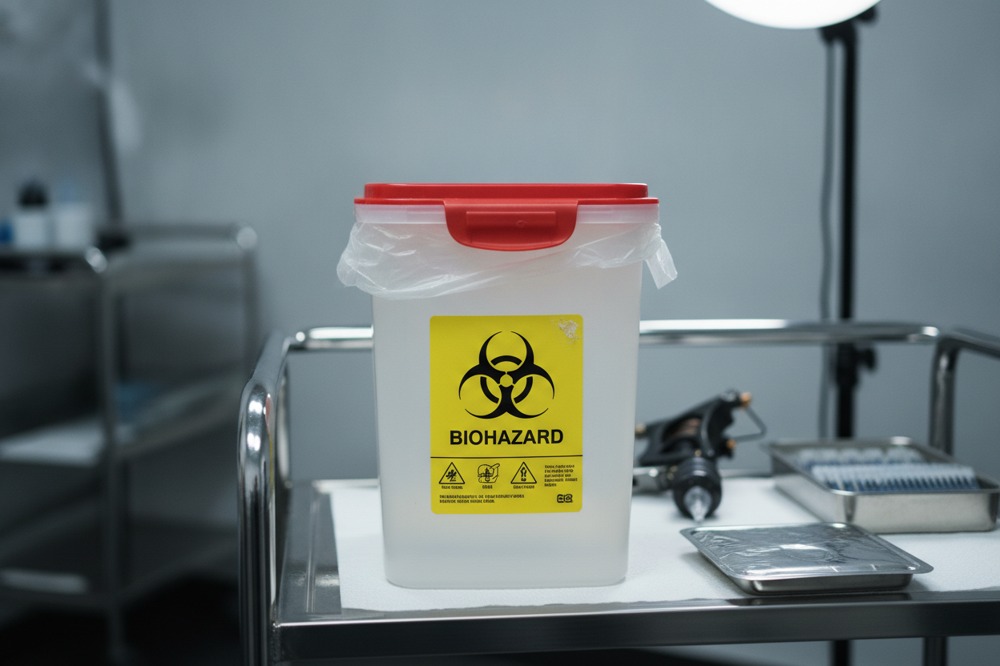
Ask them to explain the preparation, plainly. A studio doing it right will happily talk you through matching the particle size, cleaning, sterilising and clearing contaminants before anything is blended. A studio that’s cutting corners tends to get vague, or worse, tells you they’ll just pop the ashes straight in. That answer alone tells you to walk away.
Here’s the part that should reassure you at Bubblegum Ink ®. Nothing happens out of your sight. Your loved one’s ashes stay in view the whole time and how much you want to see or be part of is entirely your call. Some people want to watch every step. Others can’t bear to look and would rather sit back while Paul handles it quietly and that’s completely fine. You stay in control of it. Nothing gets carried off to a back room, nothing gets swapped and you decide how involved you are.
Experience is the other honest signal. Paul has been tattooing for over 30 years and has specialised in ashes work for 20 + of them. That’s two decades of doing only this, so the preparation isn’t a nervous first attempt on your ashes. The studio is private and appointment-only, so it’s just you and Paul, not a busy shared floor with people wandering past.
What Do You Bring, And When Are The Ashes Prepared?
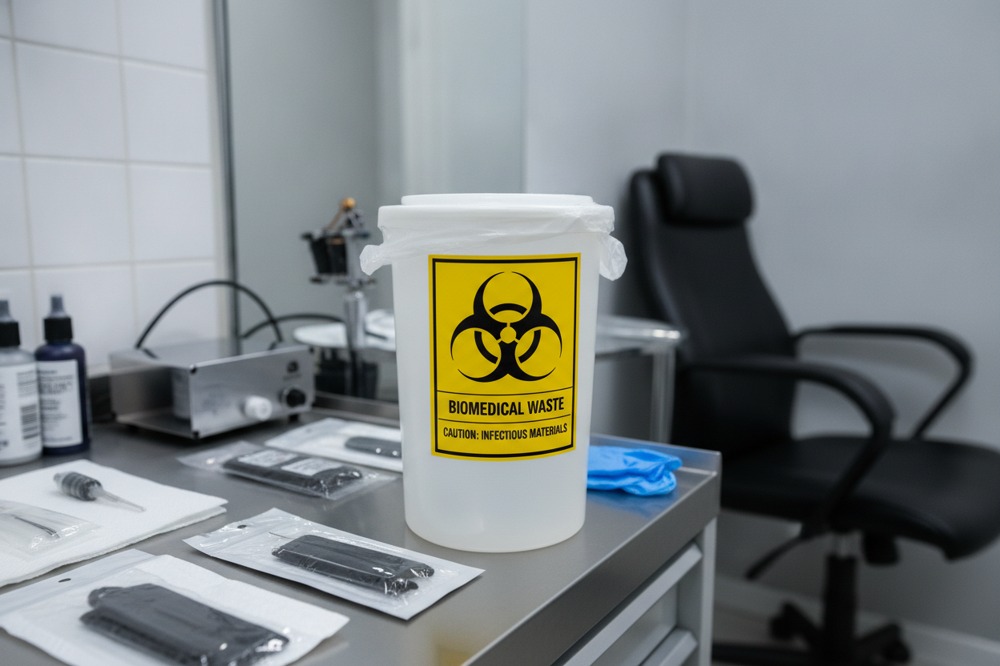
The simplest thing is to bring the whole container along and let Paul take out what’s needed on the day. For a lot of people, handling the ashes themselves is the bit they’d rather not do, so he measures out what’s required gently while you watch or look away, whichever feels right. Only a small amount is used, roughly a teaspoon’s worth and the rest goes home with you.
If you’d prefer, you can measure that small amount out yourself at home beforehand and just bring that portion instead. Either way works. The ashes stay yours, you keep the bulk of them and nothing is taken without you seeing it happen. There’s no posting ashes off in advance and no dropping them somewhere to be dealt with off-site. They come with you on the day and go back with you the same day.
The preparation itself happens as part of your appointment, not weeks earlier out of your view. If you want to understand the run-up to the day, from your first message through to what’s arranged before you arrive, what happens before your appointment sets it out step by step. Knowing the sequence tends to take the anxiety out of it, because there are no surprises about when or how your loved one’s ashes are handled.
Why Does Getting The Preparation Right Matter So Much For A Memorial?
Because you only get one go. This isn’t a tattoo you can laser off and redo with a fresh batch. The ashes woven into it can’t be replaced. So the difference between raw ashes tipped into ink and ashes that have been properly matched, cleaned, sterilised and blended isn’t a technicality, it’s the difference between a tribute that heals beautifully and lasts and a scarred patch made from something irreplaceable.
There’s a peace-of-mind element too. When you know the ashes have been prepared to a clinical standard and sat in a bespoke, particle-matched ink rather than raw grit, you can stop worrying about whether the thing on your arm is safe and just let it mean what it’s meant to mean. A memorial tattoo is a heavy, tender thing to carry through. The last thing anyone grieving needs is a preventable problem on top of the loss. Doing the preparation properly is what lets the tattoo be about the person you’ve lost and nothing else.
Ask A Question Whenever You’re Ready
If you’re weighing this up and something’s still nagging at you, just ask. You don’t have to book anything or commit to a date to get a straight answer. Plenty of people message with a single question first, about the preparation, about how much of the ashes gets used, about what the day looks like and go from there once they feel settled.
You can call the studio on 01270 385001 or email info@bubblegumink.com. No pressure, no hard sell. Ask what you need to ask, take your time and decide when it feels right.
FAQ
Why Can’t Raw Ashes Just Be Tipped Straight Into Tattoo Ink?
Raw cremation ashes are coarse, sharp, unevenly sized bone grit and they aren’t sterile. Pushed into skin like that they tear the tissue, cause blowouts and scarring, get rejected as foreign debris and can carry contaminants that lead to infection. They have to be matched to the right particle size, cleaned, sterilised and cleared of contaminants first before they can safely go into ink.
What Goes Wrong If A Studio Mixes Unprepared Ashes Anyway?
Several things at once. The oversized particles can’t settle in the dermis, so the skin walls them off and you get lumps, raised patches or full rejection. The sharp edges drag and blur the tattoo into a blowout. And because the material isn’t sterile, you’re at real risk of infection in an open wound. The result tends to be a scarred, distorted mess rather than a clean tattoo.
Can I Grind And Mix My Loved One’s Ashes At Home First?
No. You can’t sterilise ashes at home and you can’t get the particle size safe or consistent with household tools. Handing a tattooist home-crushed ashes in ink means unsterile, uneven grit going into your skin, which is exactly what causes infection, scarring and rejection. It also risks ruining ashes you can’t replace. It should always be done by someone set up to prepare them properly.
Do Prepared Ashes Go Into Ordinary Tattoo Ink?
No. Prepared ashes are blended into a bespoke, particle-matched, high-quality tattoo ink, not a generic bottle off the shelf. The carrier ink is a big part of why the finished tattoo suspends the ashes evenly and heals cleanly. Once it’s in your skin it behaves like any ordinary ink, with the same feel and the same healing, but the product itself is a specialist preparation.
How Can I Check A Studio Isn’t Cutting Corners With The Ashes?
Ask them to talk you through the preparation. A studio doing it right will explain matching the particle size, cleaning, sterilising and removing contaminants without hesitation. If they get vague or say they’ll simply mix the ashes in raw, that’s your cue to walk away. At Bubblegum Ink ® the ashes stay in view the whole time and you decide how much you want to see or be involved in.
Written by Paul.