
Watercolour Dog Memorial Tattoo Designs & Ideas
Key Takeaways
- A watercolour dog memorial tattoo uses loose washes, bleeds and splashes of colour so the piece looks brushed on rather than drawn, with no hard black outline.
- The palette is pulled from the dog’s own coat, which is what stops a watercolour piece reading as a generic splash of paint and makes it recognisable as your dog.
- Very pale washes with little pigment and no line to hold them are the parts that fade, so Bubblegum Ink builds extra pigment weight into the key areas to keep the dog readable for years.
- Sun and rub shorten the life of a colour piece, so the outer forearm and top of the foot fade faster than a shoulder, inner forearm or calf.
- Black or white dogs suit watercolour well, usually as charcoal and grey washes with one warm accent colour bleeding through.
- Bubblegum Ink matches the ashes to the right particle size, cleans, sterilises to clinical standards and clears contaminants before blending them into bespoke particle-matched ink.
- Around a teaspoon of ashes is used, and because watercolour spreads pigment across a wider area, the dog is carried through the whole wash rather than sitting in one dense spot.
- Prepared ashes do not change the colours or alter how fast a watercolour piece fades, as the ink behaves like any other pigment once it is in the skin.
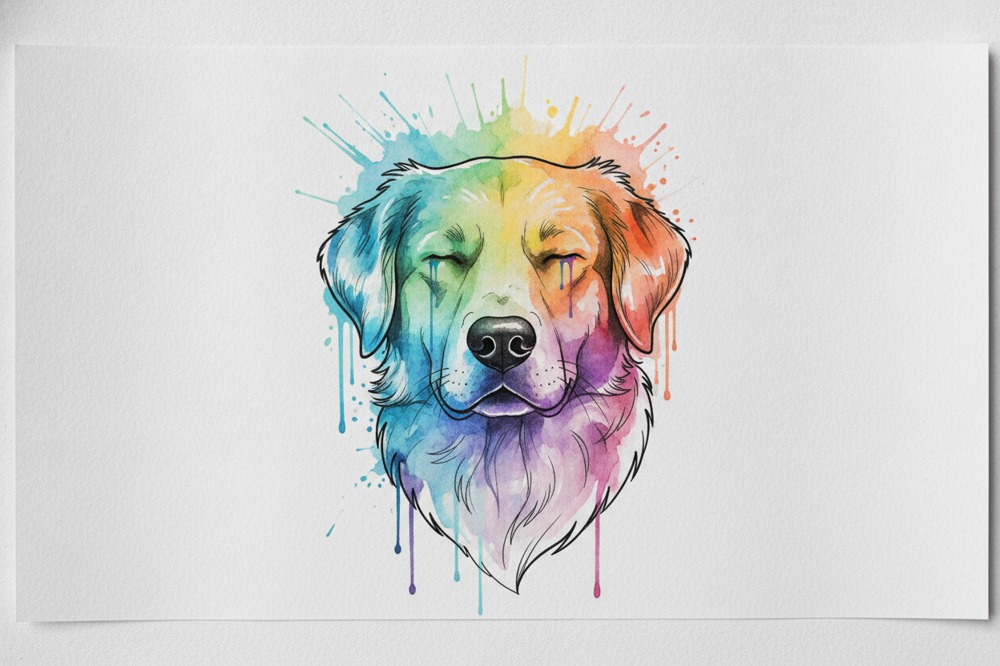
Most people who ask about a watercolour dog memorial come in with a photo on their phone and a rough idea: they want the soft, painted, colour-bleeding look rather than a hard black outline and they want a bit of their dog in it. That’s the core of it. Watercolour uses loose washes of colour, gentle bleeds and splashes of pigment so the design looks brushed on rather than drawn and for a dog it tends to soften the whole thing, which is often exactly the feeling you’re after. The ashes go into a small amount of the ink itself, so the colour that makes up the piece carries a little of them.
What makes watercolour work for a dog specifically is that dogs already come with colour. A ginger crossbreed, a merle collie, a black lab with a grey muzzle at the end. That coat gives you a ready-made palette to pull the washes from and it’s what stops a watercolour piece looking like a generic splash of paint and makes it read as YOUR dog.
What Does A Watercolour Dog Memorial Tattoo Look Like?
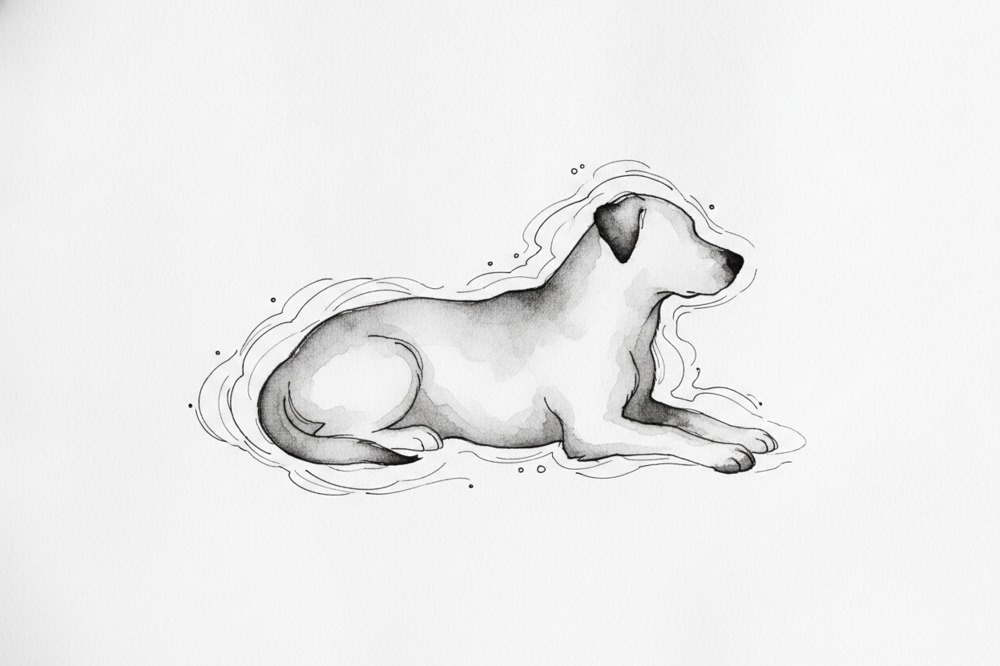
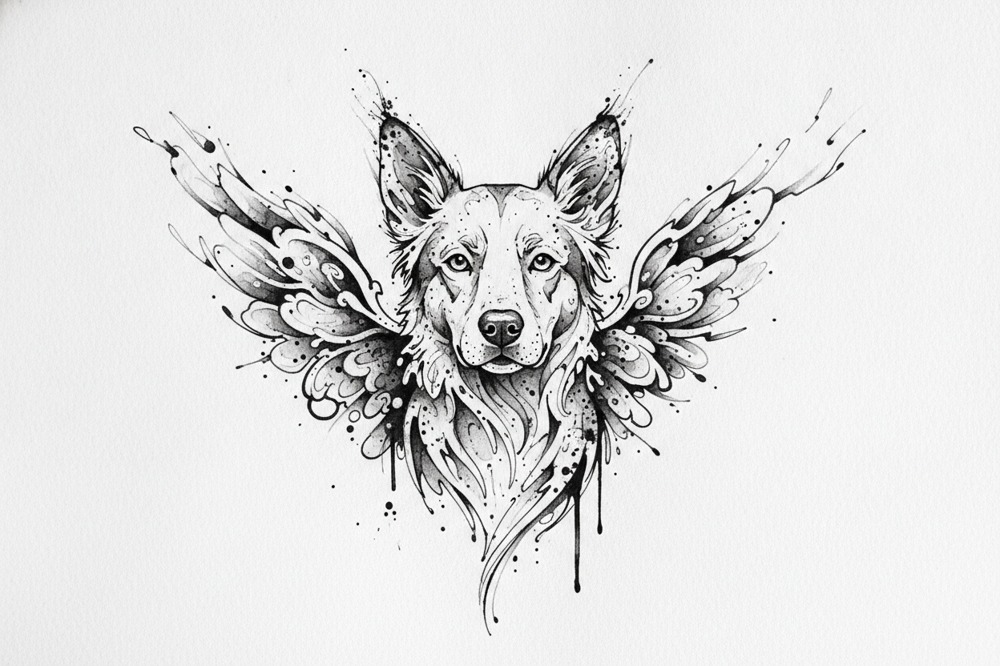
Strip away the label and a watercolour piece is a design where the colour does the work instead of the line. Some versions keep a light sketchy outline of the dog and let colour wash out behind it, like paint running off the edge of the drawing. Others go almost lineless, so the shape of the ear or the curve of the back is suggested by where the colour sits and where it fades to skin.
Common shapes people go for:
- A loose portrait of the face, just the eyes and muzzle picked out, with colour blooming out around the head.
- A full silhouette of the dog filled with washes, mid-run or sitting, so the outline is recognisable but the inside is all soft colour.
- A single feature, a paw or an ear tip, painted small with a spray of colour behind it.
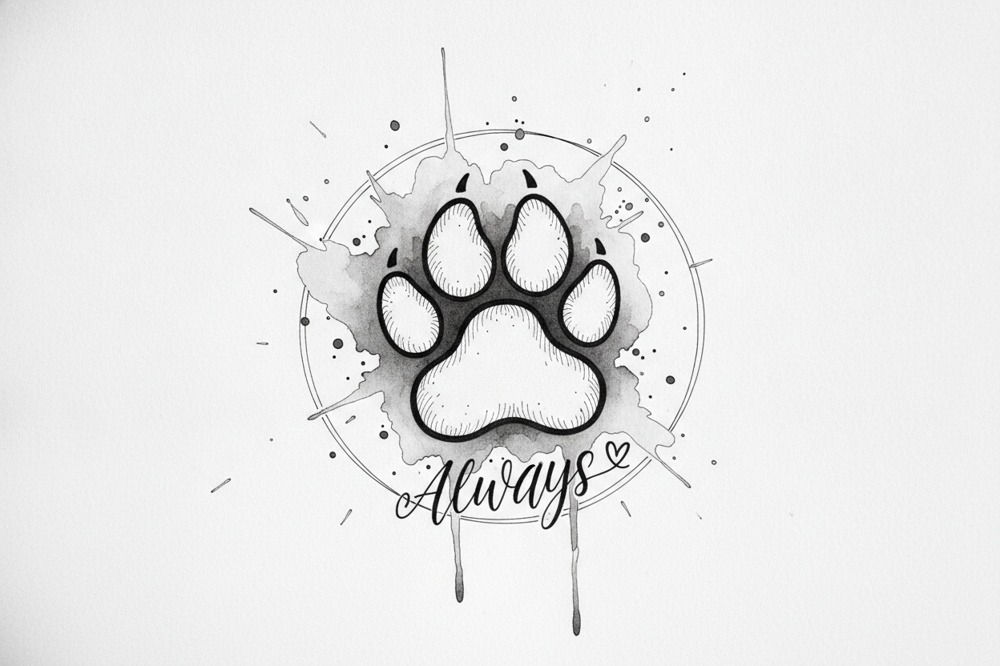
- Colour splashes with a small detailed element sitting inside them, say the dog’s name in a handwritten script or a tiny paw.
The splashes and drips are the signature. Little flecks of pigment thrown off to one side, a run of colour trailing down, the odd geometric line cutting through, those are what tell the eye it’s watercolour and not just a colour tattoo.
Which Colours Suit A Watercolour Dog Tattoo Best?
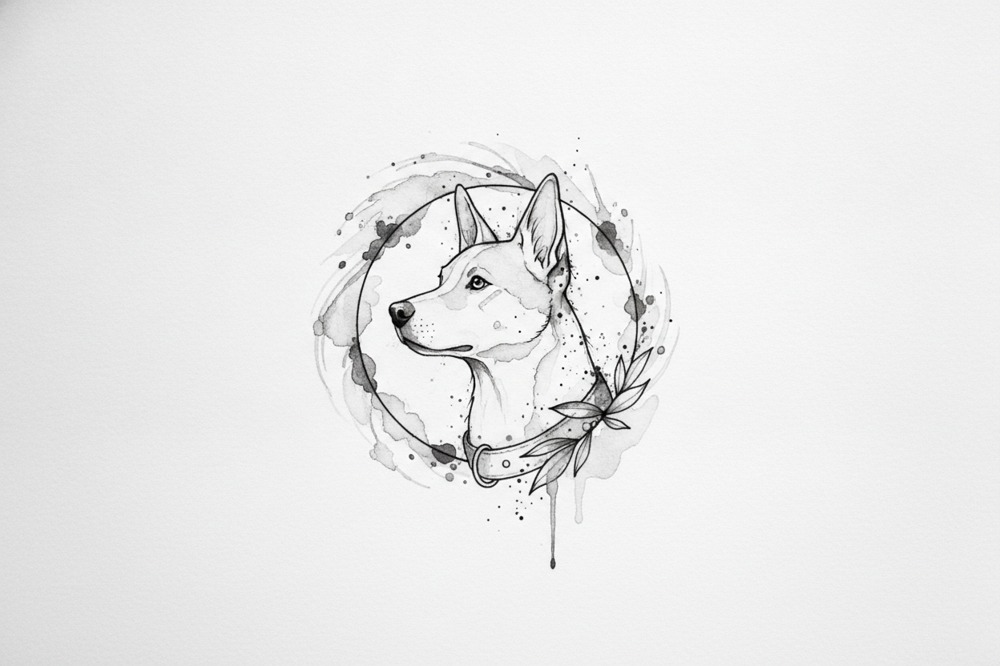
The honest answer is to start with the dog. Pull two or three colours straight from their coat and build the washes from those, then add one accent that means something. A springer with liver-and-white markings gives you warm browns and a clean white where the skin shows through. A grey lurcher gives you soft blue-greys that watercolour loves. Pulling from the real coat is what keeps it personal rather than decorative.
For the accent, people often reach for a colour with a story. The blue of a favourite lead. The green of the field you walked every morning. A wash of sunset orange because that was when you’d go out. If your dog was mostly black or white, don’t panic, watercolour handles that well too. A charcoal-and-grey wash with one warm colour bleeding through often looks better than trying to force bright colour onto a black dog.
Worth knowing before you commit: soft pastel washes and very pale colours are the ones that fade fastest and can look patchy first. If you want the piece to hold its shape for years, it helps to keep a little more pigment density in the key areas and let the true pale washes sit around the edges as accents. A specialist will steer you toward a palette that stays readable rather than one that only looks good the day it’s done. There’s more on how the ink and the design come together in the dog ashes tattoos guide.
Does Watercolour Fade Faster Than A Normal Tattoo?
This is the question that matters with this style and it’s fair to ask it. Watercolour has a reputation for fading and there’s some truth in it, but it’s mostly down to how it’s done rather than the style being doomed. The parts that fade are the ultra-light washes with almost no pigment and no line to hold them. The fix is not to avoid watercolour, it’s to build it properly.
A well-made watercolour dog memorial keeps a subtle structure underneath, enough pigment weight in the important spots so the dog stays recognisable as the pale areas soften over the years. Placement matters too, which is why where you put it is worth thinking about early on and there’s a whole rundown of that in dog ashes tattoo placement ideas. Spots that get a lot of sun or constant rub, the outer forearm, the top of the foot, will lighten a colour piece faster. A shoulder, inner forearm or calf tends to hold colour longer.
The ashes side of it doesn’t change any of this. Once a small amount of prepared ashes is blended into a bespoke, particle-matched, high-quality tattoo ink, the colour behaves like any other pigment going into the skin. It heals the same, it holds the same. The ashes don’t make a watercolour piece fade any faster or slower.
How Are Your Dog’s Ashes Worked Into The Colour?
Everything happens on the counter in front of you. There’s a small tray, the wrapped container you brought sits there in plain sight and the little pot of ink gets mixed where you can watch. Nothing gets carried off to a back room, nothing is done out of your eyeline. If you’d rather not look while it’s being handled, that’s completely fine, it’s done gently and quietly and you can turn away for that bit.
The ashes are matched to the right particle size, cleaned, sterilised to clinical standards and cleared of contaminants before any of it goes near the ink. Then a small amount, roughly a teaspoon’s worth, is blended into the colour for your piece. Because watercolour spreads the pigment across a bigger area rather than packing it tight, your dog is quite literally carried through the whole wash rather than sitting in one dense spot. Plenty of people like that about the style for a memorial.
On bringing the ashes, there are two easy ways. You can measure out a small amount at home, about a teaspoon’s worth and just bring that little bit with you. Or bring the whole container along and Paul will take out what’s needed himself, which suits anyone who’d rather not handle them at all. Either way, only a teaspoon or so is used and the rest goes back home with you.
What Can You Combine With A Watercolour Dog Piece?
Watercolour plays well with almost anything, because the washes act like a backdrop the detail sits on top of. A few combinations people bring in:
- A crisp dog paw print ashes tattoo ideas sitting inside a soft colour splash, the sharp print against the loose wash gives a nice contrast.
- Their name or a short date in handwriting, kept clean and dark so it stays legible against the colour.
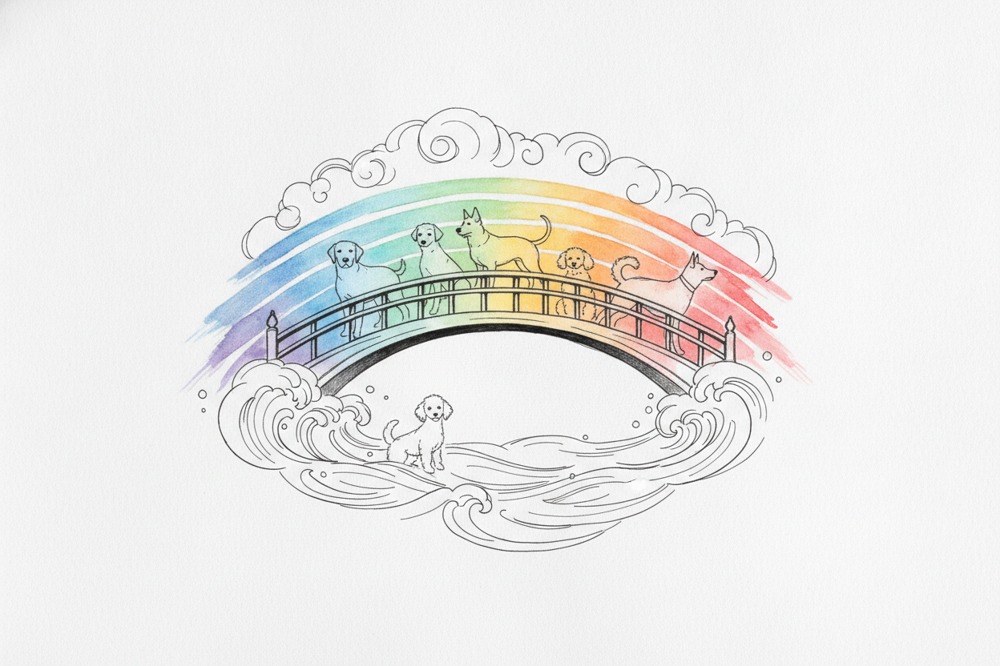
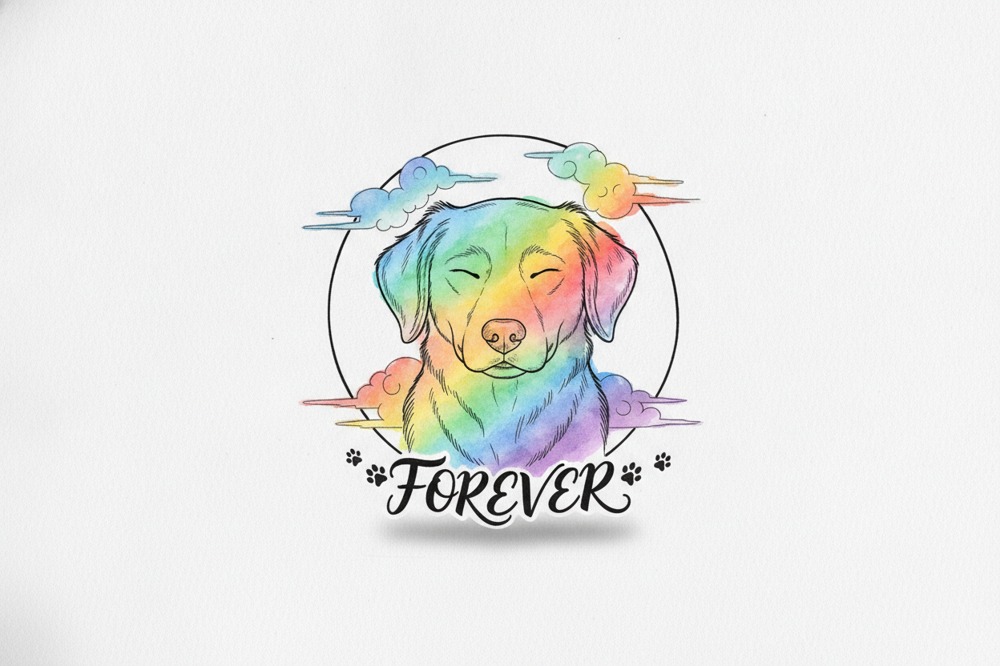
- A rainbow theme, which fits the style naturally and there’s a set of gentler ideas around that in rainbow bridge dog tattoo ideas if that’s the direction you’re leaning.
- A small symbol that was theirs, a favourite toy, a ball, a collar tag, tucked into the corner of the wash.
If you’re still weighing up styles and not sure watercolour is the one, it’s worth a look through broader memorial tattoo design ideas first. There’s no rush to decide before you get in touch, the design gets talked through properly before anything is booked.
FAQ
Do Watercolour Dog Tattoos Fade Faster Than Other Styles?
The very light washes can soften over time, more than a heavily lined piece would. It’s manageable though. Keeping a little more pigment weight in the key areas, choosing a spot away from constant sun and rub and getting it done by someone who builds watercolour to last all help it stay readable for years rather than fading into a smudge.
Can You Do A Watercolour Dog Memorial In Just Black And Grey?
Yes. A greyscale watercolour, all soft charcoal washes and grey bleeds, works beautifully and suits a lot of dogs, especially black or white ones. Many people add a single accent colour bleeding through, a touch of warmth, but it isn’t required. A pure grey-wash piece is a genuine option and often ages very cleanly.
How Much Of My Dog’s Ashes Go Into A Watercolour Tattoo?
Only a small amount, roughly a teaspoon’s worth, blended into the colour for your piece. Because watercolour spreads pigment over a wider area, that small amount carries right through the washes. You bring either a measured teaspoon from home or the whole container, whichever you prefer and the rest goes home with you.
Will The Ashes Change The Colours In A Watercolour Design?
No. Once the ashes are prepared and blended into a bespoke, particle-matched tattoo ink, the colour looks and behaves like any other ink. Your palette comes out as planned. The ashes are mixed in without altering the shade, so a soft blue stays a soft blue.
Is Watercolour Better For A Small Dog Tattoo Or A Larger One?
Watercolour can work small, but it needs a bit of room to breathe, since the splashes and colour bleeds are part of the look. Very tiny pieces can lose that painted feel and end up looking like a solid blob. A palm-sized or larger piece on the forearm, shoulder or calf gives the washes space to do their thing.
You can read more about Paul and how he works.