
Great Dog Breed Memorial Tattoo Ideas To Inspire
Key Takeaways
- A dog breed memorial tattoo works best when it starts from the two or three features that make the breed instantly readable, then narrows to the markings, ear set or grey muzzle that belonged to your dog alone.
- Short-coated, strong-outlined breeds such as boxers, staffies, whippets and pointers carry well as clean silhouettes, because the shape alone does the work.
- Heavily coated breeds such as huskies, chows, samoyeds and rough collies need shading or soft realism, since the coat is the character and a flat outline loses it.
- Fine breed detail like wiry terrier hair or a precise merle pattern holds up better at a slightly larger size, as small tattoos flatten fine texture as they heal.
- Crossbreed memorials are often the most personal, because there is no breed standard pulling the design toward a generic look.
- Bubblegum Ink matches the ashes to the right particle size, cleans, sterilises and decontaminates them, then blends them into bespoke particle-matched ink prepared in the studio.
- Only around a teaspoon of ashes is needed whatever the design, so a heavily shaded portrait uses no more than a fine-line outline.
- Your dog’s ashes stay in the room and in your sight throughout, and everything not used goes home with you.
The best dog breed memorial tattoo works from the two or three features that make that breed instantly readable, then narrows those down to the ones that were true of your dog. A greyhound reads from its deep chest and folded outline. A dachshund reads from the long body and the low, determined stance. A collie reads from the coat and the ears. Start with the breed’s signature shape, then pin it to your own dog by adding the markings, the eye colour, the crooked ear or the grey muzzle that nobody else’s dog had.
That’s the difference between a tattoo of a breed and a tattoo of your dog. A generic Labrador outline could be any Labrador. The one with the slightly barrel chest, the white splash on the chin and the daft head-tilt is yours.
What Breed Features Should A Memorial Tattoo Focus On?
Every breed has a handful of things that carry its identity. Get those right and the tattoo reads correctly even at a small size on a wrist or forearm.
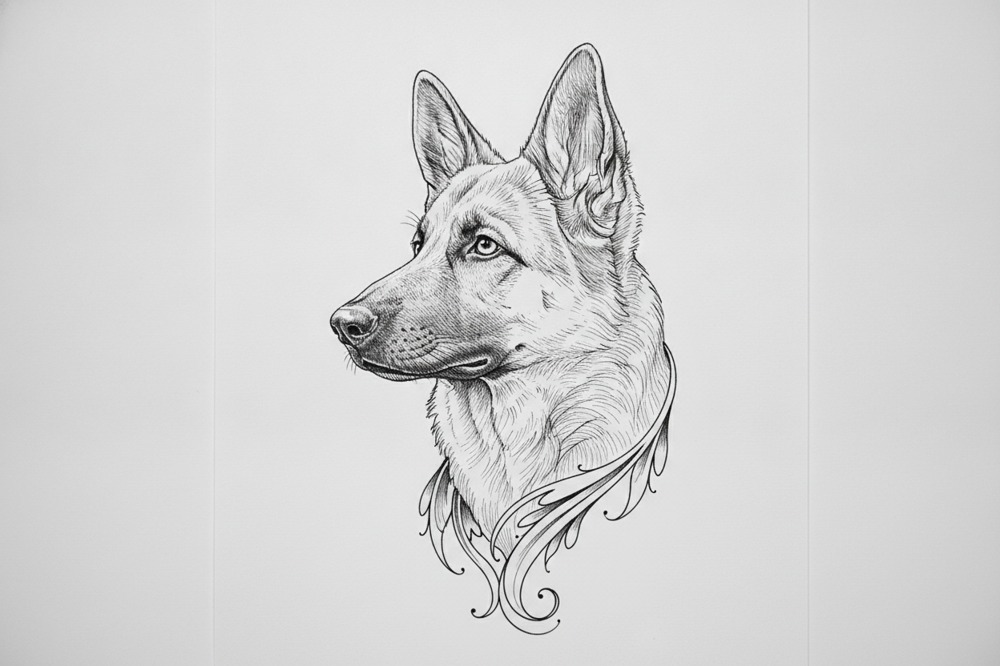
For most breeds it comes down to the ears, the muzzle length, the coat and the body outline. A German shepherd lives in the upright ears and the sloped back. A pug lives in the flat face and the curled tail. A spaniel lives in the long feathered ears. A staffie lives in the wide smile and the blocky head. If you’re picking a design, look at photos of your dog and ask which single feature a stranger would name first. That’s your anchor.
Colour and markings do the rest of the work. A merle coat, a brindle pattern, the black saddle on a beagle, the tan eyebrows on a rottweiler. These are the bits that make people who knew your dog say “that’s him” rather than “nice tattoo.” Bring several photos from different angles so the artist can build the pattern from real reference, not a guess.
One honest note on style. Very fine breed detail, like individual wiry terrier hairs or a precise merle map, holds up better at a slightly larger size. Tiny tattoos flatten fine texture as they heal, so a busy coat pattern squeezed onto a small area can blur over the years. It doesn’t mean small won’t work, it means simplify the detail if you want it small.
How Do Different Dog Breeds Translate Into Tattoo Designs?
Different breeds suit different design approaches and matching the two is where these tattoos get good.
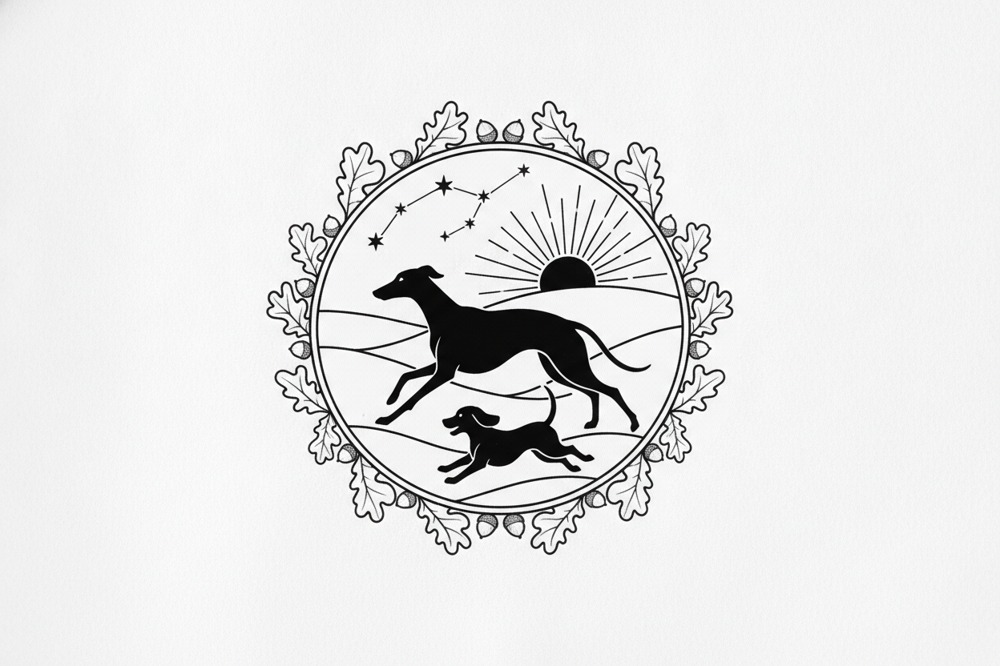
Short-coated, strong-outlined breeds like boxers, staffies, whippets and pointers work beautifully as clean silhouettes or fine-line outlines. The shape alone carries them, so you don’t need heavy shading. A whippet curled into a comma shape says everything with one line.
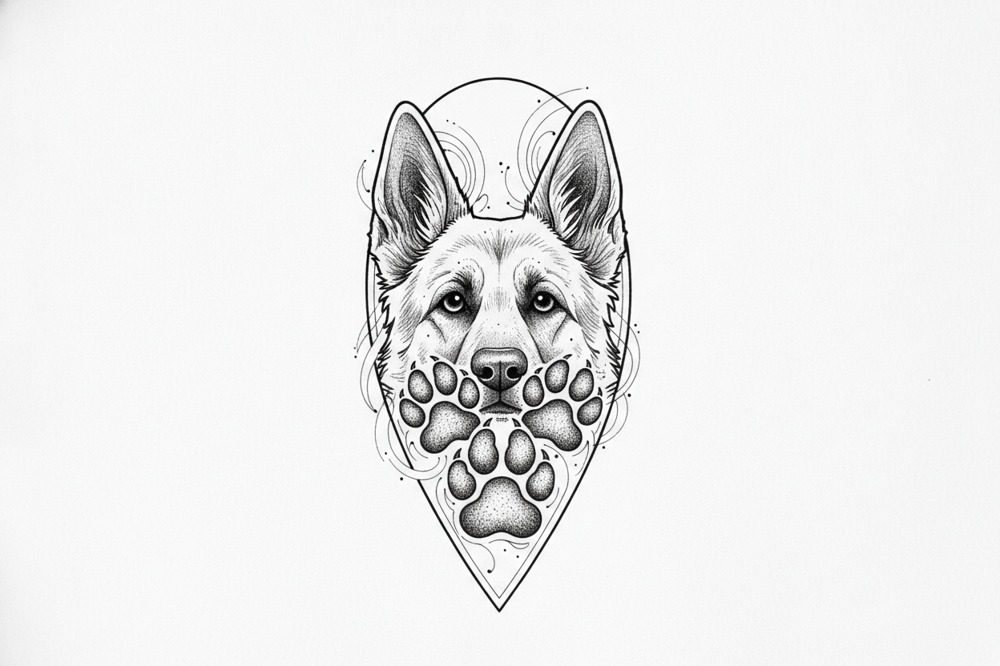
Heavy-coated breeds like huskies, chows, samoyeds and rough collies want more shading or a soft realism style, because the coat is the character. A flat outline loses what made them look like them. This is where a black-and-grey realism portrait or a soft watercolour treatment earns its place. Plenty of owners go for watercolour dog memorial tattoo ideas precisely because loose colour suits a fluffy coat and a big personality.
Breeds with a strong single feature can be reduced to that feature. A dachshund’s long profile, a greyhound’s curled sleeping shape, a bulldog’s front-on face, a spaniel’s ears. A stylised or geometric take often suits these, turning the breed’s silhouette into something almost graphic.
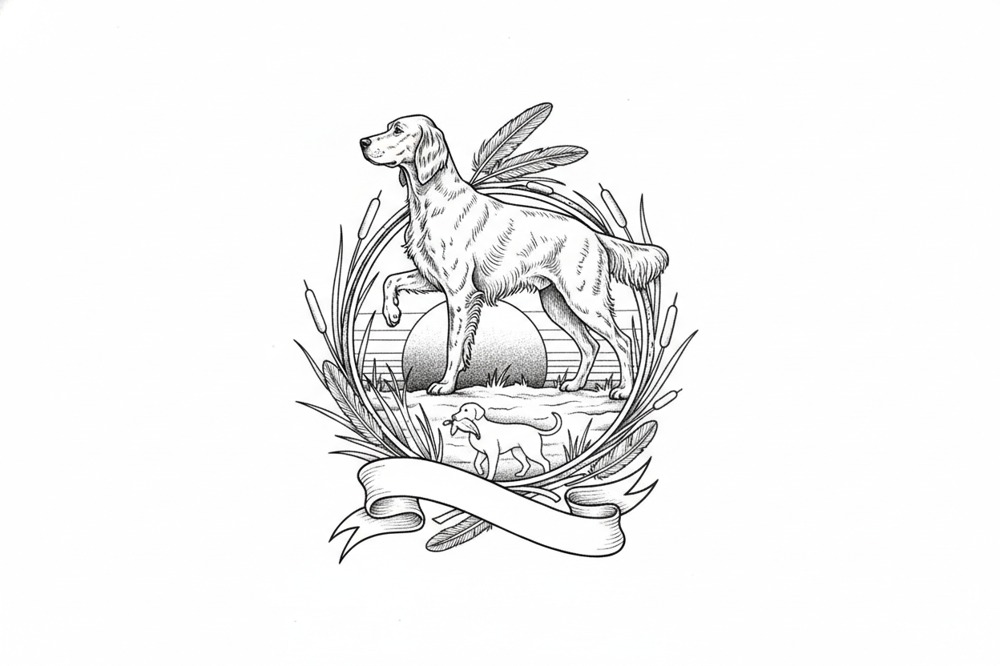
Working and gundog breeds sometimes suit a scene rather than a portrait. A pointer mid-point, a collie in a herding crouch, a Labrador carrying something. If your dog was a doing dog, a posture can say more than a face.
Can You Do A Memorial Tattoo For A Crossbreed Or Mixed Breed Dog?
Yes and mixed-breed memorial tattoos are often the most personal of the lot. A crossbreed doesn’t fit a breed-standard template, which sounds like a problem but is really the opposite. There’s no “correct” look to match, so the whole design is built from your dog and nobody else’s.
Work from photos rather than from any idea of what the breed “should” look like. A collie-cross might have one breed’s ears and another’s coat. A rescue of unknown parentage is just its own shape. Pick the features that were most them: the exact ear set, the particular scruff, that one white sock. Because there’s no reference breed pulling the design toward a standard, the result tends to be a portrait of a specific animal, which is the whole point of a memorial.
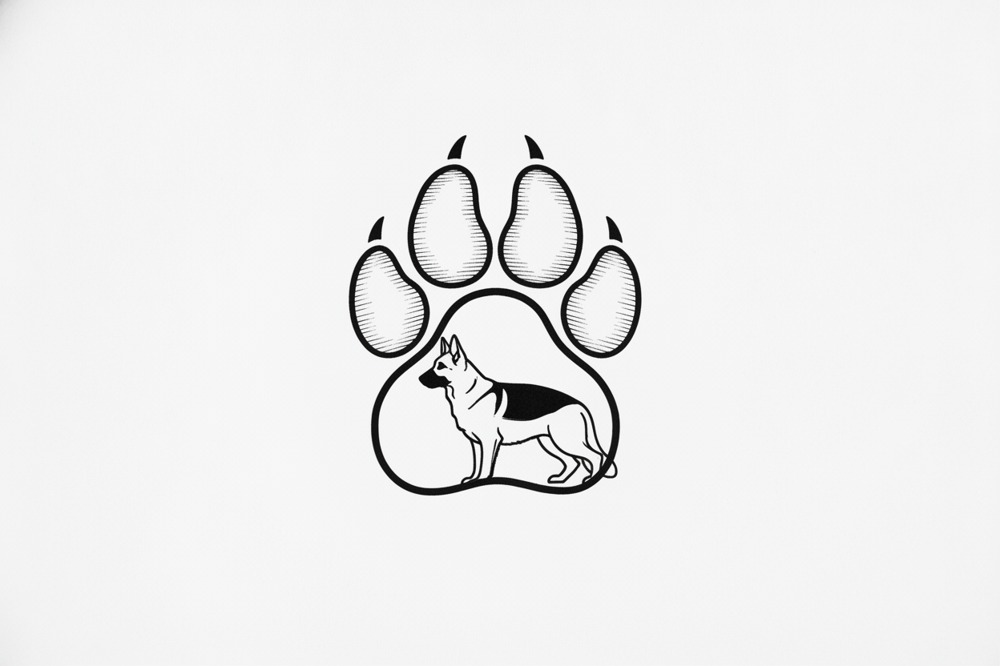
Small mixed breeds and terrier types often suit a compact design, so a paw, a profile or a curled-up shape reads well without much space. If you want something that leans on the shape rather than the coat, dog paw print ashes tattoo ideas are a strong option for any breed or cross, since the print is unique to your dog regardless of parentage.
How Do The Ashes Go Into A Breed Memorial Tattoo?
A small amount of your dog’s ashes is prepared and blended into the ink, then that ink is used to tattoo the design. It becomes part of the piece itself rather than a separate section, so a breed portrait, a silhouette or a paw print all carry the ashes through the whole design.
Before any of that, the ashes are matched to the right particle size, cleaned, sterilised to clinical standards and cleared of contaminants. They then go into a bespoke, particle-matched, high-quality tattoo ink prepared here for exactly this, not any off-the-shelf product. Once it’s in the skin it behaves like ordinary ink, so it heals the same and feels the same as a standard tattoo. If you want the detail of that process, here’s more on adding ashes into tattoo ink.
Some breeds and styles use more ink than others. A dense husky coat in black and grey pulls more pigment than a fine-line whippet outline. It makes no real difference to the ashes side, since only a small amount is needed regardless, but it’s worth knowing when you’re choosing between a heavily shaded portrait and a clean outline.
Will You See Your Dog’s Ashes The Whole Time?
For a lot of people this is the part that matters most, more than the design itself. Handing over a pet’s ashes is a hard thing to do and the worry is that they’ll disappear into a back room and you’ll never quite know what happened to them. So none of that happens here. The ashes stay in the room, in your sight, from start to finish. Nothing is taken away out of view.
If handling them yourself feels like too much in that moment, Paul does the measuring and the blending gently while you watch, or while you look away if that’s easier. You set the pace. Having done this for 20 plus years, means the day is handled calmly and without rushing you through it.
The rest of the ashes go home with you. Only a small amount is ever used, so what your dog leaves behind stays with you almost entirely.
What Should You Bring To A Breed Memorial Tattoo Appointment?
The simplest way is to bring the whole container along and let Paul take out what’s needed himself. For a lot of owners that’s the easier path, because it means you don’t have to measure or handle the ashes at home while you’re grieving. He’ll take roughly a teaspoon’s worth on the day and the rest goes straight back in the container to come home with you.
If you’d rather sort it before you arrive, measure out a small amount, about a teaspoon’s worth and just bring that. Either option is fine and either way most of the ashes stay with you.
The other thing to bring is reference. Several clear photos of your dog from different angles, especially anything that shows the markings, the ear set and the expression you knew best. For a breed tattoo the reference is what keeps it your dog and not a stock version of the breed. If you’ve an idea for placement or want to talk through style options first, the dog ashes tattoos guide walks through the wider decisions and if you’re leaning toward a design that reflects loss and remembrance rather than a straight portrait, rainbow bridge dog tattoo ideas is worth a look.
FAQ
Which Dog Breeds Make The Best Memorial Tattoos?
There’s no single best breed for a tattoo, but breeds with a strong outline or one standout feature tend to translate most cleanly. Whippets, dachshunds, greyhounds, pugs and staffies read well even as small silhouettes. Heavily coated breeds like huskies and collies also work but usually need a bit more space and shading to keep the coat looking right, so plan the size around the detail rather than the other way round.
How Do I Make Sure The Tattoo Looks Like My Breed And Not A Generic Dog?
Bring several real photos and point out the specific markings, the exact ear set, the eye colour and any quirk like a crooked jaw or a grey muzzle. A generic breed image gives you a generic tattoo. The individual details, worked in from your own photos, are what turn a breed outline into a portrait of your particular dog.
Can You Include The Breed Name Or Kennel Name In The Design?
Yes. A breed name, a pedigree or kennel name, dates or a call name can sit alongside the portrait or below a paw print. Handwriting from something of yours can be used too. Just keep lettering a sensible size, since very small text can thicken as it heals, so a short name or a set of dates holds up better than a long line squeezed in.
Does A Detailed Breed Portrait Need More Ashes Than A Simple Design?
No. A detailed, heavily shaded breed portrait uses more ink overall than a fine-line outline, but only a small amount of ashes, roughly a teaspoon’s worth, is needed for any design regardless of size or detail. The ashes are blended into the ink, so they carry through the whole piece whether it’s a bold silhouette or a soft realism portrait.
Is A Silhouette Or A Realistic Portrait Better For My Breed?
It depends on what carries your dog. Short-coated, strong-outlined breeds like boxers, whippets and pointers look great as clean silhouettes, since the shape alone is enough. Fluffy or heavily marked breeds like huskies, collies and merle-coated dogs usually suit realism or watercolour, because the coat and colouring are the character and a flat outline would lose them.
About The Author
Written by Paul Cutler of Bubblegum Ink ®. Read more about Paul.