
Dog Portrait Ashes Tattoo Design For Inspiration
Key Takeaways
- A dog portrait ashes tattoo is a likeness of your dog drawn from a photograph, with a small amount of their prepared ashes blended into the ink used for the piece.
- With a portrait, the ashes can go through the whole design or into one chosen part of it, and Bubblegum Ink is often asked to put them into the eyes specifically.
- Bringing three or four photographs from slightly different angles gives a truer likeness than one reference, and a straight-on or three-quarter shot taken at the dog’s eye level in daylight works best.
- Grey around the muzzle, a torn ear, an under-bite or a single white sock should be kept rather than tidied out, because those markings are what separate a generic dog from yours.
- Realistic black and grey holds its detail longer than soft watercolour, so pairing a solid black and grey face with watercolour washes behind it gives colour without losing the likeness.
- Only around a teaspoon of ashes is needed, and clients either hand over the whole container at the studio or bring a small portion measured out at home.
- Bubblegum Ink prepares the ashes on the counter in front of the client, matched to particle size, cleaned, sterilised to clinical standards and cleared of contaminants before being blended into bespoke ink.
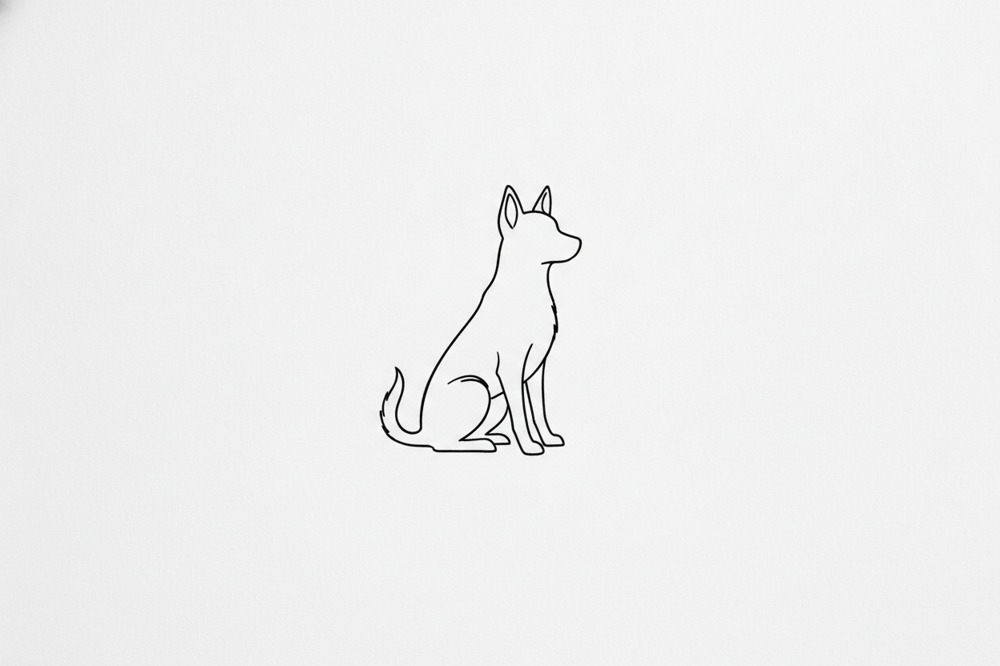
A dog portrait ashes tattoo captures your dog’s actual face, drawn from a photo you loved, with a small amount of their prepared ashes blended into the ink used for the piece. Popular directions are a soft black-and-grey portrait of the head and eyes, a fuller realistic study with the coat texture picked out, a clean single-line drawing of the profile, or a looser watercolour style with colour bleeding out behind the face. The ashes go into the whole design or into one chosen part of it, so the finished tattoo is a likeness of your dog carrying a little of them inside the lines.
The photo matters more than the style. A sharp, well-lit picture where you can see the eyes and the shape of the muzzle gives an artist far more to work with than a blurry snap, however precious that snap is. If the only photo you have is grainy or dark, say so early. It can still be worked from. It just changes how much fine detail is realistic to promise.
What Styles Work Best For A Dog Portrait Ashes Tattoo?
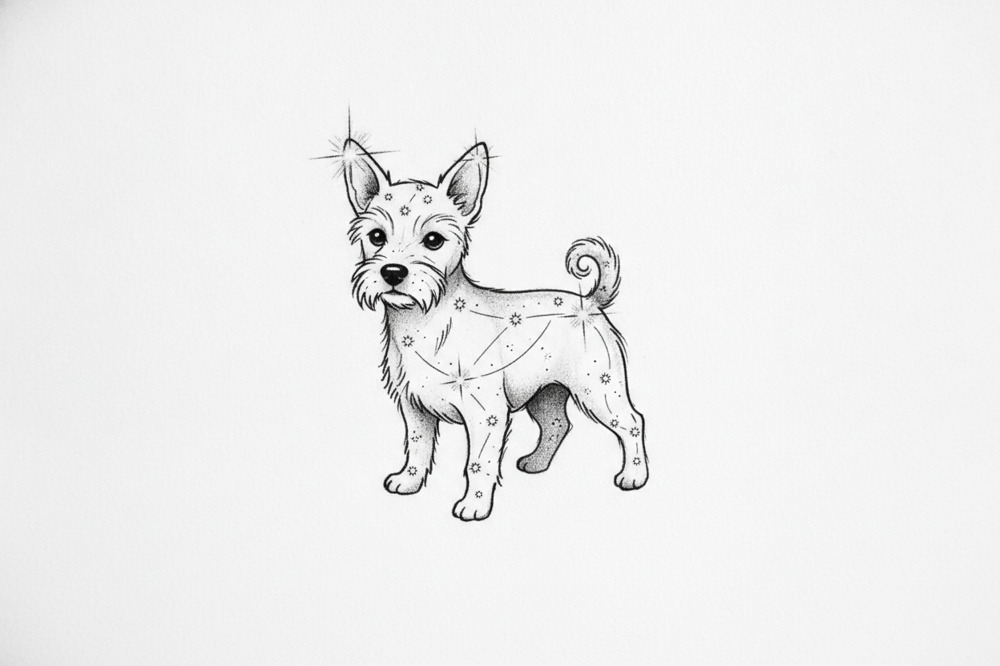
Realistic black-and-grey is the most requested for a reason. It reads clearly at a distance, it ages well and it suits almost any breed, from a wire-haired terrier to a smooth Staffie. The eyes carry the whole thing. Get those right and the rest follows. A good realistic portrait leans on the catchlight in the eye, the wet of the nose and the way the fur falls, so those are the parts worth choosing a photo for.
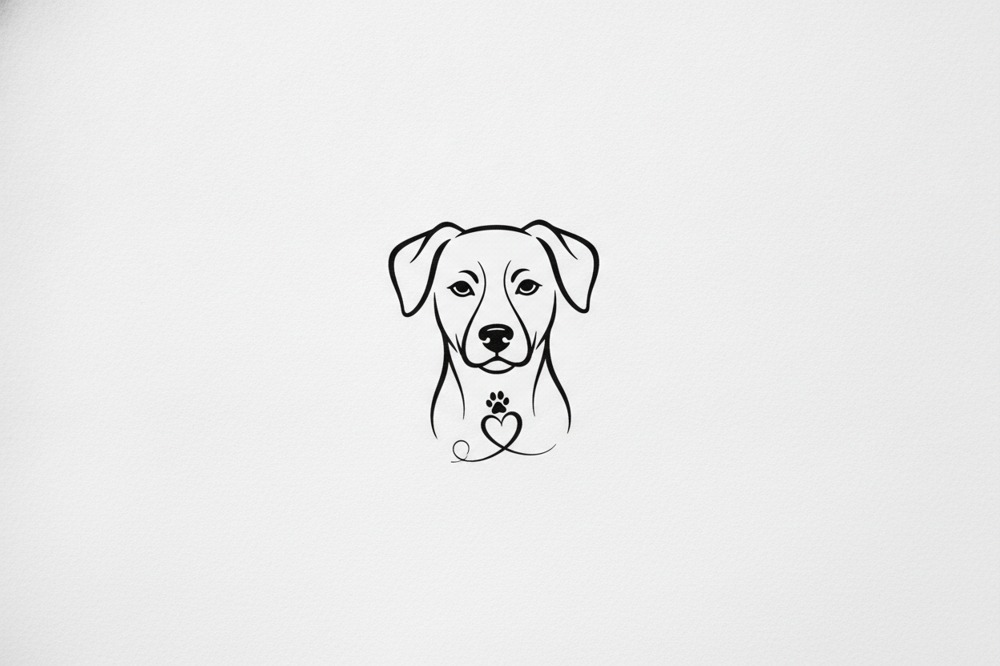
Single-line and fine-line portraits go the other way. One continuous line traces the profile or the sit, minimal and quiet. These sit beautifully small and work well on a forearm or the inside of the wrist. If you want something understated that still reads unmistakably as your dog, this is the route and you’ll find more of these in our small dog ashes tattoo ideas.
Watercolour portraits keep the face fairly true, then let washes of colour splash out behind it. Some people love the energy of it. Worth knowing: soft watercolour edges can fade sooner than solid black work, so a portrait that pairs a firm black-and-grey face with watercolour behind tends to hold up longest.
How Do You Choose The Right Photo For A Dog Portrait Tattoo?
Bring more than one. Three or four photos of the same dog, from slightly different angles, let an artist build a truer likeness than a single reference does. The best reference is usually a straight-on or three-quarter shot taken at the dog’s eye level, not looking down at them, with daylight on the face.
Think about which expression is your dog. The head tilt. The daft grin with the tongue out. The serious watching-you-eat stare. A portrait can’t show all of them, so pick the one that makes you say that’s him before you’ve thought about it. That gut reaction is the right answer.
Don’t crop out the bits that identify them. The grey coming in around the muzzle on an older dog, a torn ear, a wonky under-bite, the one white sock. Those aren’t flaws to tidy up. They’re the difference between a generic dog and yours.
Where Do Dog Portrait Ashes Tattoos Sit Best?
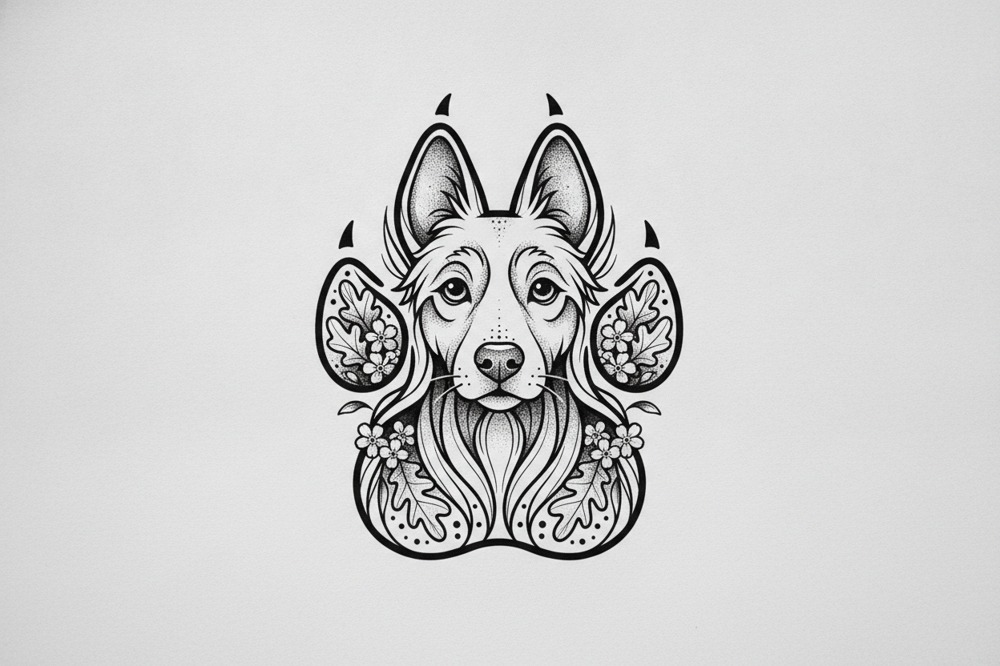
Size decides placement as much as taste does. A detailed realistic portrait needs room to breathe, so the outer forearm, the upper arm, the calf or the shoulder blade give the detail space to sit without crowding. Squeeze a busy portrait too small and the fine work closes up as it heals.
Smaller line-work or a simple head study can go somewhere more private and personal: the inner wrist, the inside of the forearm, over the heart. People often want their dog somewhere they’ll catch sight of without meaning to, doing the washing up, pushing up a sleeve.
Many people add the dog’s name and the years alongside the face, either curved under the chin or set to one side. If that’s your plan, leave space for it in the design from the start rather than trying to wedge it in later. We go into that properly on our page about dog memorial tattoos with names and dates and there’s broader placement and layout thinking in our memorial design ideas.
How Do Your Dog’s Ashes Go Into A Portrait Tattoo?
Only a small amount is needed, roughly a teaspoon’s worth for a tattoo. The ashes are matched to the right particle size, cleaned, sterilised to clinical standards and cleared of contaminants, then blended into a bespoke, particle-matched, high-quality tattoo ink made for this. It isn’t a jar of generic ink with something stirred in. Once that ink is worked into the skin it behaves like any other ink, so a portrait made this way heals the same and feels the same as a normal tattoo of the same size.
With a portrait you get a choice most people don’t expect: the ashes can go through the whole piece, or into one meaningful part of it. Some ask for their dog’s ashes in the eyes specifically, so the part of the face that held their gaze is literally made of them. Others want it in a paw, a name, or the darkest shadow of the coat. It’s your call and it’s worth deciding before the day so the design can be built around it.
Coat colour has a small say in style here. On a very pale dog with a lot of light fur, a heavy black-and-grey portrait carries the pigment differently than on a dark dog, so an artist will steer the shading to suit both the likeness and how the ink sits.
What Happens With The Ashes On The Day?
The simplest approach and the one most people prefer, is to bring the whole container along and let Paul take out the small amount that’s needed himself. That suits anyone who’d rather not handle the ashes at all. If you’d sooner sort it at home, you can measure out roughly a teaspoon’s worth beforehand and just bring that. Either way, the rest goes home with you. Nothing is kept.
The measuring and blending happen right there on the counter in front of you, on the tray, with the container unwrapped where you can see it. Nothing is carried off to a back room. If handling your dog’s ashes is more than you can face on the day, that’s completely normal and it’s done for you, gently, while you watch or look away, whichever you need. People cry. People bring a photo and talk about the dog the whole time. Both are fine.
The wider practical side of all this, from booking to healing, is covered in the dog ashes tattoos guide.
Why Does The Artist’s Experience Matter For A Portrait?
A dog portrait is one of the harder things to tattoo well and doing it with ashes ink adds a layer that a general studio rarely handles. Getting a likeness right takes years of portrait work and preparing ashes correctly takes its own separate experience. Paul has both. 30 plus years of tattooing means the portrait skill is there; specialising in ashes tattoos for 20 + years means the ashes side is second nature, not a one-off favour. For a piece meant to look like your dog and hold part of them, that combination is the point.
The studio is private and appointment-only, so it’s one person and one artist in the room, not a shared floor with strangers walking past while you’re grieving. There’s time to talk through the photo, the style and where the ashes should go before any needle touches skin.
FAQ
How Much Of A Photo Detail Can Be Kept In A Dog Portrait Ashes Tattoo?
Most of it, if the photo is clear. Eye catchlights, nose texture, the fall of the fur and distinctive markings all translate into a portrait when the reference is sharp and well lit. Very small details from a blurry or dark photo can’t be invented reliably, so bring the best pictures you have and more than one if possible.
Can I Have My Dog’s Ashes Only In The Eyes Of The Portrait?
Yes. With a portrait you can choose to have the prepared ashes go into one specific part of the design rather than the whole thing and the eyes are a common request. Decide this before the appointment so the piece is planned around it. The rest of the portrait is then finished in ordinary ink.
Is A Realistic Or A Watercolour Dog Portrait Better With Ashes?
Both work, but a realistic black-and-grey portrait tends to hold its detail longer than soft watercolour, which can fade sooner at the edges. A popular middle ground is a solid black-and-grey face with watercolour washes behind it, giving colour and energy while keeping the likeness crisp for years.
How Big Does A Dog Portrait Ashes Tattoo Need To Be?
A detailed realistic portrait usually needs a fair-sized area, like the forearm, upper arm or calf, so the fine work doesn’t close up as it heals. A simpler line-work or single-feature portrait can go much smaller, on the wrist or inner forearm. The style and level of detail you want set the minimum size.
Can I Add My Dog’s Name And Dates To The Portrait?
Yes and it’s very common. The name and years can curve under the chin or sit to one side of the face. It’s best to plan the lettering into the design from the start rather than adding it later, so the spacing looks right and nothing feels cramped around the portrait.
Written by Paul Cutler at the private, appointment-only Bubblegum Ink ® studio in Sandbach, Cheshire. Read more about Paul.